Montessori Method: creating a cocoon of autonomy at home
Nateo CONCEPT
Montessori at home: fostering autonomy
Your child wants to do everything alone but faces an unsuitable environment that generates frustration and daily tantrums? The concrete application of the Montessori method at home offers a caring response to transform these challenges into learning opportunities. We guide you step by step to create a sustainable and secure space that will unlock their potential while restoring confidence in your educational choices.
The basic idea: seeing the child differently
We often imagine a list of strict rules or expensive equipment. Wrong. The foundation is a radical change in perspective. Your child is not a vessel to be filled, but a competent individual, capable of learning on their own. You just need to respect their pace and trust them.
Maria Montessori wasn't a disconnected theorist. Through observation, she understood something simple: the child wants, more than anything, to participate in the adult world. It's a visceral need, not a game.
Applying the Montessori method at home simply means giving them the keys to satisfy this natural curiosity in daily life.
Autonomy, the true goal
Don't confuse everything. Autonomy is not letting them do everything without framework or safety. It's allowing them to "do alone" what they're capable of. It's a progressive conquest that boosts their confidence.
Concretely? It's putting on their shoes, choosing a book, or setting the table with you. Less frustration, fewer tantrums. It's actually a formidable help in managing the famous terrible twos without losing your mind.
Each success, however small, strengthens their self-esteem. That's where everything is at stake for their future.
The absorbent mind: the superpower of toddlers
You don't see it, but your child has a major asset: the absorbent mind. From 0 to 6 years, they absorb their environment without any conscious effort, somewhat like mental breathing.
Their brain acts like an ultra-efficient sponge. It doesn't sort anything. It takes everything in bulk: language, your gestures, the atmosphere, and even the order (or disorder) of the house.
That's why the environment you offer them is crucial. It's literally the raw material of their intelligence.
Sensitive periods: learning windows not to be missed
Your child goes through intense phases, the sensitive periods. Suddenly, they're obsessed with order, language, or small objects. It's not a whim, it's an imperative biological need.
During these windows, they learn with disconcerting, almost magical ease. It's the ideal time to offer them the right material. If we miss the opportunity, learning will require much more effort later.
Your job? Spot these windows of opportunity and feed their immediate need. That's all.
Creating a prepared environment: the secret to a serene home
What is a "prepared environment"?
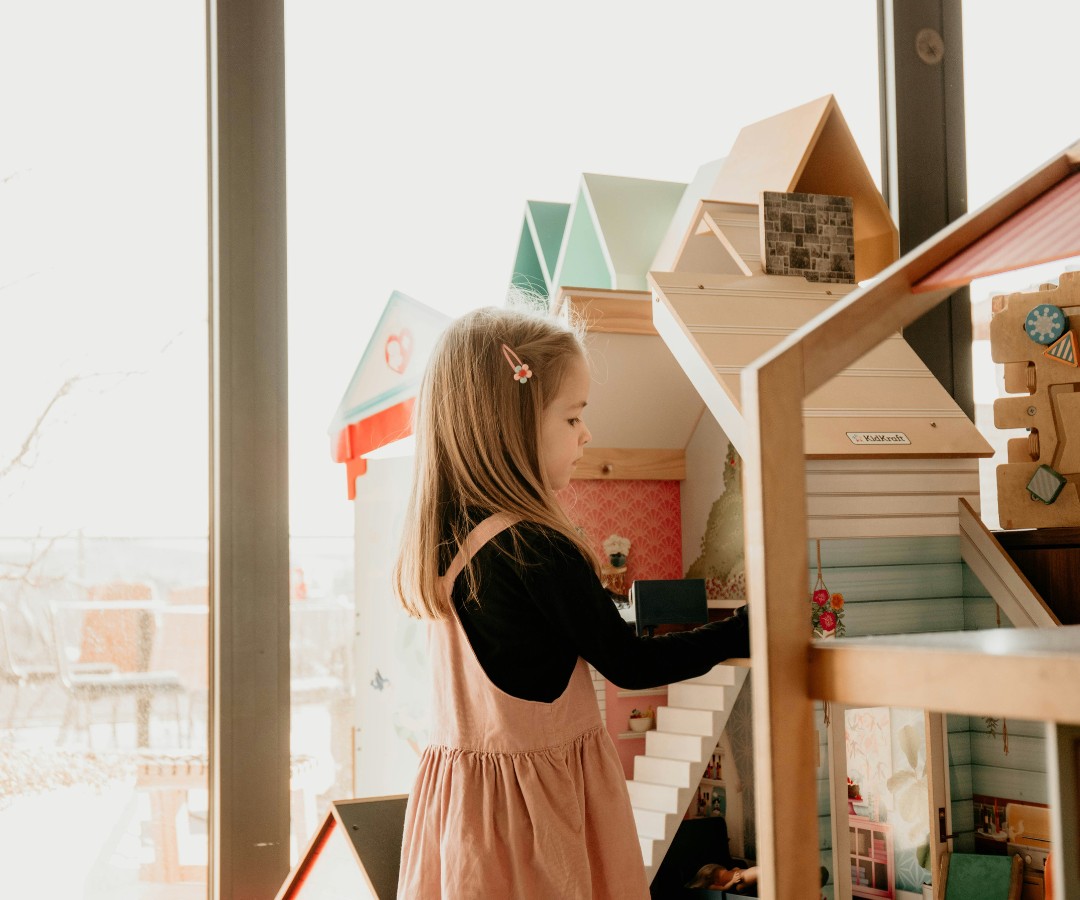
It's not a frozen magazine decor page. The prepared environment is a space designed for the child, adapted to their actual size and within their immediate reach. It's their territory of expression.
The goal is simple: allow them to act without asking for an adult's help every five minutes. It's a framework that whispers "you are capable". This autonomy reduces frustration and boosts their self-confidence.
To invite exploration, this space must remain beautiful, orderly, and secure. A harmonious place soothes the mind and promotes concentration.
The 3 pillars of a successful space: safety, accessibility, order
Safety comes first: hide outlets, secure heavy furniture. The idea is to let them explore freely without having to say "no" or "careful" every two minutes.
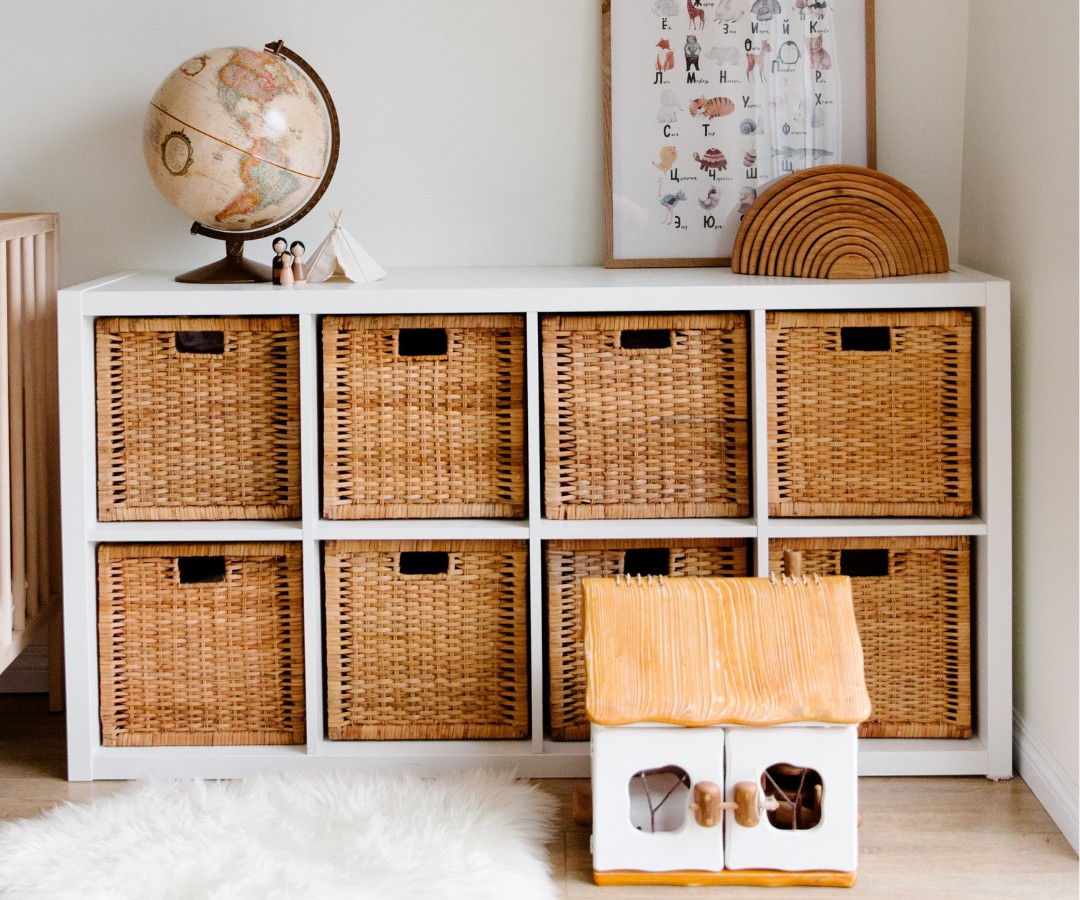
Next comes accessibility: low shelves, a small coat rack or a step stool. Everything must be at their height so they can physically interact with their space.
Finally, order is vital: everything has a defined place. This helps the child structure themselves mentally, know where to find their things and especially, where to put them away once the activity is finished.
Adapted furniture: an investment in autonomy
Let's be clear, Montessori furniture is not just a marketing gimmick. It's a technical tool designed to meet the child's physiological developmental needs. It's designed for their size, strength and motor skills.
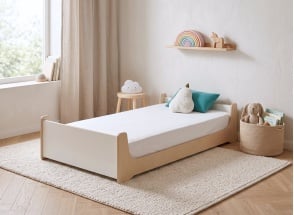
Choosing adapted furniture, like a floor bed, means investing in their independence. By extension, it also means investing in your family life's peace of mind.
It's the key to involving your child in daily life without conflicts or unnecessary battles.
Fewer toys, but better chosen
Apply the principle of activity rotation. Instead of leaving everything available in a large bin, we offer a limited selection of toys.
The benefit is immediate: it avoids visual overstimulation that tires the child. It renews their interest in their objects and helps them focus deeply on a single task at a time, without scattering.
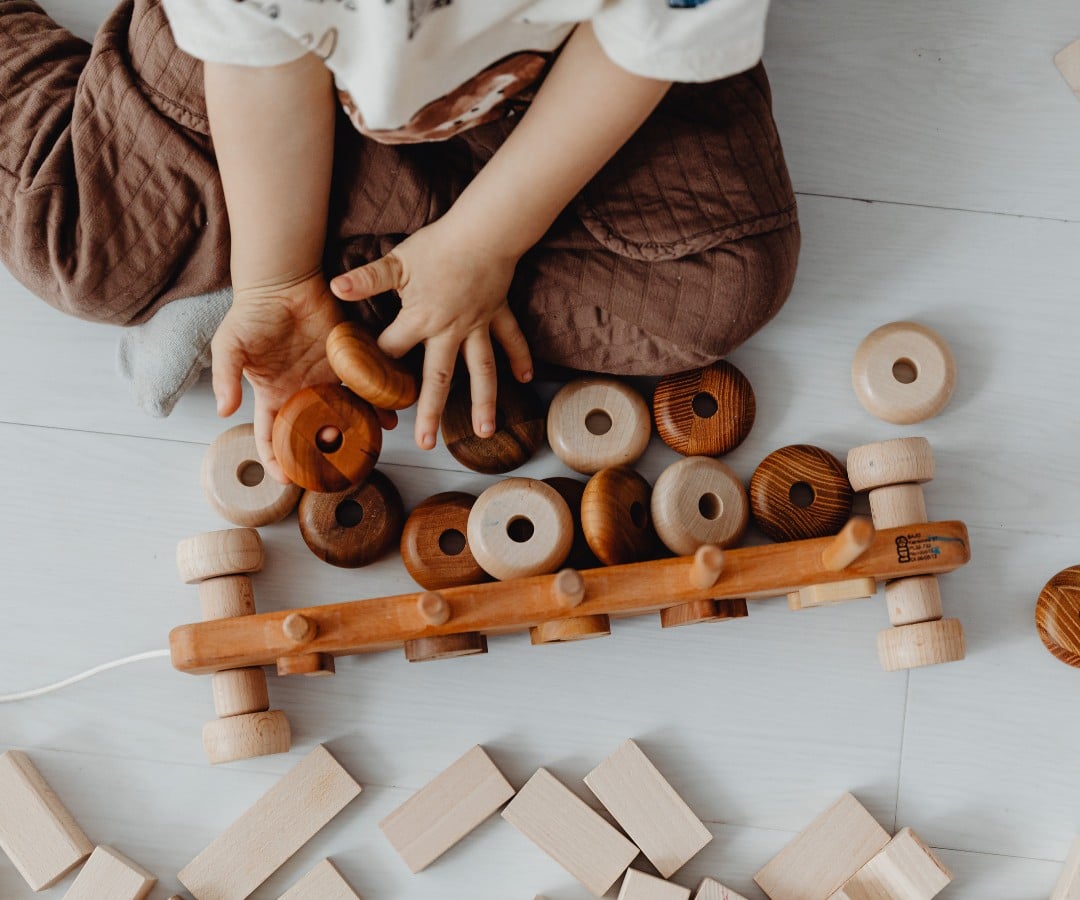
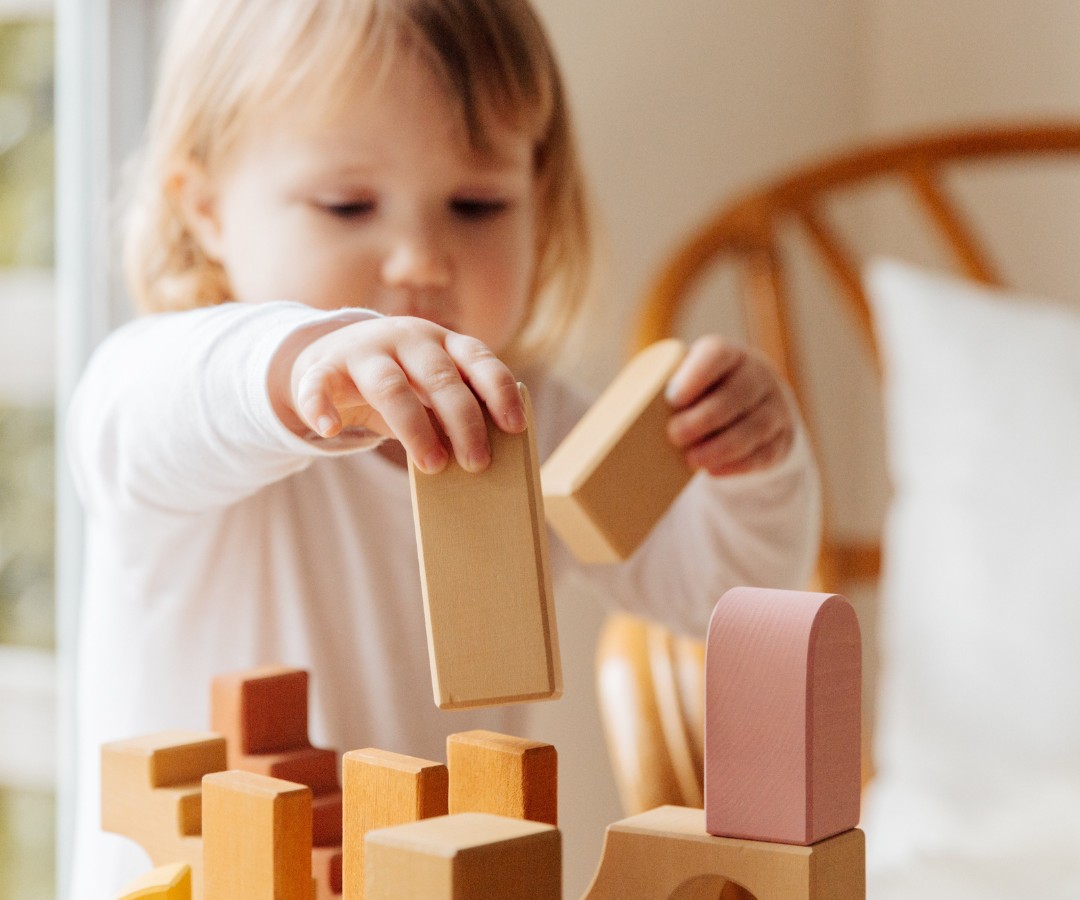
These toys should be quality, durable, often made of natural materials like wood, rather than plastic.
The Montessori bedroom: a haven to grow and thrive
After seeing the principles of the environment, let's zoom in on the most intimate and important room for the child: their bedroom. Let's see how to transform it into a true sanctuary of autonomy. To go further on how to create a Montessori children's room, follow the guide.
The floor bed: the sleep revolution
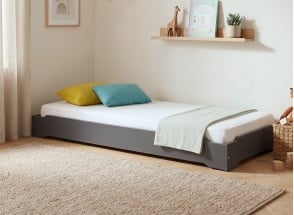
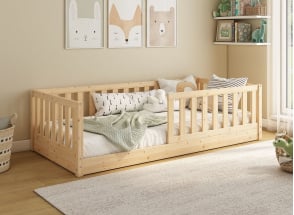
Forget the confining bars. The centerpiece of the bedroom is undoubtedly the floor bed, a true tool of freedom. Unlike the traditional bed, it allows the child to move freely as soon as they wake up.
Your child can thus get up and go to bed alone, simply listening to their body's signals. This approach makes the child responsible very early for their own sleep rhythm.
It's an immense mark of trust that completely changes the dynamics of bedtime and waking up. To understand in detail what a Montessori baby bed is, you can consult our complete guide.
Choosing the right Montessori bed: our advice
Timing is important. We often wonder at what age to switch to a Montessori bed: it's generally around 18-24 months, when walking is acquired.
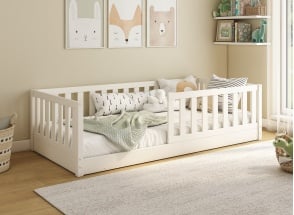
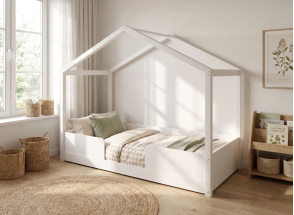
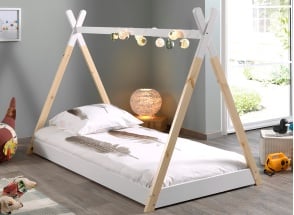
Style-wise, the house bed is a favorite because it creates a reassuring and playful space for the child. Be uncompromising on quality: always favor solid wood and water-based paints to guarantee a healthy environment.
Discover our selection of Montessori children's beds designed in France to combine safety and design.
An accessible and inviting reading corner
Reading should not be a constraint. The trick is to use a forward-facing bookshelf where books display their cover facing the child, not their unreadable spine.
This arrangement immediately catches the child's eye and invites them to choose a book completely independently. It's visual and much more engaging for toddlers.
Simply add a comfortable rug or some cushions on the floor to make the space cozy and inviting to settle in.
Storage at their height for easy order
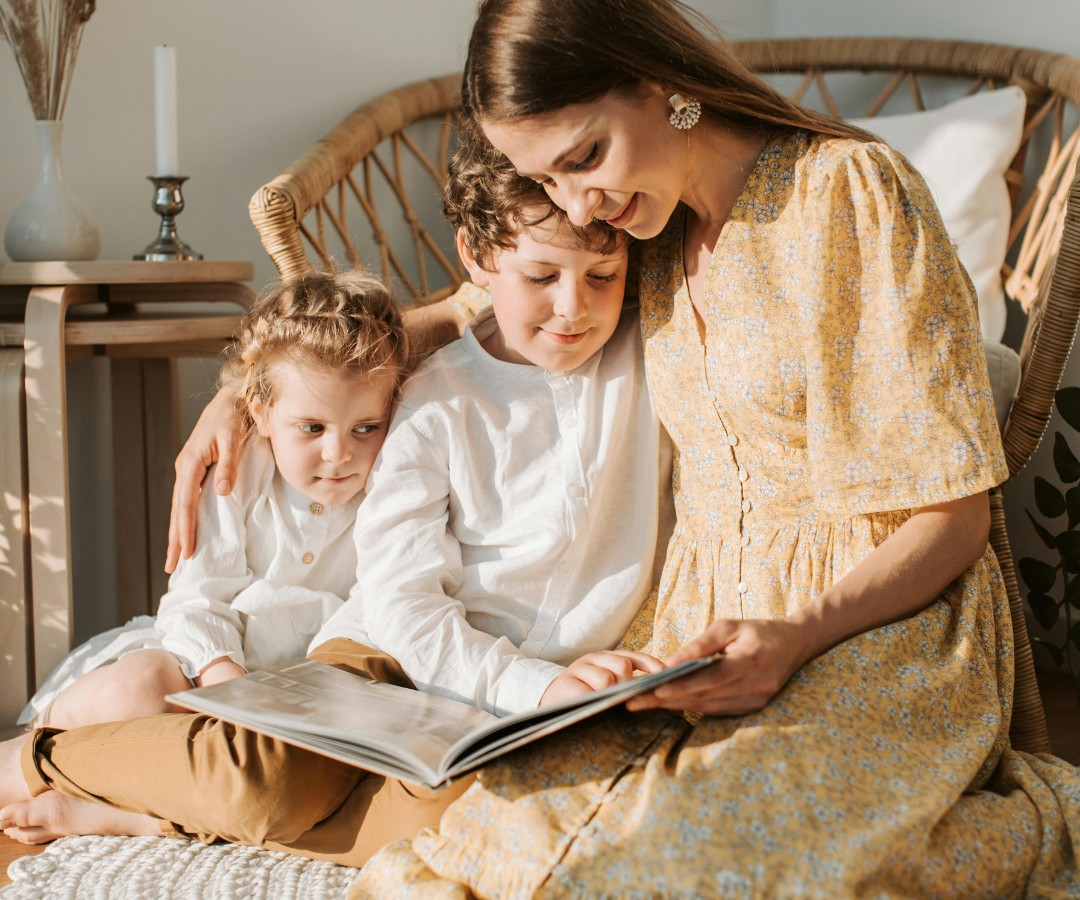
Autonomy also goes through tidying up. Install low shelves, bins, or baskets that always remain easily accessible. The goal is simple: the child must be able to put away as easily as they took out their toys.
Maria Montessori said it well: external order helps build the child's internal order. It's a fundamental principle for them to feel good and calm in their room.
Also think about a small wardrobe at their height so they can choose their clothes alone in the morning.
Participating in family life: the heart of learning
Autonomy doesn't stop at the bedroom door. The greatest playground and learning ground is the home itself. Let's see how furniture can help them take part in daily tasks.
The learning tower: essential for curious little ones
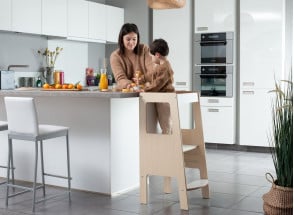
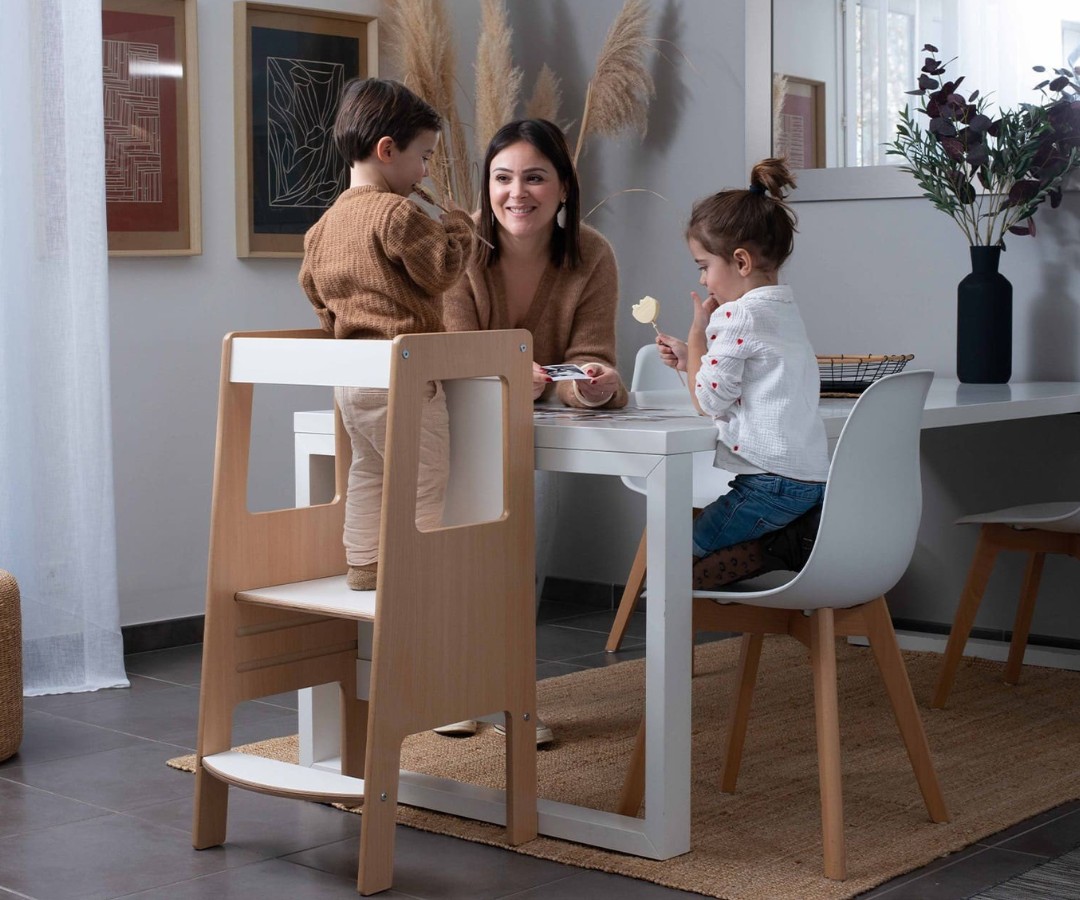
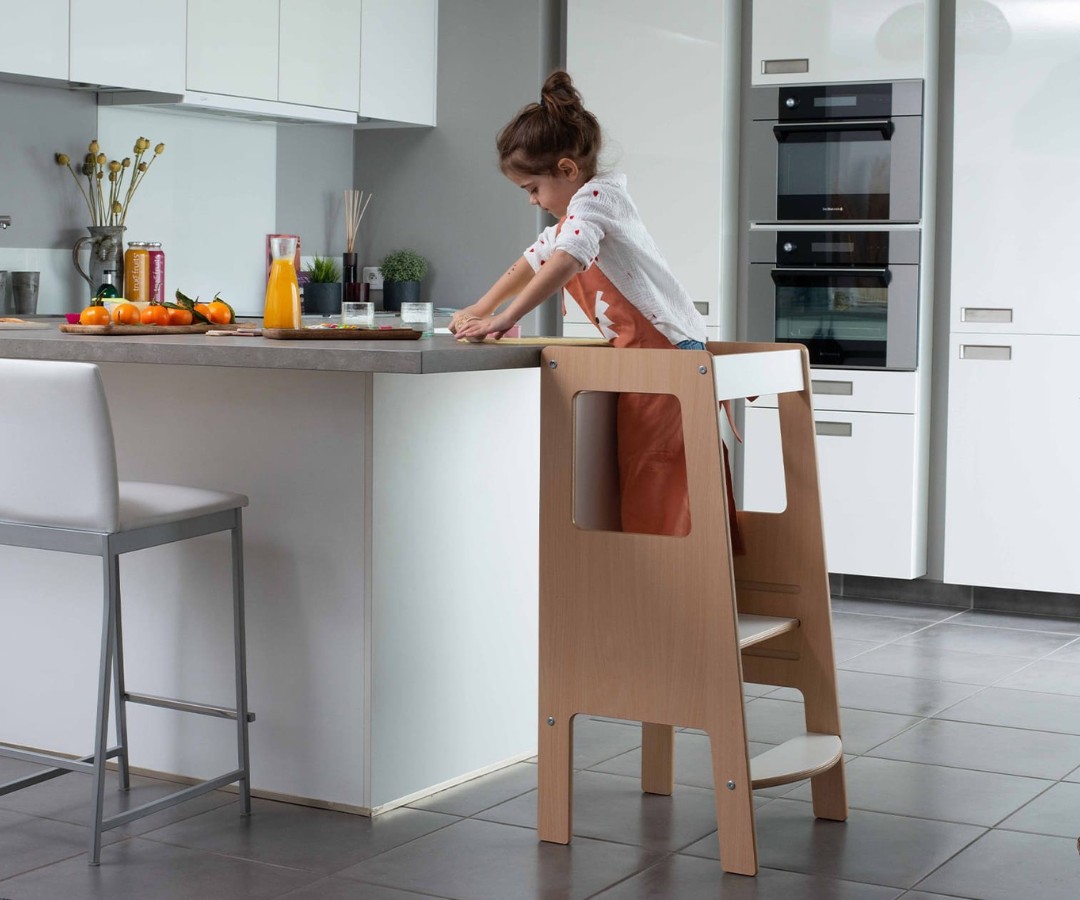
Forget the simple unstable step stool. The learning tower is a true revolution that secures the child while lifting them to your height. It's a privileged observation post that finally allows them to see what's happening on the countertop.
In the kitchen, its usefulness is immediate. Your child no longer passively experiences the action, they become a true helper capable of washing a vegetable or mixing batter with pride.
It also finds its place in the bathroom. Brushing teeth or washing hands on a Montessori learning tower becomes child's play.
Practical activities for every room in the house
Practical life activities constitute the foundation of the Montessori method for toddlers. They're not chores, but meaningful tasks that truly fascinate them.
Here are some concrete ideas to integrate these learning moments throughout your home:
- In the kitchen: pour water from a pitcher to a glass, peel a banana, clean the table with a small sponge.
- In the living room: water the plants, dust a low shelf, arrange the cushions.
- In the entryway: hang up their coat, put away their shoes.
These simple actions significantly develop movement coordination and concentration ability. More importantly, the child feels they have their place. They feel useful, valued, and a full member of the family tribe.
The role of imitative play
You've probably noticed: children learn primarily by mimicking adults. It's their main mechanism for decoding the world around them and integrating into it.
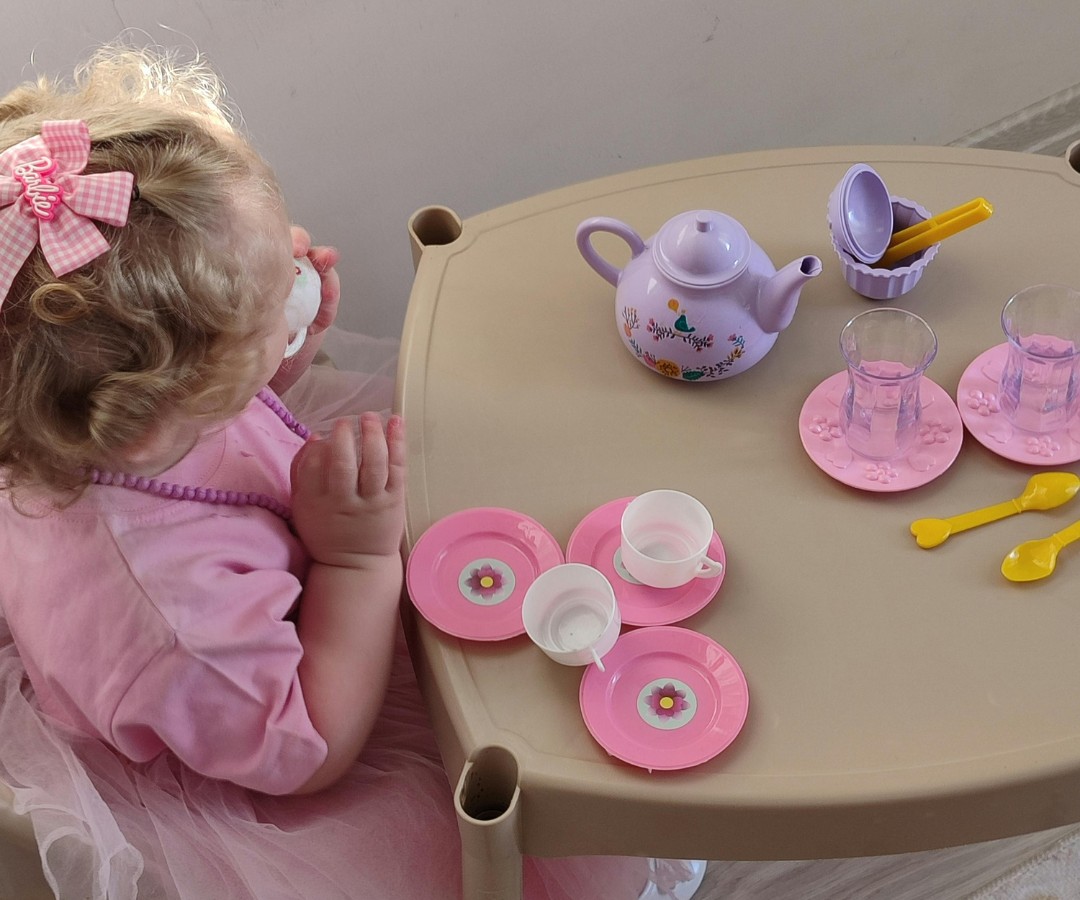
Imitative play like a play kitchen, a workbench or a doll are essential. They offer a safe space to replay and digest everyday scenes.
By actually participating in household tasks, we feed this natural need. It's the ideal complement to imitative play, in the most authentic way possible.
Adapt the tools, not just the furniture
Beyond furniture, equipment must follow. Think about providing them with tools their size: a small manageable broom, a light shovel, an adapted pitcher or dishes that won't break.
Having their own equipment reinforces their sense of competence. They're not borrowing your things that are too heavy, they're using their own, which boosts their motivation to participate.
This changes everything: they can finally complete a task "for real", from start to finish, without frustration.
Supporting child development, age by age
Of course, the needs of an 8-month-old baby are not the same as those of a 3-year-old child. The Montessori environment is evolving. Let's see how to adapt it to the major stages of their development
From 0 to 18 months: the time of sensory exploration and movement
For babies, the Montessori method emphasizes freedom of movement. Forget the bouncer, prefer a play mat on the floor. A Munari mobile will suffice to stimulate their sight.
The goal is to allow them to discover their body without hindrance. They will go through motor stages like rolling over or crawling at their own pace.
This is the period when we install a low mirror for them to observe themselves. A pull-up bar will then help them stand up while baby discovers their space.
From 18 months to 3 years: the explosion of language and independence
This is the golden age of practical life and autonomy. The child absolutely wants to "do it all by themselves" in daily life. It's the ideal time to introduce the learning tower and floor bed.
We emphasize language development by naming everything around them. By reading a lot, you enrich their vocabulary which must remain precise.
It's also the age when they begin to assert their strong character. Offering them limited choices, like "the blue sweater or the red one?", is an excellent strategy.
From 3 to 6 years old: refining gestures and opening up to the world
The child now has better coordination and masters their gestures. Activities can be more complex: using a real adapted knife or helping to prepare a recipe.
Their curiosity expands to the outside world and nature. You can introduce nomenclature cards, geography puzzles or logical sorting activities.
Evolving furniture, such as a height-adjustable observation tower, makes perfect sense here to follow their growth without having to buy everything again.
Summary table of needs by age
To see things more clearly, here's a summary of key needs and equipment by age. This will help you visualize the essentials.
| Age range | Main need | Key furniture/Material | Activity examples |
|---|---|---|---|
| 0-18 months | Sensory and motor exploration | Play mat, Low mirror, Mobiles, Rattles | Crawl freely, grab objects, look at themselves. |
| 18 months - 3 years | Autonomy and practical life | Floor bed, Learning tower, Small table and chair | Wash their hands alone, choose their clothes, pour water. |
| 3-6 years | Refinement and intellectual curiosity | Forward-facing bookshelf, Sorting material, Evolving furniture | Cook, care for plants, put away their belongings. |
The adult's role: becoming a caring guide
The most beautiful prepared environment is useless without the proper adult posture. Our role changes: we are no longer conductors, but discreet and respectful guides.
Observe before intervening
This is often the most complex step for us as parents. Yet, applying the Montessori method starts there: watching your child without judging. This allows you to grasp their real needs, their current interests and their present obstacles.
You must resist the urge to help as soon as they grimace. Let them search, fumble, and even make mistakes. It's precisely in this effort that learning becomes durably fixed.
This silent observation is your best ally to know exactly what material to offer at the right time.
Trust and let do
If you observe carefully, trust comes naturally. You must believe in their abilities. Your child is often much more resourceful and competent than you imagine.
Let them take measured risks, like climbing alone on their observation tower or cutting a banana. It's by experiencing controlled danger that they learn to know their own physical and motor limits.
Often, it's not the child's inability that blocks their autonomy, but rather our own adult fears.
Show slowly and without speaking
When you present a new activity, like pouring water, do it in slow motion. Break down each gesture almost theatrically so their eyes capture everything.
Do it imperatively in silence. A toddler's brain cannot process your verbal explanations and your hand movements simultaneously. It's one or the other.
Once the demonstration is complete, simply invite them to try. Don't correct them if they fail. They will eventually self-correct through repetition.
Key principles of the accompanying adult
Adopting this posture requires real self-work, far from our usual reflexes. To help you, here are some golden rules to keep in mind daily.
These simple principles radically change the atmosphere at home:
- Do not interrupt a focused child.
- Do not help if they haven't asked.
- Speak with respect, as you would to an adult.
- Prepare and maintain an orderly environment.
- Be a model of calm and consistency.
It's a journey that requires patience, towards them and towards yourself. The ultimate goal is to become that reassuring presence that provides the necessary framework to foster your child's autonomy safely.
Challenges and misconceptions: let's be real
On paper, the theory seems idyllic. But in everyday reality, applying this pedagogy raises concrete questions and sometimes difficulties. It's time to address the touchy points, without taboo or beating around the bush.
"Children do whatever they want"
This is probably the biggest misconception circulating. Yet, the Montessori method is not anarchy, it's freedom within a strict framework.
This framework is defined by non-negotiable life rules: we don't hurt others and we don't break the material. The environment itself sets limits, because only appropriate activities are offered there.
It's absolutely not permissiveness, but the progressive development of self-discipline in the child.
"It's a method for the wealthy"
Let's address the cost question head-on. Yes, equipping yourself with specific equipment and quality furniture requires an initial budget. But you should see this as a long-term investment in your child's future.
It's better to choose a Montessori children's bed in solid, evolving wood that will last for years, rather than accumulating plastic toys that break and end up in the trash.
Remember that the essence of the pedagogy costs nothing: it's above all a posture and attentive observation.
What about the transition to traditional school?
This is a legitimate concern that haunts many parents. Will a child accustomed to so much autonomy manage to adapt to a more rigid system?
The answer is yes, without hesitation. A child who has developed their self-confidence, concentration and curiosity has all the keys to adapt.
They will have learned to learn on their own, which remains the most valuable skill for their schooling.
Managing mess and letting go
Let's be realistic: a child learning to pour water will spill some. A child cooking will inevitably make a mess. It's an unavoidable step.
The real challenge is for the parent, who must learn to let go of their need for perfection. Learning through experience is far more important.
The solution is simple: always include cleaning as part of the activity itself.
Building your Montessori haven: where to start?
Start small: one area at a time
There's no need to transform the entire house into a pedagogical museum overnight. Simply choose a single area to start. Why not a small reading corner in the living room or arranging the entrance?
Set up a low shelf with only 3 or 4 activities. Then, watch how your child takes ownership of the space.
This gradual approach is much less intimidating for you and much more effective for them.
The first truly useful purchases
If you had to invest in a few key pieces, which ones would have an immediate impact? Here's our selection of essentials for applying the Montessori method.
- The learning tower: for cooking or washing hands with you.
- The floor bed: for total freedom of movement and sleep.
- A table and chair set their size: for creating and eating.
- A low bookshelf: to choose their favorite stories.
These few Montessori pieces of furniture are enough to radically change the dynamics of the home. They literally give your child the keys to independence.
Prioritize quality and durability
Since the idea is to consume less, you might as well consume better. Always choose PEFC-certified solid wood furniture. It's the guarantee of furniture that stands the test of time.
Carefully check the finishes: demand water-based paints, without harmful solvents or VOCs.
Choosing durable and eco-responsible furniture is a concrete vote for your child's health and the planet's future.
Trust yourself and follow your child
Ultimately, the best guide for arranging your home isn't this article or a theoretical book. It's your child. Watch them evolve, they will show you what they need.
Every family is unique. Don't seek perfection, adapt these core principles to your reality, your space and your values. Trust yourself, you know what's right.
Transforming your home into a Montessori cocoon is a gradual adventure. Beyond choosing durable and adapted furniture, it's your caring gaze that will make all the difference. Trust yourself, observe your child's needs and savor each step toward their autonomy. Your home will then become the fertile ground for their development.
Sage green and wood bedroom: how to create a natural and soothing space
Children's bed size: the complete guide for healthy and safe sleep
How to decorate your bedroom with healthy materials?