Pretend play: a big trend among children

- Categories : Inspiration

Nateo CONCEPT

Teaching your child to play alone through imitation

Whether it's taking care of a teddy bear when it's sick, preparing meals for dolls, or even tinkering or gardening, children love to imitate adult activities! They thus take on a role and work on their imagination by pretending. This type of activity contributes to cognitive and social development, and also allows them to learn to play alone. So what are the pretend play games that we can offer our children according to age? Why choose pretend play? What are the other ways to help your child develop?

Pretend play by age

Depending on their age, a child will be able to engage in different pretend play games. Parents will therefore be able to favour toys that encourage this activity by taking into account their child's age.

From 18 months to 2 years

From their earliest age, children love to play pretend. Very observant, they like to reproduce what they discover. Most often, a cuddly toy or a doll will be the best way to introduce your child to pretend play. As you do for them, they will feed, change, tell a story or even scold their doll. You can therefore offer a baby doll to the youngest, there are very light ones, easy to carry.

From 2 to 3 years old

At this age, children observe parents a lot and have an even greater tendency to want to imitate them in their daily activities. You can therefore offer your child ways to reproduce everyday activities at home with for example a play kitchen set, a wooden workbench or even plastic gardening tools for example.

After 3 years old

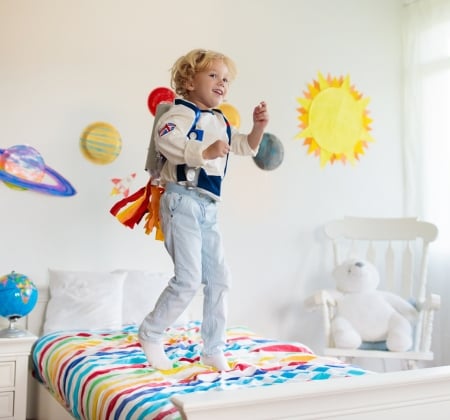
After 3 years old, the field of possibilities becomes even wider for imitating parents, but also their heroes for example. Children here invent a whole scenario and imagine themselves in the shoes of a merchant, a doctor, a teacher, a firefighter, a veterinarian, etc. There are a multitude of toys, but also costumes that allow the little ones to experience real adventures.

Petit garçon joue à l'astronaute

What are the benefits of pretend play?

If the vast majority of children engage in pretend play, it's a very good thing, as it contributes to their development. From a very young age, this type of activity allows learning to develop fine motor skills by manipulating different objects. Furthermore, the child then develops symbolic function and cognitive development with this type of activity.

As parents, you can support your child in these activities by providing them with ways to make what they imagine even more fun and concrete. Be attentive to your child by offering them ways to take on their favourite roles. You can also offer them ways to create new adventures. Be sure to avoid reproducing gendered patterns to respond to your child's true desires. Dolls are not reserved for little girls and DIY for little boys.

Promoting child development with Montessori furniture

Pretend play offers a real opportunity to develop certain abilities, imagination and autonomy. This is also the case with Montessori furniture which also aims to promote child development.

The Montessori furniture is based on the educational principle devised by Maria Montessori (the Montessori method). This approach offers the child true freedom of learning (more information on the subject here). To promote the integration of this method into daily life, the use of Montessori furniture or even several pieces depending on the needs is recommended. There is indeed equipment designed for the implementation of this method.

The Montessori tower

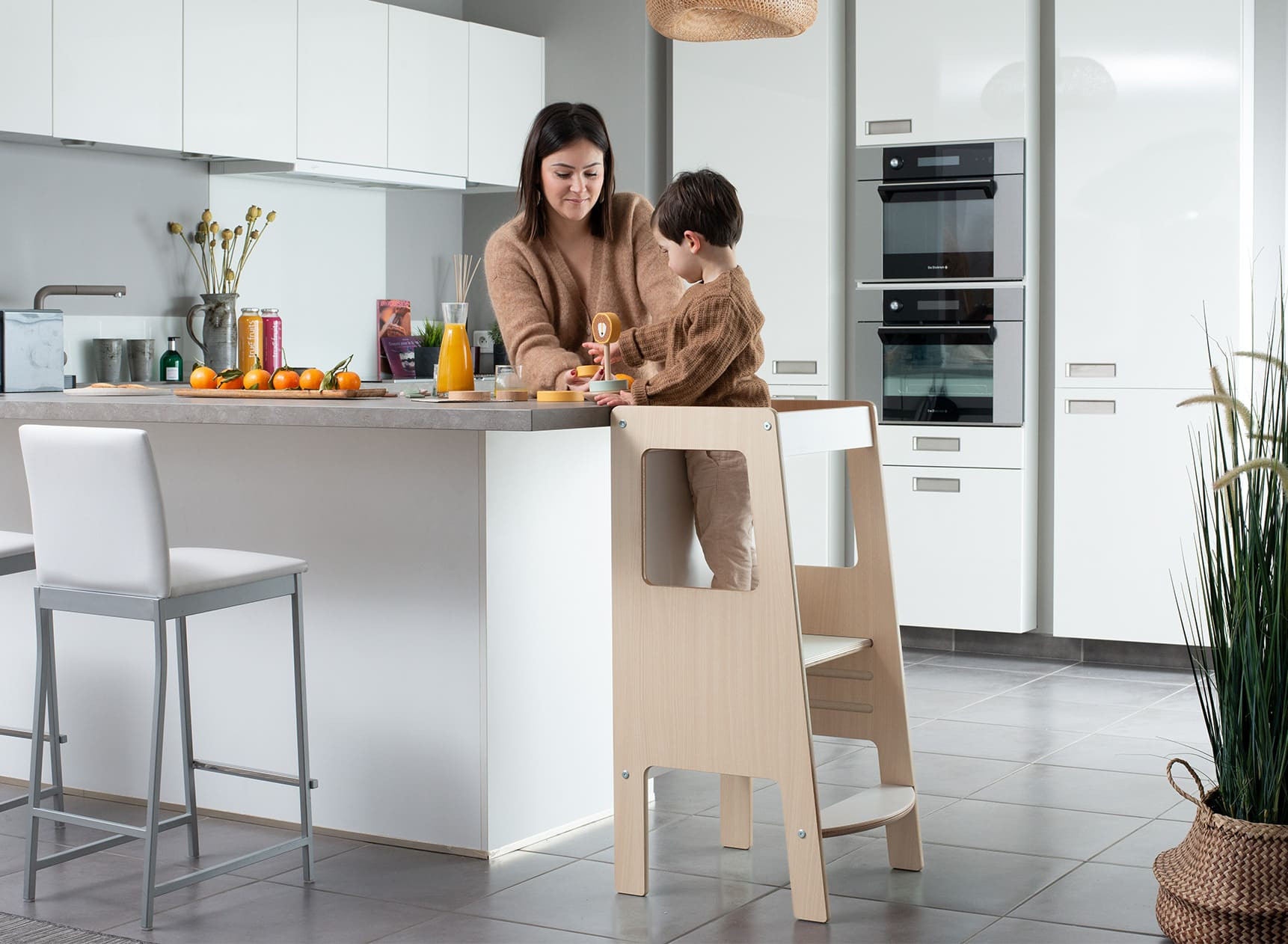
The Montessori tower or baby observation tower is an essential piece of Montessori furniture. It is a secure step stool with guardrails designed to allow the youngest to reach the height of a worktop, table, sink, etc. The Montessori observation tower thus gives the little ones the opportunity to observe what parents are doing, but also to participate in their activity. It offers the possibility to share fun moments and further encourages pretend play afterwards for everyday activities (cooking, brushing teeth, combing hair, doing the dishes, etc.).

The Montessori house bed

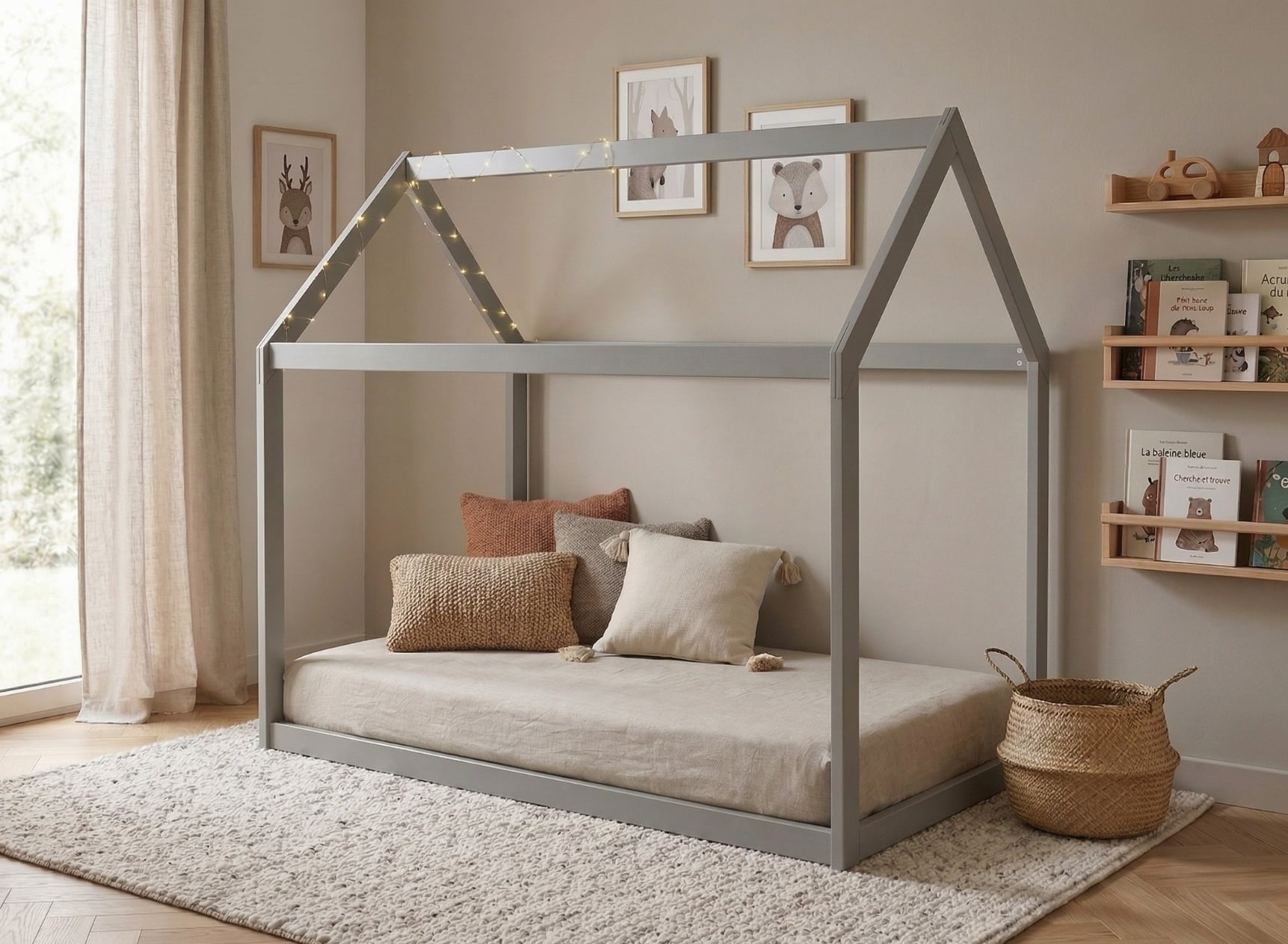
The Montessori house bed is a piece of Montessori furniture that is now well known to parents. It presents itself as a children's bed with a nice house-like structure to make the whole even more pleasant and fun. Its particularity also lies in the fact that this Montessori furniture is very close to the ground. It thus allows even the smallest to get up and go to bed completely independently to make them responsible for managing their sleep.

That being said, you can also opt for a children's bed with storage (like our MANLY trundle bed for example) or an evolving children's bed and apply the principles of the Montessori method as well.

Other Montessori furniture and equipment

We can mention many other Montessori furniture and equipment such as:

  • An autonomous bookcase that allows the youngest to choose and store their books as they wish
  • A small desk with a chair for drawing while being comfortably seated
  • A Montessori mirror with a support bar so that even the smallest can pull themselves up and discover their reflection
  • A Montessori hand-washing station equipped with a small water reservoir for washing hands and face independently

There are therefore a multitude of elements that will complement the toys intended for pretend play to help your child develop at all levels.