Baby and pets: what you need to know

- Categories : Tips

Nateo CONCEPT

Babies and pets: our advice

When welcoming a baby into a family, there may already be one or more four-legged companions occupying the space. Therefore, it's important to anticipate and organize to ensure baby's perfect safety. This may require some adjustments and changes in habits, which is why thinking about it in advance is often preferable.

Animals and hygiene: is there a risk?

Around very young children, the presence of animals can indeed present hygiene concerns. Dogs and cats can carry ticks, parasitic diseases can be transmitted through their droppings, and there's obviously the issue of fleas. Therefore, it's important that children stay away from the animal's food bowl and litter box, and that excrement is picked up in the garden.

It's also crucial that your pet is treated for fleas and other parasites.

What about allergies?

Children with an atopic predisposition can indeed suffer from pet hair allergies. Therefore, it is recommended to avoid any contact between the child and the animal to avoid risks. The home interior should also be cleaned very regularly.

For children who don't particularly present allergy risks, some studies have shown that the presence of animals could even strengthen the immune system and reduce the risk of allergies.

My pet wants to share my child's bed, what should I do?

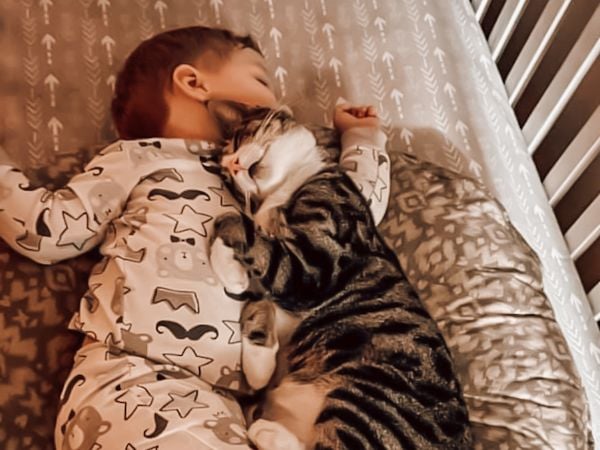
If your cat is squatting in the baby's crib or your dog wants to settle in the bed, this type of behavior must not be tolerated at all. Even the gentlest animal can cause a bite or scratch to your child, whether intentionally or not. Moreover, cats in cribs are responsible for many incidents causing suffocation.

Regardless of the context, an animal should not share a child's bed. The best solution is to prevent the animal from accessing the room by closing the door to avoid any risk. This change is sometimes difficult for animals who were used to sharing their owners' bed to accept, but it's an essential condition for baby's safety. Be very firm on this point.

How to properly prepare the baby's room

If your cat or dog is used to roaming freely around the house, preparing the room can be a good way to indicate that this space is no longer accessible to them. As soon as possible, start limiting your animals' access by simply closing the door. If they complain at first, they'll quickly get used to it.

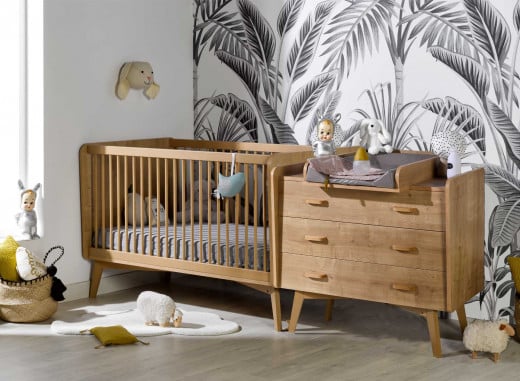
You can take this opportunity to furnish your child's room. For example, choose a beautiful wooden baby room with different matching furniture. Take time to set up your baby room before birth to avoid rushing. The complete baby room should therefore be kept free from animals. Especially since cats tend to take the moses baskets, changing mats, and other cozy elements of the baby's room as ideal napping spots.

If you're unsure whether you want a boy's nursery or a girl's nursery, there is completely neutral furniture available such as our WOOD baby room. By choosing made in France and solid wood, you opt for solid and robust furniture for your wooden baby room.

By keeping the baby's room free from animals, you avoid many risks and maintain the cleanliness of the room.

How can I promote harmony between my pet and my baby?

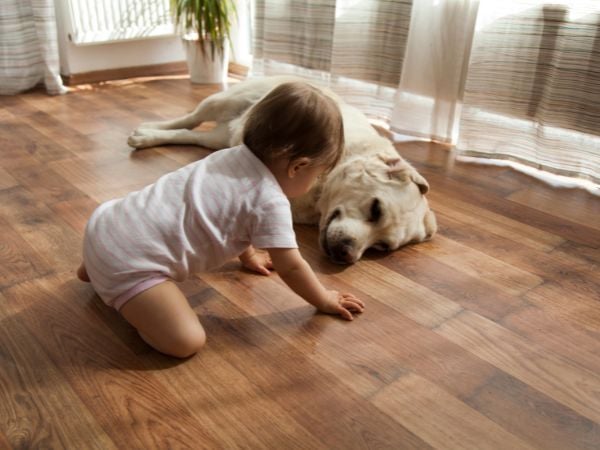
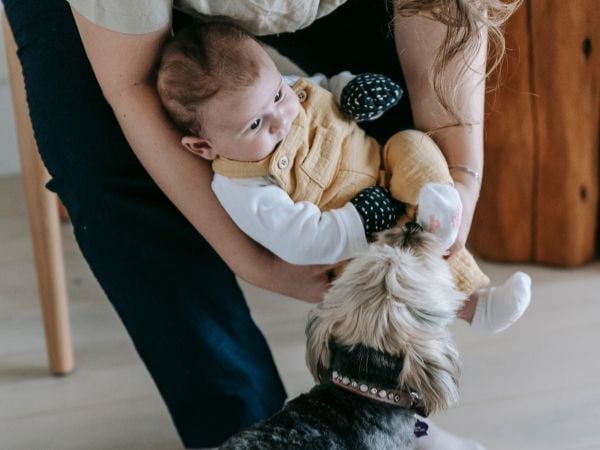
Just as you had to tame your pet, your child will also need to build a relationship with them, and this will happen gradually. Some animals are very sensitive and can, from pregnancy, understand that something is happening in their owner's belly. When baby arrives home, take time to introduce them to your pet in a calm and reassuring environment.

The arrival of a child who changes the household rhythm, habits, and who can also be very noisy can sometimes be difficult for an animal to handle. So be patient while they get used to it. Try to encourage positive interactions between your baby and your pet. However, if the relationship is tense, it's better to limit interactions for now.

As baby grows, teach them how to behave properly with an animal. Not to be rough, respect when an animal refuses to play, not to startle them, etc. Always be extremely careful and present when your baby and your pet interact. This way, they can learn to know each other and build a real relationship.

Which animals should be avoided?

Generally speaking, dogs and cats are excellent companions for children. When trained, they are less unpredictable and are used to human presence and contact. However, what we call exotic pets may be less suitable. Rabbits, snakes, ferrets, and others are indeed smaller and more fragile. They require more precautions and care, which may be less appropriate when there's a baby in the house.

If an animal already shares your life, you know it and will therefore have no trouble helping it acclimate to baby's presence. However, avoid any adoption at the same time as baby's arrival. An animal needs to be educated and requires time - take care of only one baby at a time.