Eco-designed furniture: Towards a healthy living space with certified wooden furniture

- Categories : Tips

Nateo CONCEPT

Eco-designed furniture: a healthy habitat with wooden furniture

Many families are trying to make their homes healthier by opting for more natural products and making more eco-responsible choices. When buying furniture, it is entirely possible to apply this philosophy by particularly favouring certified wood. So how does choosing eco-designed furniture make a difference and, most importantly, how do you go about it?

Why choose eco-designed furniture?

When we talk about eco-designed furniture, we are referring to furniture that has been designed to have the least possible impact on the environment. This generally involves the choice of materials used, the choice of manufacturing techniques, or even their location. The goal? To ensure that the impact on the planet is as minimal as possible, from the extraction of raw materials to the end of the furniture's life.

Consequently, people who want to make more eco-responsible choices will naturally tend to turn towards eco-designed furniture rather than classic furniture, which often proves to be more polluting. The good news is that more and more brands are being transparent about the origin of chosen materials and manufacturing processes, which allows for conscious decision-making.

Why is wood preferable for furniture manufacturing?

In terms of furniture, wood is the most preferred material. And for good reason, it is a renewable material that offers very wide possibilities in terms of creation. Moreover, wood is known to be sturdy and particularly durable over time. It is therefore the most suitable material for furniture making.

How to ensure you choose certified wood?

Today, more than just classic wooden furniture, it is possible to opt for certified wood furniture. This means that the wood used for the furniture design has specific and appreciable characteristics from an ecological point of view. Most often, you will see the presence of the FSC or PEFC label. This label ensures that the wood used for making the furniture is sourced from sustainably managed forests.

You can find this label on wooden furniture, but also on wooden toys, cardboard packaging, sheets of paper, etc.

HOYA, our solid wood children's bedroom

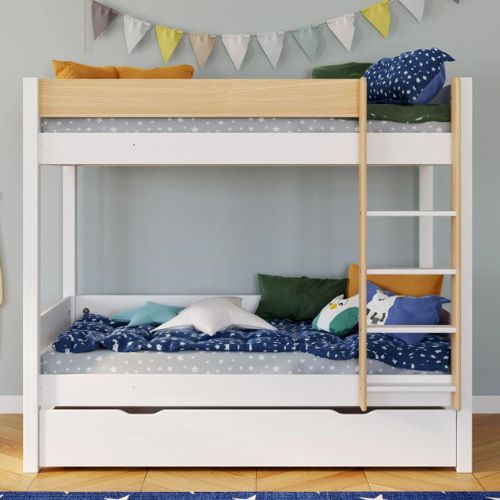
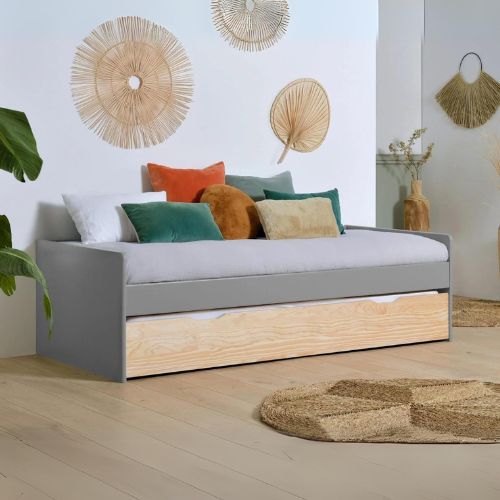
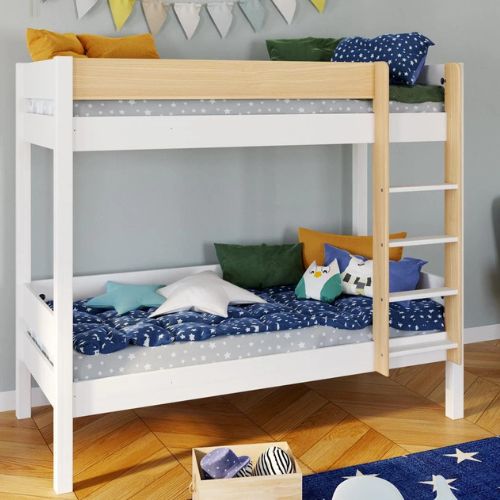
It is now very easy to find children's furniture made of certified solid wood. This is the case, for example, with the furniture in our HOYA collection, which are all made of solid pine. In this collection, you will find several pieces such as:

  • The 3-person bunk bed HOYA in solid wood: This bunk bed appears as a classic 90x190 cm bunk bed, but it actually contains a third sleeping space. If you're looking for a children's bunk bed and/or a wooden bunk bed with 3 sleeping spaces, the 3-person bunk bed is what you need.
  • The trundle daybed: Like the 3-person bunk bed, it also has a second sleeping space hidden in a drawer under the bed base.
  • The solid pine bunk bed: This is a 90x190 bunk bed perfect for a room shared by two children.
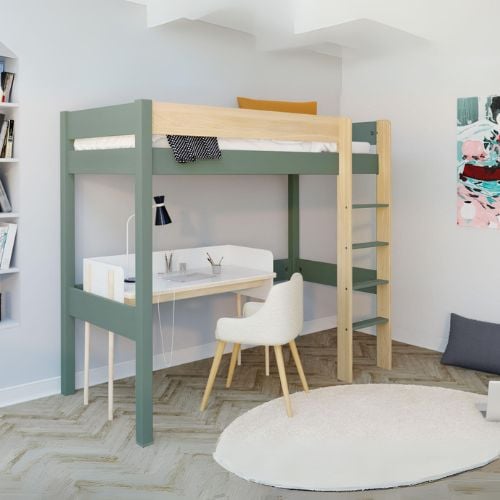
  • The loft bed: It will allow you to save space and perhaps install a small desk just underneath.
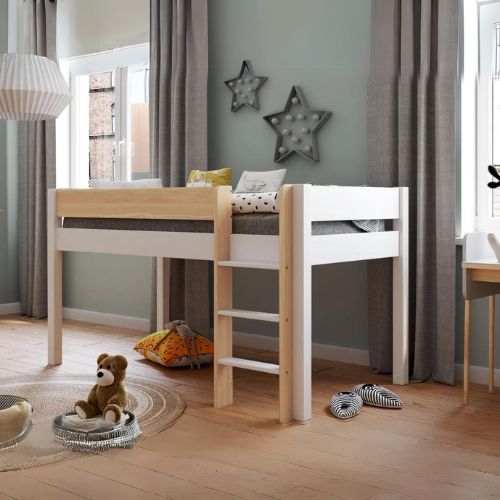
  • The mid-height bed: An ideal bed for younger children who want to sleep at a height and create a secret den under the bed base.

What is the best wood for making furniture?

There are several types of wood that are used today to manufacture furniture. These include:

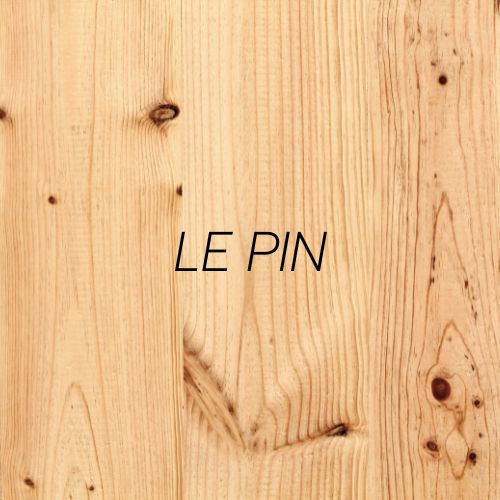
Predominantly used for furniture manufacturing, it is flexible, lightweight, and sturdy. Inexpensive, it allows all budgets to afford solid wood furniture.

Also very commonly used in furniture making. Like pine, it has several species, which offers a wide range of possibilities.

Beech is a beautiful light and sturdy wood that is also widely used in decoration and furnishing.

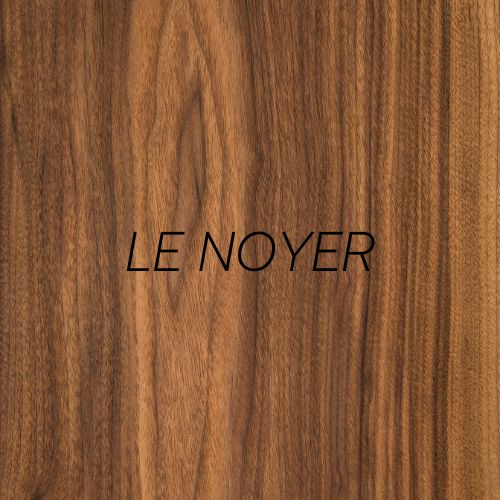
Its characteristic reddish-brown colour gives it a very particular appearance, which is part of its charm.

Of course, there are many other types of wood such as oak, olive, cherry, mahogany, teak, etc. Each offers many advantages and its own characteristics, but they are becoming increasingly rare on the market.

What are the other criteria to consider when choosing eco-responsible furniture?

Beyond opting for certified solid wood, there are other criteria you can take into account to favour the use of eco-responsible furniture, such as:

  • Made in France manufacturing: This way, you avoid polluting journeys and favour short-circuit production, which is often of high quality.
  • The use of ecological panels: They sometimes complement the use of solid wood and therefore need to be ecological and low in formaldehyde to limit their impact on the environment and well-being.
  • The use of solvent-free paints and varnishes: Here too, the aim is to favour the simplest possible formulas (with water-based paint, for example) that also limit the presence of volatile organic compounds. The choice of materials in a child's room is crucial for their well-being.

Whenever possible, choose a French brand with genuine ecological commitments to complete your approach and choose eco-designed furniture.

Discover our healthy furniture