What criteria should be considered when buying sustainable baby furniture?
Nateo CONCEPT
Choose sustainable wooden furniture for baby!
Preparing for a baby's arrival often means buying numerous items that will only be used for a few months, or even weeks. For the most eco-conscious parents, it's difficult to accept consuming so much in such a short time. Fortunately, there are ways to furnish baby's room in a more sustainable and eco-responsible way.
Why choose sustainable baby furniture?
Today, the market offer for children's furniture is such that it's entirely possible to opt for sustainable furniture. This helps limit environmental impact, but also leads to real savings.
More eco-responsible furniture
Having a baby nowadays is far from being considered eco-responsible. From the first days of their lives, these little beings need a lot of things, which requires increased consumption for the family. The good news is that you can also experience the arrival of a baby in a more eco-responsible way. We're not talking about washable nappies here, let's focus instead on furniture.
Indeed, there is baby furniture designed in a more eco-responsible way to respect parents' values and the environment of course. No more expensive than "classic" furniture, it now offers a wide range of possibilities to meet the different expectations and tastes of each family.
More economical furniture
Baby furniture considered more sustainable is also more economical. Indeed, this type of furniture can either find a second life with another child, or evolve to adapt to needs. This is particularly the case with the convertible baby bed. Parents thus limit expenses and preserve the family's budget.
What criteria for choosing sustainable baby furniture?
To ensure you choose sustainable baby furniture, there are several criteria to consider when making your purchase.
1️⃣ Opt for solid wood
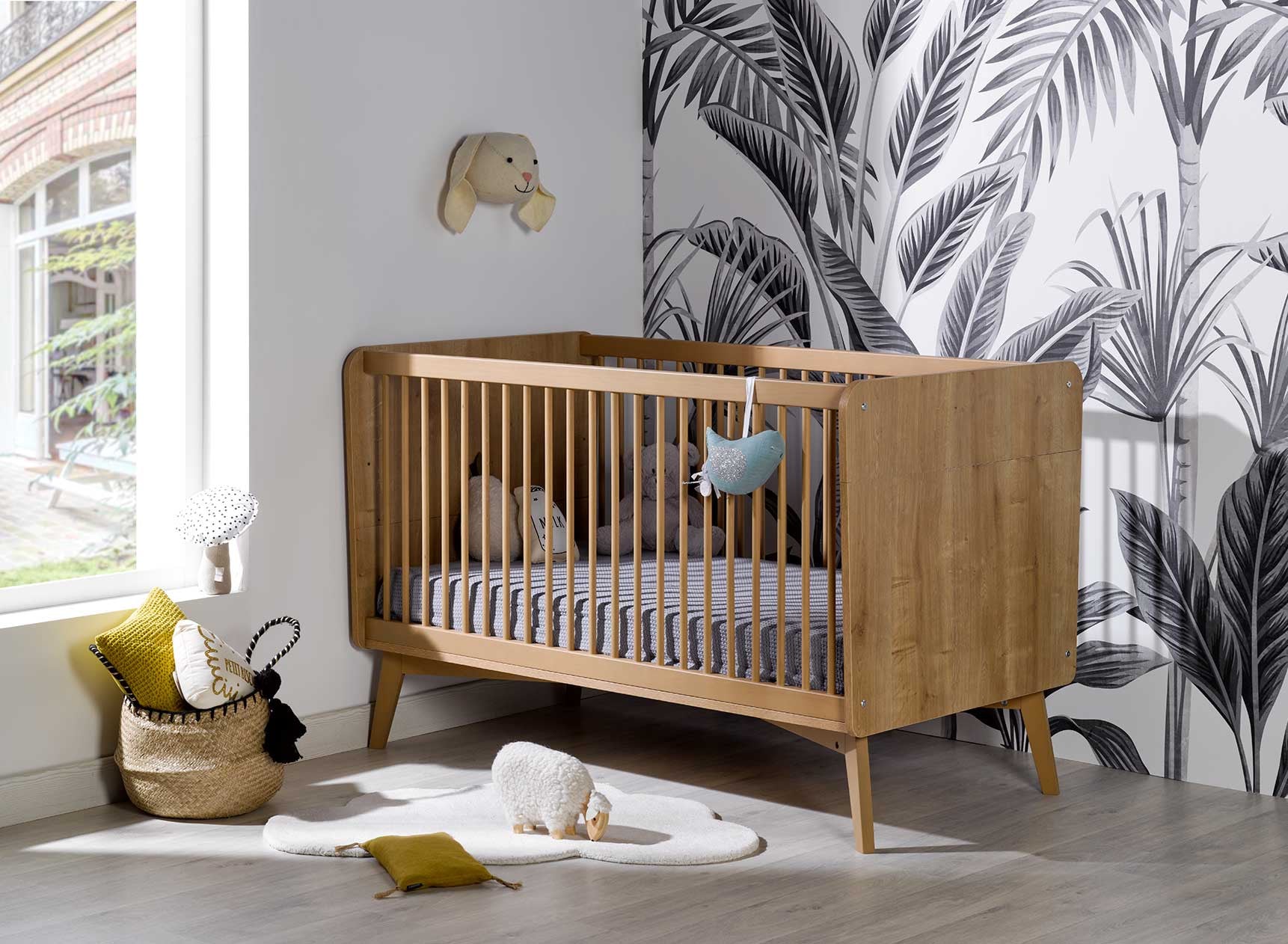
Solid wood is a safe choice that allows furniture to stand the test of time without difficulty. If you plan to use a convertible baby bed, a chest of drawers or other furniture for a long time, or even pass this furniture on to future children, we recommend choosing solid wood.
💡 However, it's better to opt for solid wood furniture designed sustainably. For this, you can choose furniture made from PEFC or FSC certified wood. These labels ensure that the wood used in making the furniture comes from sustainably managed forests.
2️⃣ Other more eco-responsible materials
Beyond solid wood, there are other materials that are considered more eco-responsible and more sustainable. This is particularly the case with ecological panels with low formaldehyde content, as well as water-based paint and varnish, meaning solvent-free. More eco-responsible, these materials are also more suitable for baby's well-being. They help avoid the presence of volatile organic compounds.
3️⃣ Favor local craftsmanship
We now know that choosing local is also more eco-responsible. Whenever possible, try to favor furniture made in France or at least made in Europe. The offer in this area is now very wide and prices just as affordable as furniture manufactured on the other side of the world.
4️⃣ Choose furniture that lasts over time
To be sustainable, furniture must be sturdy, but also useful through the years. The best example of this is the convertible baby bed.
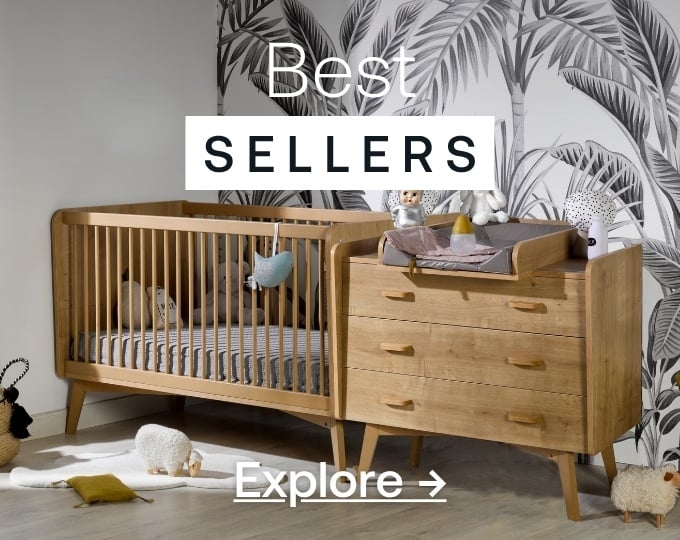
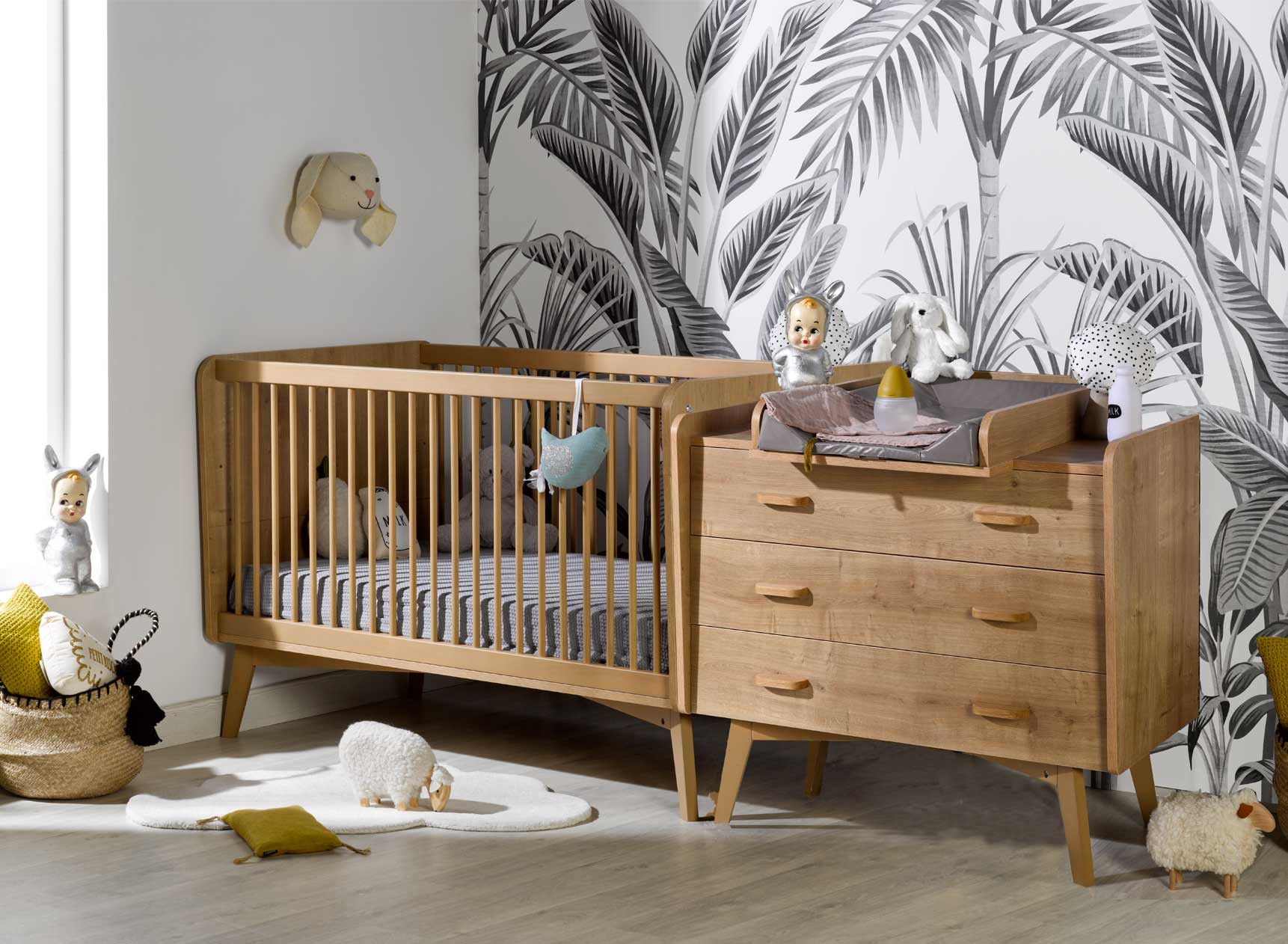
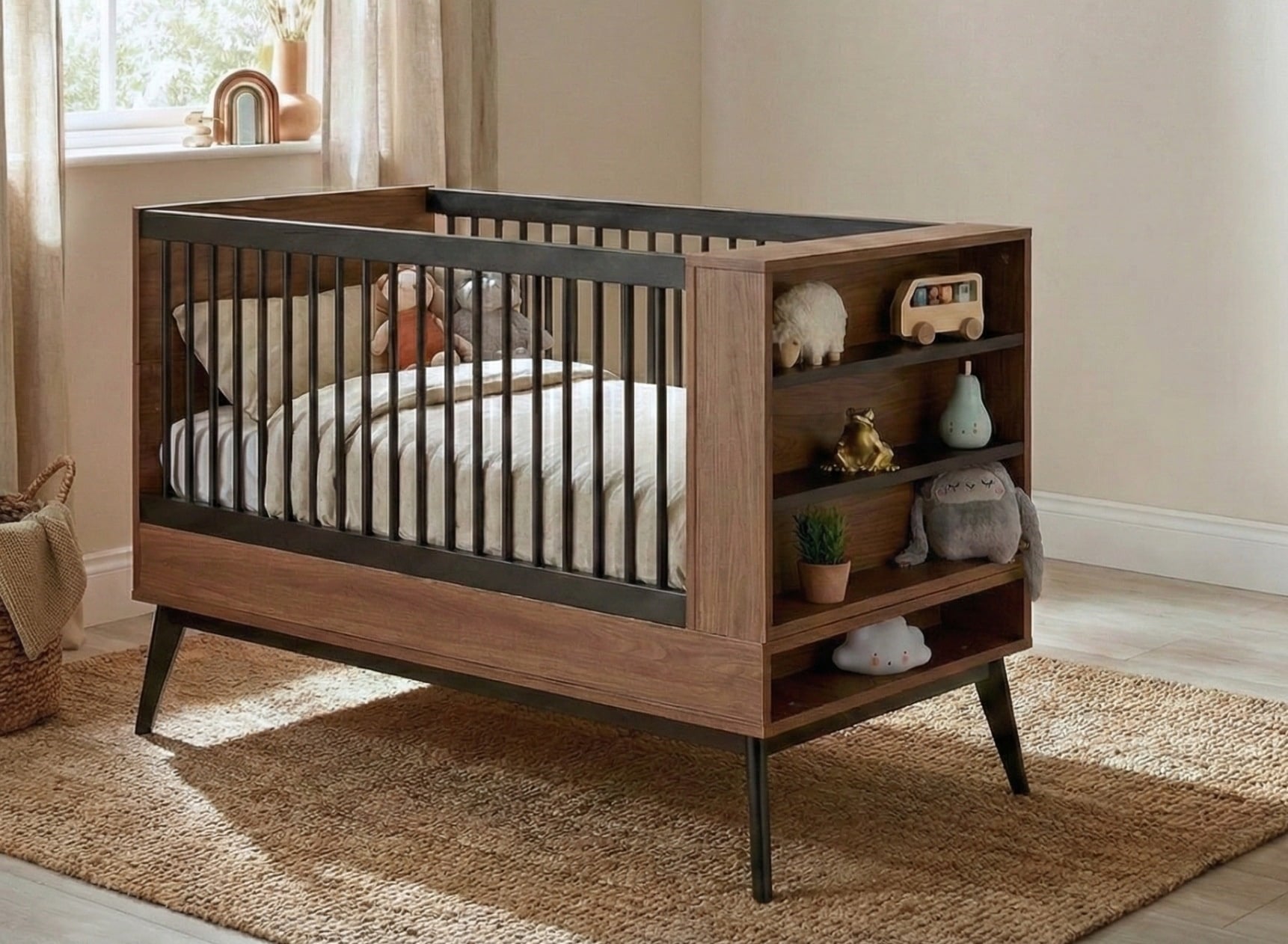
The convertible baby bed is a baby bed that can transform into a child's bed. From 6 months of age, baby can use this wooden baby cot with bars. When they're ready to move to a big bed, the wooden baby bed will undergo some transformations following the assembly instructions, and become a child's bed that can be used until around age 6.
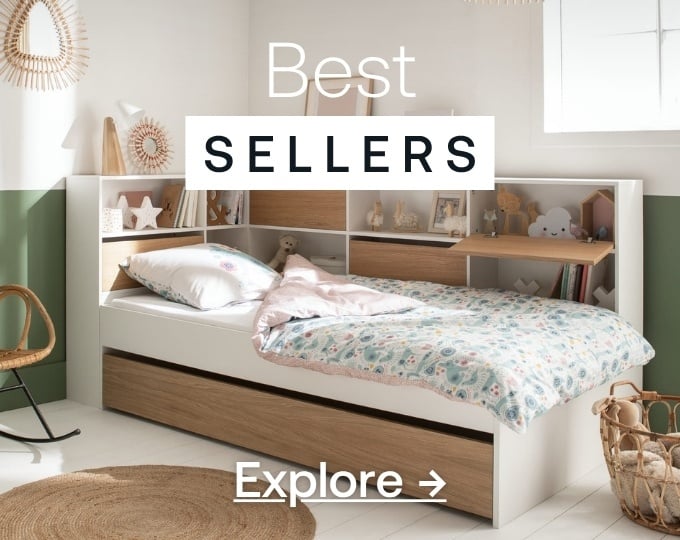
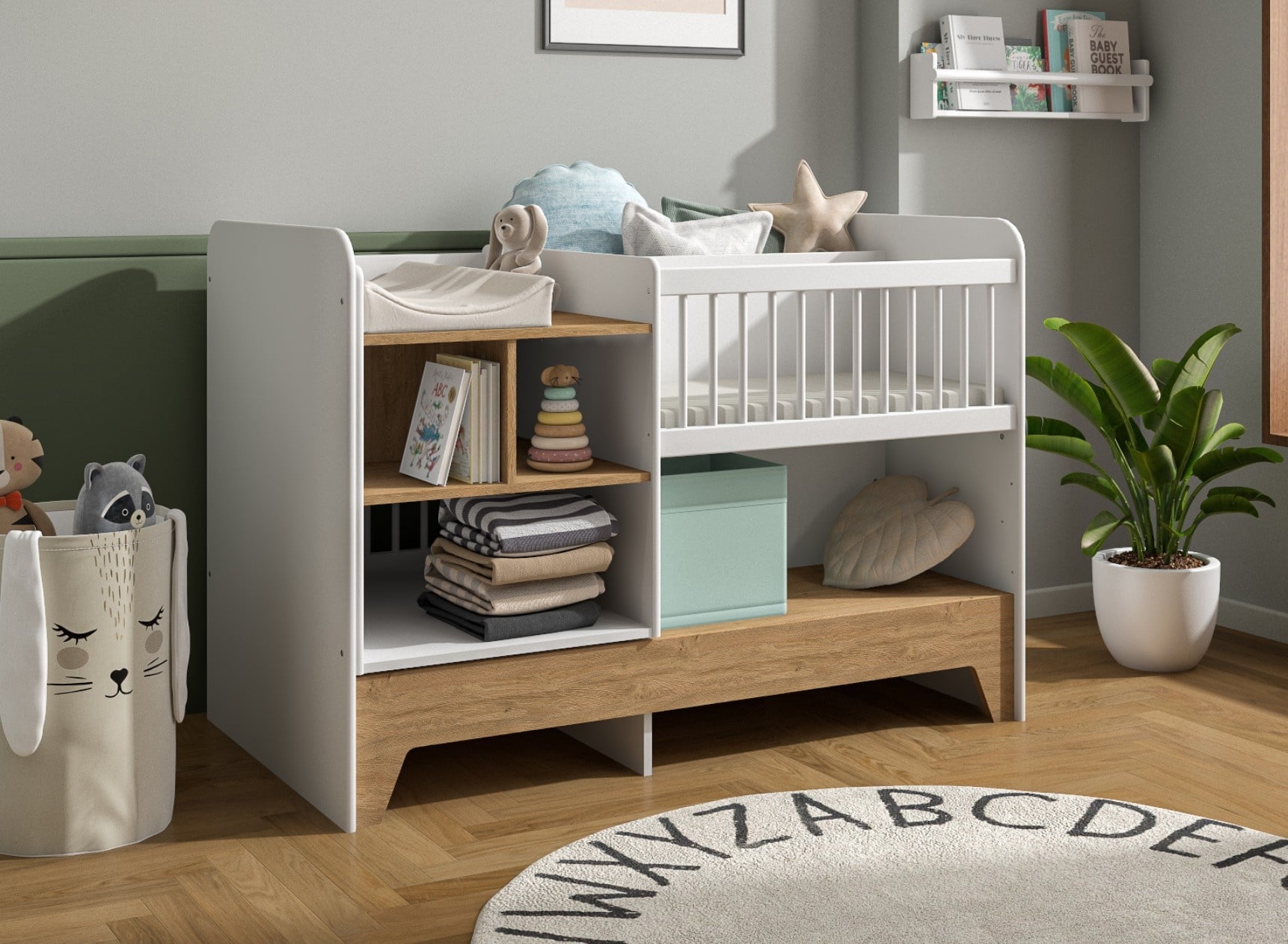
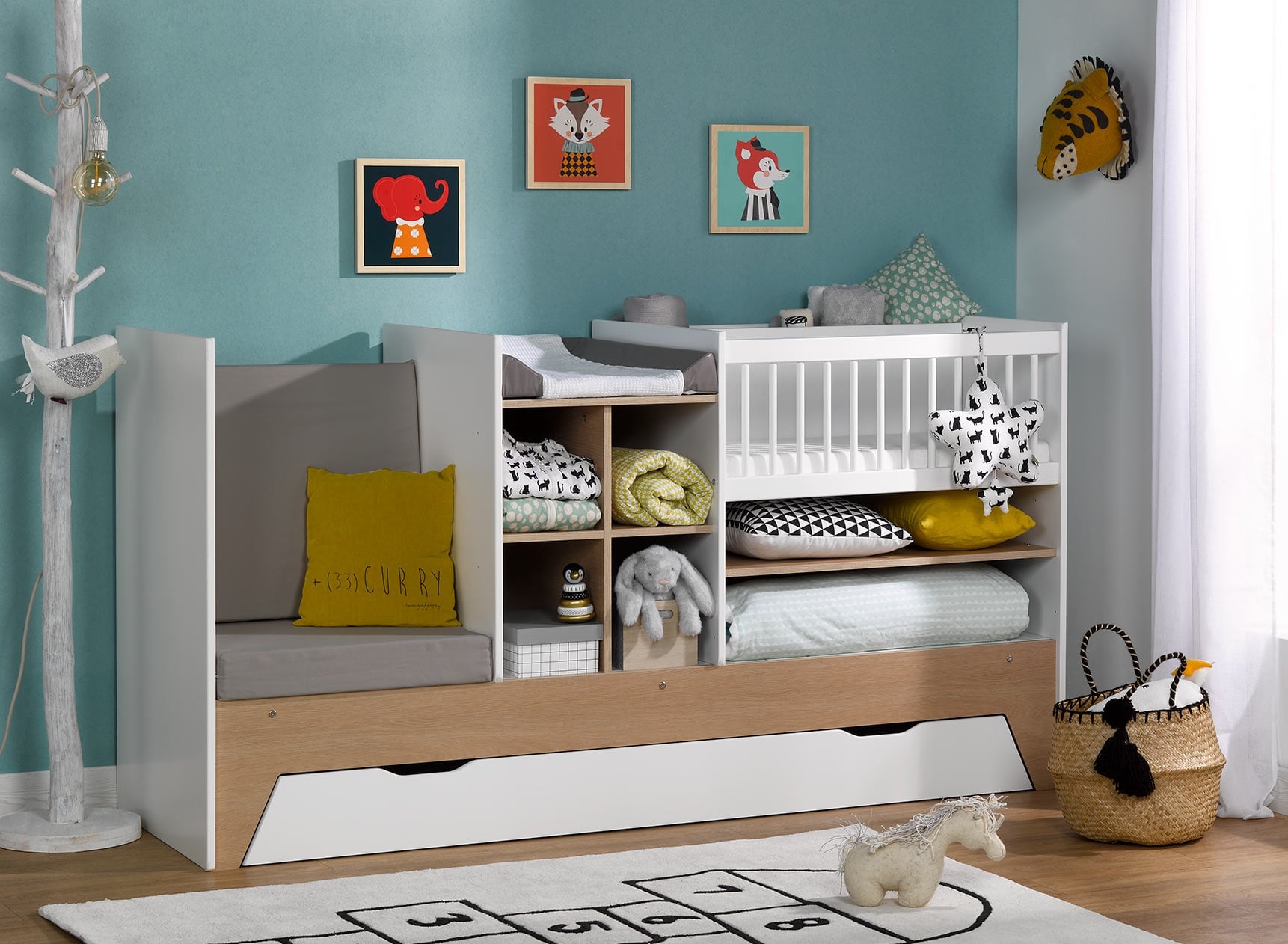
💡 Moreover, the convertible baby bed can also be a combination baby bed and include storage elements. This is particularly the case with our ANTON combination baby bed. There are therefore real advantages to choosing sustainable and evolving furniture in baby's room.
What other elements for a sustainable baby room?
Beyond a convertible baby bed, there are other examples of furniture you can choose to create a sustainable baby room.
The changing dresser
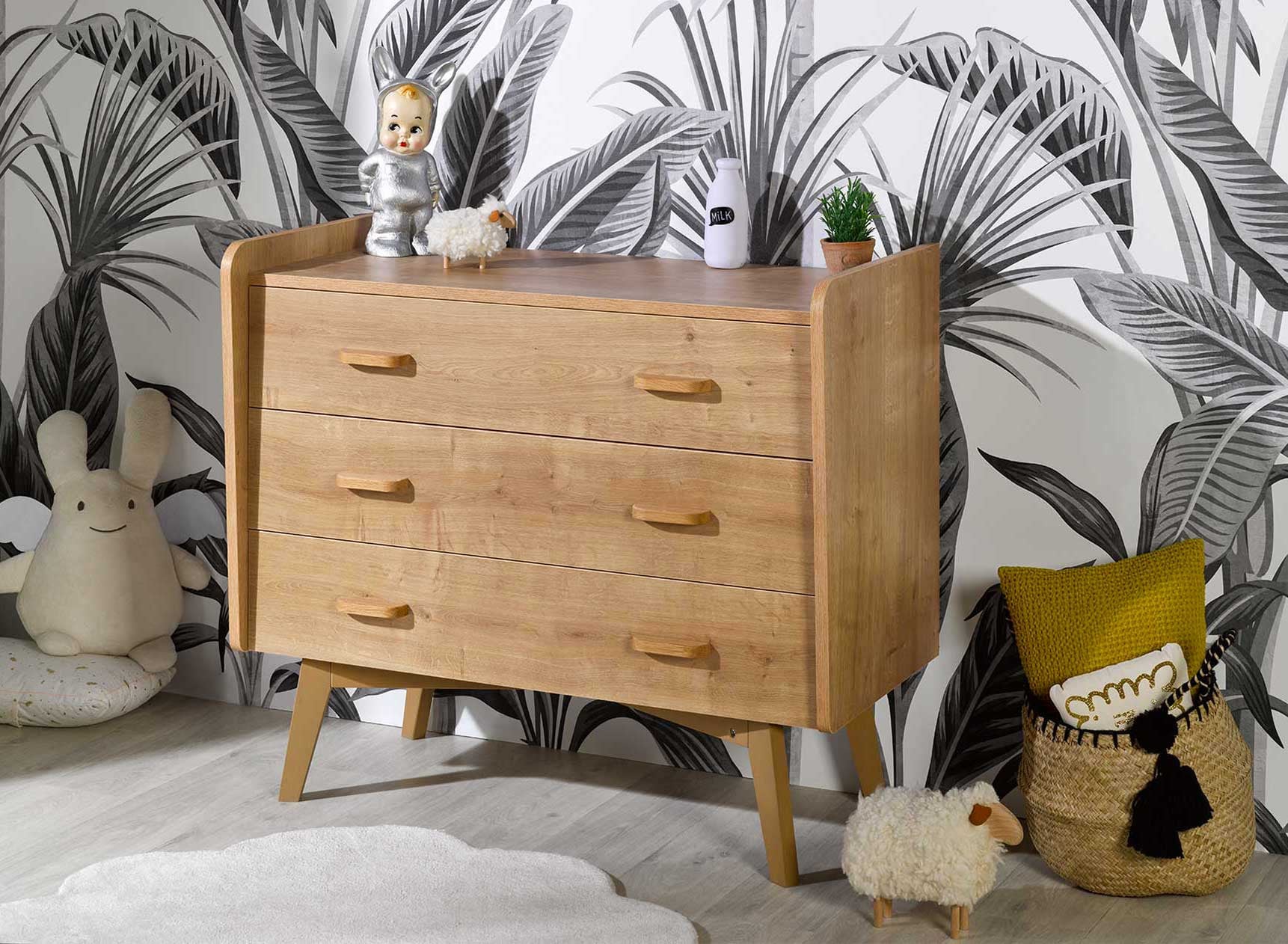
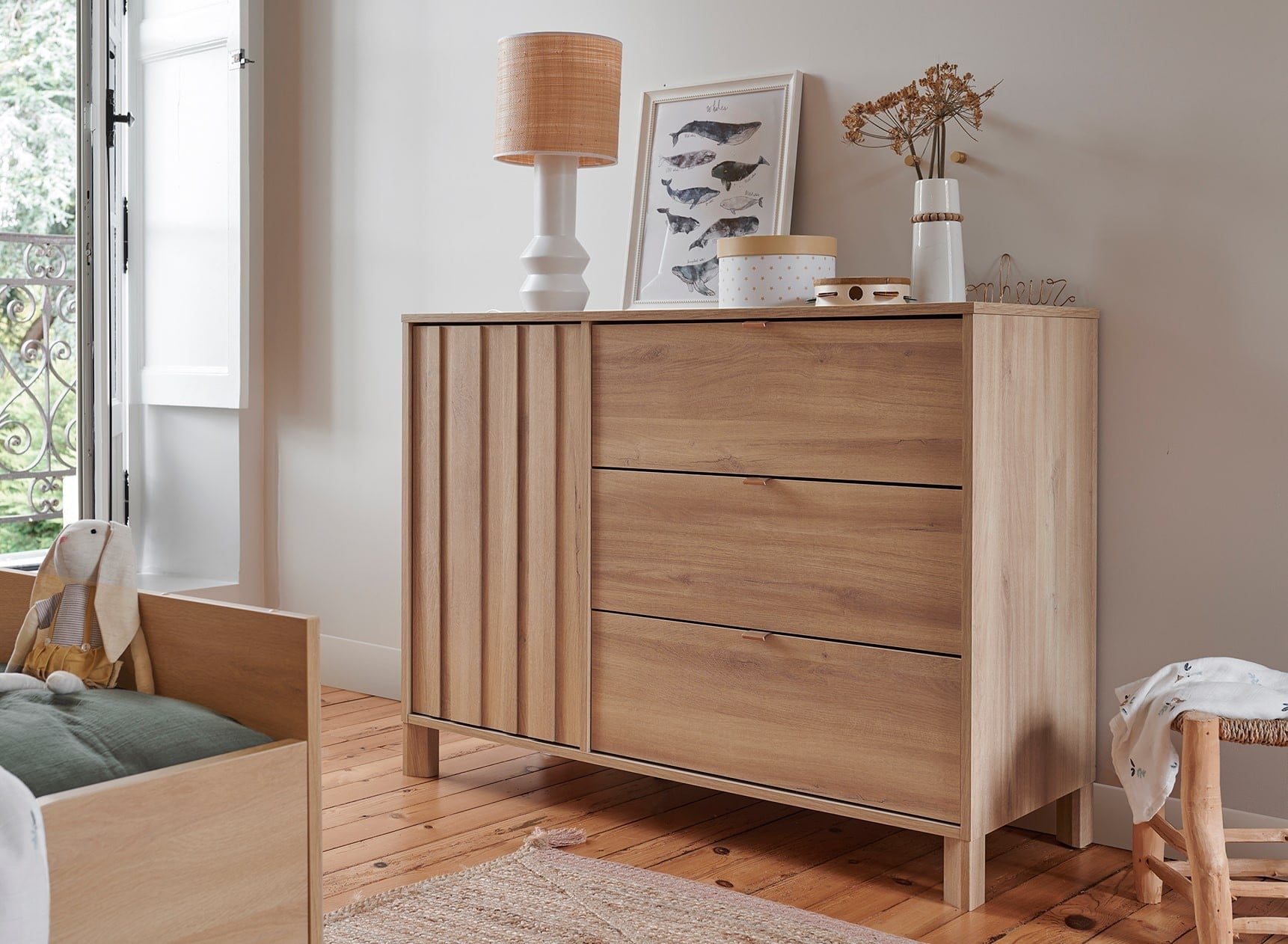
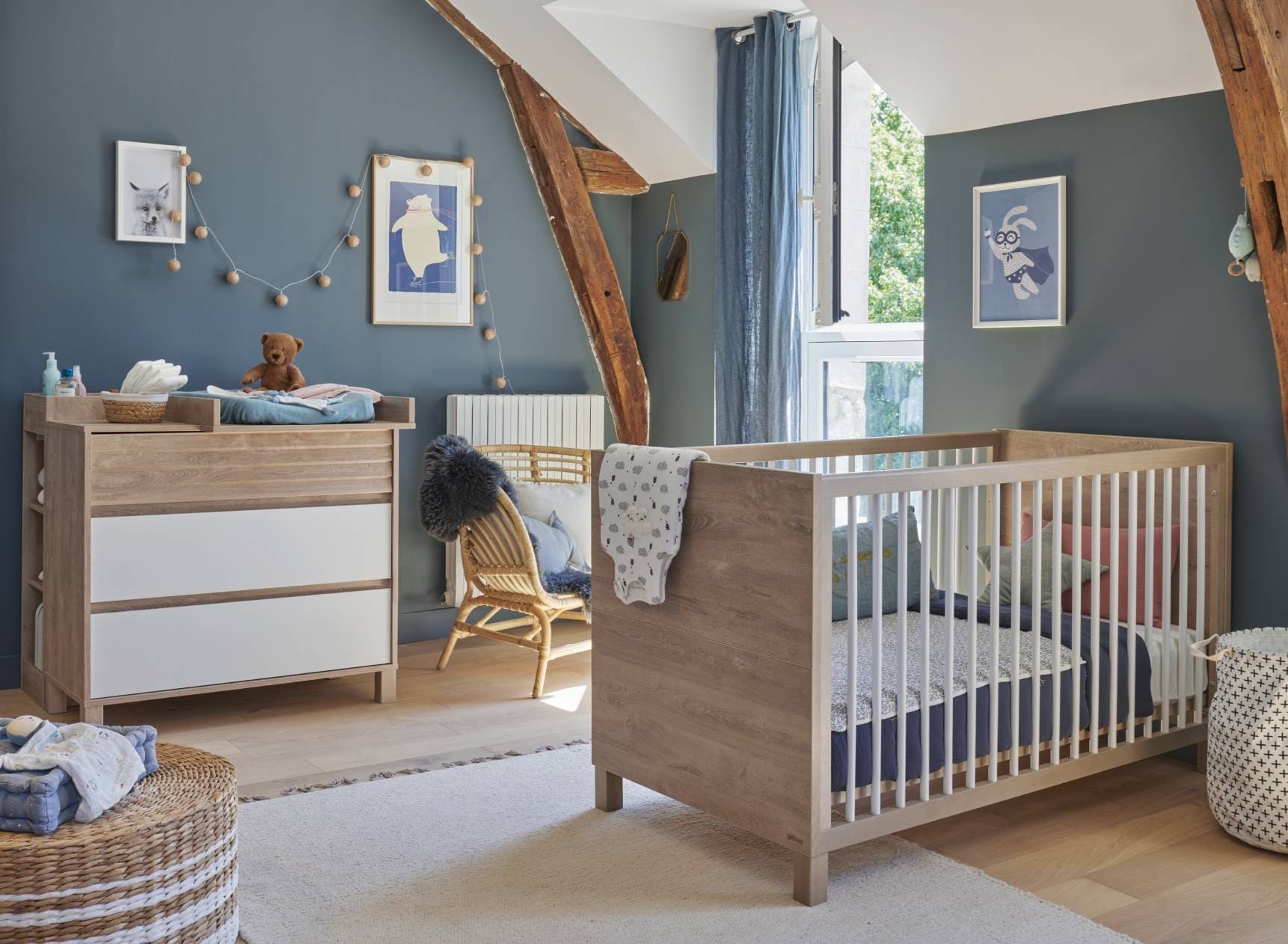
The changing dresser is also an excellent example of sustainable baby furniture. It comes as a classic dresser that can be equipped with a removable changing top. This provides a changing table with large storage drawers. Besides saving space, it eliminates the need to buy a changing table. When baby is "potty trained", the changing top can be removed and the dresser continues to be used as is.
Second-hand
Second-hand is also a very good way to create a more sustainable baby room. There is no shortage of used furniture, whether on classified ads sites, flea markets, or garage sales. You can opt for a second-hand wardrobe, chest of drawers, or toy chest for example. Just make sure everything is in good condition.
Montessori furniture
Finally, Montessori furniture is also known to evolve according to the child's needs. An item will therefore find multiple uses such as the Montessori learning arch or the observation tower. Make sure to research the different uses of this type of furniture to choose one that will last through the years.
Sage green and wood bedroom: how to create a natural and soothing space
Children's bed size: the complete guide for healthy and safe sleep
How to decorate your bedroom with healthy materials?