Mattress and back pain: How to choose the best mattress for your nights?
Nateo CONCEPT
Complete guide: how to choose the ideal mattress?
Could your mattress be causing your restless nights and back pain? It's often the case! This guide reveals how to choose bedding adapted to your body type. Between natural latex, pocket springs and memory foam, each technology presents its advantages for relieving your tension. Did you know that sleep quality directly influences your daily vitality? Decoding essential criteria for ideal bedding - firmness, support, thermoregulation. What if tomorrow your nights became synonymous with restorative sleep?
Key criteria for a suitable mattress
Materials that support your back
The choice of materials directly shapes the effectiveness of a mattress against back pain. Between natural latex, pocket springs and memory foam, each technology brings its strengths. Latex offers dynamic support ideal for the lumbar area, while independent springs follow movements without disturbing sleep. Memory foam, on the other hand, reduces pressure points thanks to its precise body adaptation.
Let's look at the advantages of different options together, to help you find the model that matches your needs and budget.
- Memory foam: It literally molds to your curves, particularly relieving sensitive areas like the lower back. Its secret? High density that maintains firm support throughout the night.
- Latex: Comfortable and breathable, this natural material offers ideal progressive resistance. Perfect for those who alternate between side and back positions.
- Pocket springs: A hybrid technology that combines reactivity and sleeping independence. Each spring works separately to reduce movement transfer while maintaining good lumbar support.
- High-resilience foam (HR): With its density varying from 30 to 60 kg/m³, this durable foam maintains its shape year after year. A wise choice if you prioritize longevity at an accessible price.
- Hybrid: The best of both worlds! These models usually combine springs and memory foam for enhanced lateral support. An increasingly popular option for its adaptability.
In essence, the key lies in the harmony between your physical characteristics and the mattress features. Don't hesitate to test several models in store before making your final choice.
Which firmness for your body?
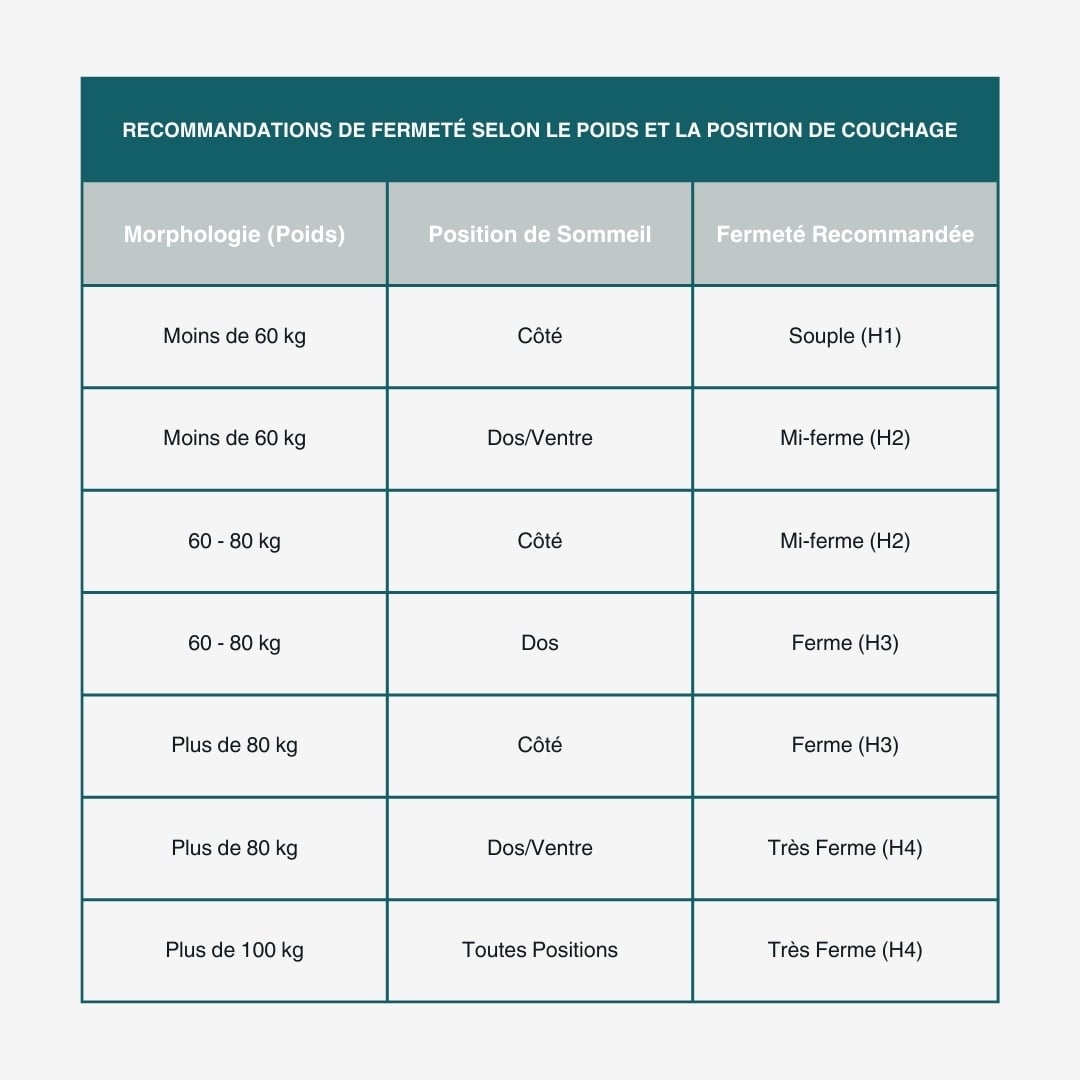
The ideal firmness closely depends on your weight and sleeping habits. Note that a too soft mattress will sag in the lumbar areas for heavier people, while excessive firmness will create unwanted pressure points. The tip? Opt for sufficient thickness (minimum 20 cm) and density proportional to your body type.
This comparative table guides you according to your profile:
A tip: always pair your mattress with a suitable double bed. A good base reinforces support and preserves material lifespan, regardless of your bedding's initial price.
Recognizing a mattress unsuitable for your back
Revealing signs of incompatibility
Back pain upon waking sometimes betrays an unsuitable mattress. Persistent stiffness constitutes a warning sign. Indeed, a bed that doesn't properly support the spine often explains these discomforts.
It's important to quickly recognize these symptoms, as your bed base and mattress directly influence your daily well-being. Let's look at concrete indicators:
- Morning discomfort: Do you feel tingling in the lumbar areas? This often suggests inadequate support during the night. A mattress of good thickness would prevent these tensions.
- Night restlessness: More than twenty minutes to fall asleep? This difficulty sometimes reveals a sleeping technology inappropriate for your body type. Hybrid products often combine softness and firmness.
- Visible deformation: Observe your bed. A sagging in support areas compromises comfort. Some spring models lose their hold over the years.
- Hygiene issues: Despite regular maintenance, odors persist? This situation affects the air quality around your bedding. Natural materials like latex limit this risk.
- Sinking sensation: Does your body sink too deeply? This indicates a loss of foam density. Recent offers provide solutions better adapted to different weights.
If several of these elements concern you, consider seriously evaluating your equipment. A defective bed base can also influence the purchase price of a new mattress - take this into account in your project.
Practical methods to evaluate your mattress
A simple check allows you to assess the actual condition of your bed. Lie on your back and try to slide your hand under your lower back. A gap indicates insufficient support. A good mattress naturally follows your curves without creating excessive pressure points.
Also test sleeping independence with your partner. Memory foam models or those combining springs and latex usually offer a good compromise. Don't hesitate to compare reviews on hybrid technologies before considering a change, especially if your price budget is tight.
Medical selection criteria
Healthcare professionals' recommendations
Rheumatologists emphasize three key points for a back-friendly mattress. Choose a model that supports the spine without excessive rigidity, especially if you alternate between side and back positions. Memory foam mattresses prove interesting for distributing pressure in the lumbar area, but check their minimum thickness.
Vertebral ergonomics principles
Contrary to popular belief, mattress firmness alone doesn't guarantee good alignment. The goal? Follow the body's natural curves while limiting excessive sinking. Differentiated support zones, particularly at the cervical level, significantly reduce morning tension. In practice, test several technologies: hybrid foam often combines breathability and support. Don't hesitate to consult medical reviews comparing materials.
Optimization and lifespan
Rotation and protection techniques
To preserve the ergonomic properties of your mattress and optimize its price in the long term, a few simple gestures make the difference. But beware - not all models are equal! A bed base adapted to the mattress thickness, combined with rotation every 6 to 12 months, helps balance wear. Hybrid versions (latex + springs) particularly require this attention. Remember to regularly check the lumbar support areas, especially if your bed is used daily.
When to replace your mattress?
Most products offer good durability for 7 to 10 years. However, note that foam thickness or spring technology influence this duration. A tip? Compare current comfort with that of your new bed through our trial offers. To delve deeper into the subject, discover our detailed analysis: When should you change your mattress. Customer reviews often mention the evolution of lumbar support as a key indicator.
A priority choice for your health
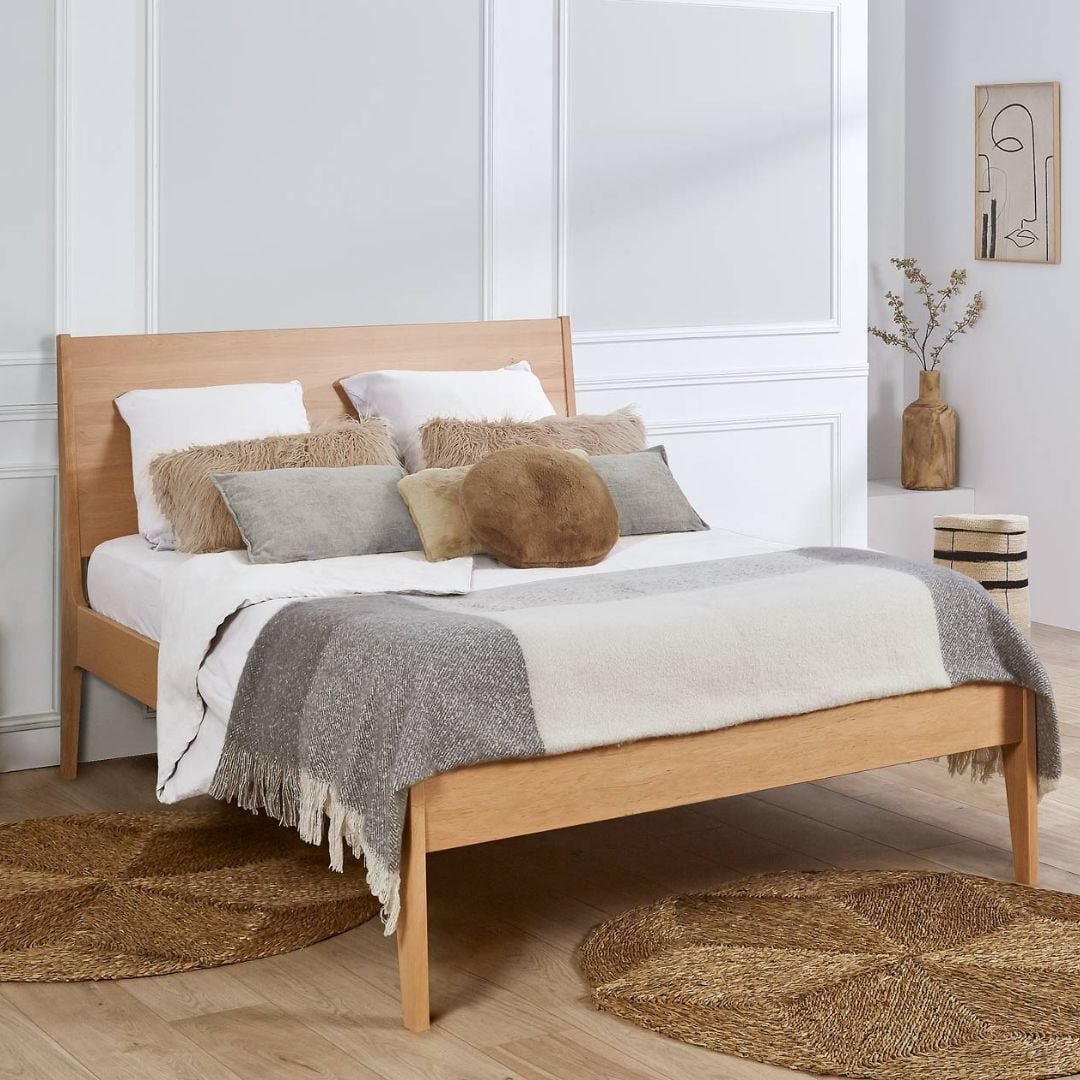
Choosing a suitable mattress directly influences your daily well-being. Designed to follow body curves, it contributes to restorative nights while limiting muscle tension. Its thickness and foam or spring technology determine optimal support, particularly in the lumbar areas. Note that a compatible eco-friendly bed base like our GABRIEL wooden double bed reinforces these benefits. By combining natural materials with a durable structure, this offer combines comfort and environmental respect. Customer reviews highlight how this hybrid set significantly improves their sleeping experience. A wise investment considering the impact of good bedding on long-term health.
Traps to absolutely avoid
Beware of budget mattresses: inadequate spine support risks intensifying your pain. A poorly chosen model creates pressure points on sensitive areas (lumbar, cervical...) despite seemingly attractive products. Forget prejudices: a good bed relies on natural materials and advanced technology for truly restorative nights. Tests have proven that mattresses under £500 can be better in terms of comfort, support and aging resistance than more expensive models. Real relief for both back and wallet!
Choosing a mattress that relieves back pain represents more than a purchase - it's a true health care investment. The tip? Opt for a model that adapts to your body type and favorite sleeping positions, without neglecting professional advice. Transform your nights now to regain energetic mornings and a back free from tension!
Sage green and wood bedroom: how to create a natural and soothing space
Children's bed size: the complete guide for healthy and safe sleep
How to decorate your bedroom with healthy materials?