How to protect a mattress from moisture?

- Categories : Tips

Nateo CONCEPT

Mattress protected from moisture

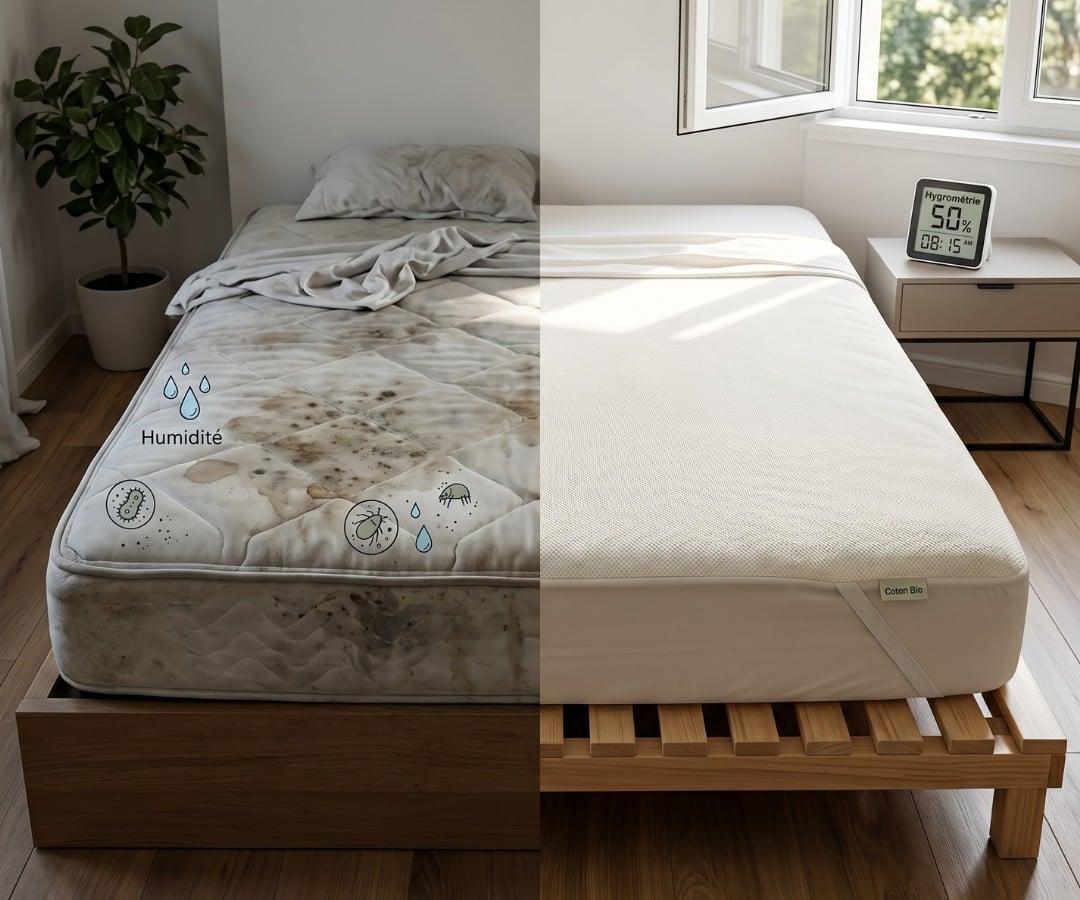
The key takeaway: night-time moisture, from the 300 ml of daily perspiration, degrades fibres and encourages mould. To protect your family's health and the durability of your bedding, choose a slatted bed base paired with a breathable organic cotton mattress protector. Maintaining humidity between 45% and 55% effectively extends the life of your mattress.

An adult expels on average between 300 and 500 ml of perspiration every night, moisture that seeps directly into the heart of your bedding's fibres. But do you know how to protect a mattress from moisture to prevent this natural phenomenon from prematurely degrading your comfort?

This invisible condensation encourages the growth of mould and unpleasant odours, thereby harming your bedroom's hygiene. We will review the concrete solutions and essential equipment needed to durably refresh your sleeping space.

Why moisture damages your mattress faster than you think

Every night, 300 ml of perspiration seeps into the bedding, encouraging mould and dust mites. Airing for 15 minutes, a slatted bed base and an organic cotton mattress protector keep humidity between 45% and 55% to stop this night-time condensation.

Understanding where this water comes from is the first step to saving your nights, as moisture creeps in through often invisible pathways.

The three main sources of night-time condensation

The human body expels approximately 300 ml of water every night. This perspiration seeps directly into the layers of the mattress. Without protection, the filling absorbs this liquid. This is the primary cause of invisible degradation of your bedding.

The thermal shock between body heat and cooler air creates condensation. This physical phenomenon occurs at the very heart of the fibres. Moisture then stagnates without being released.

Ambient humidity also plays a major role in the condition of the fibres. Air that is too saturated with water overloads natural or synthetic materials. The mattress can no longer breathe.

  • Volume of night-time perspiration (300ml)
  • Impact of thermal shock
  • Influence of the room's humidity level

Constant monitoring of these factors limits the damage. You must act quickly to preserve sleeping comfort.

The invisible mechanism of fibre degradation

Stagnant moisture encourages the rapid proliferation of mould and dust mites. These micro-organisms thrive in warm, damp conditions. They colonise the ticking and the core of the mattress within just a few weeks.

Fibres lose their resilience when exposed to water. The core of the mattress sags and deforms prematurely. Your support becomes less firm and wear accelerates irreversibly.

The Nateo Concept advice is simple: air your bed for fifteen minutes every morning. Leave the bedding uncovered to allow condensation to escape. This allows the materials to dry naturally before making the bed again.

Morning airing is an essential habit for your comfort. Opening the windows chases away residual moisture. This daily gesture is free and very effective. It extends the life of your equipment.

Healthy bedding starts with good air management. Never overlook this crucial step for your health.

3 warning signs that your mattress is suffering from moisture

Having understood the causes, you need to know how to identify the visible symptoms of excess moisture and act before the situation deteriorates for your health.

The musty smell and suspicious stains

A persistent musty smell is a clear sign. Even after opening the window, the mouldy scent remains. This indicates that moisture is lodged deep within the filling.

Regularly inspect the ticking to spot dark stains. These small black dots are often fungal spores. They appear on the surface but also underneath the mattress. These moulds present real health risks for your lungs.

It is therefore crucial to learn how to combat mould in a bedroom to protect your children's sleeping environment and ensure healthy bedding.

Loss of comfort and the feeling of cold

Do you feel a damp sensation when you lie down? A damp mattress often seems colder than it actually is. This is a sign that the fibres are saturated with stagnant water.

Water causes the internal fibres to clump together. Comfort decreases as the mattress loses its original suppleness. You may feel denser or sunken areas. Think to check the underside of the mattress every month to detect moisture.

A mattress that no longer correctly supports the body should be inspected. Moisture is often the hidden culprit behind this discomfort. Act before pain sets in.

Which protection should you choose to keep your mattress safe from moisture?

To counter these warning signs, choosing the right protection becomes your best line of defence.

Waterproof mattress protector or breathable mattress protector

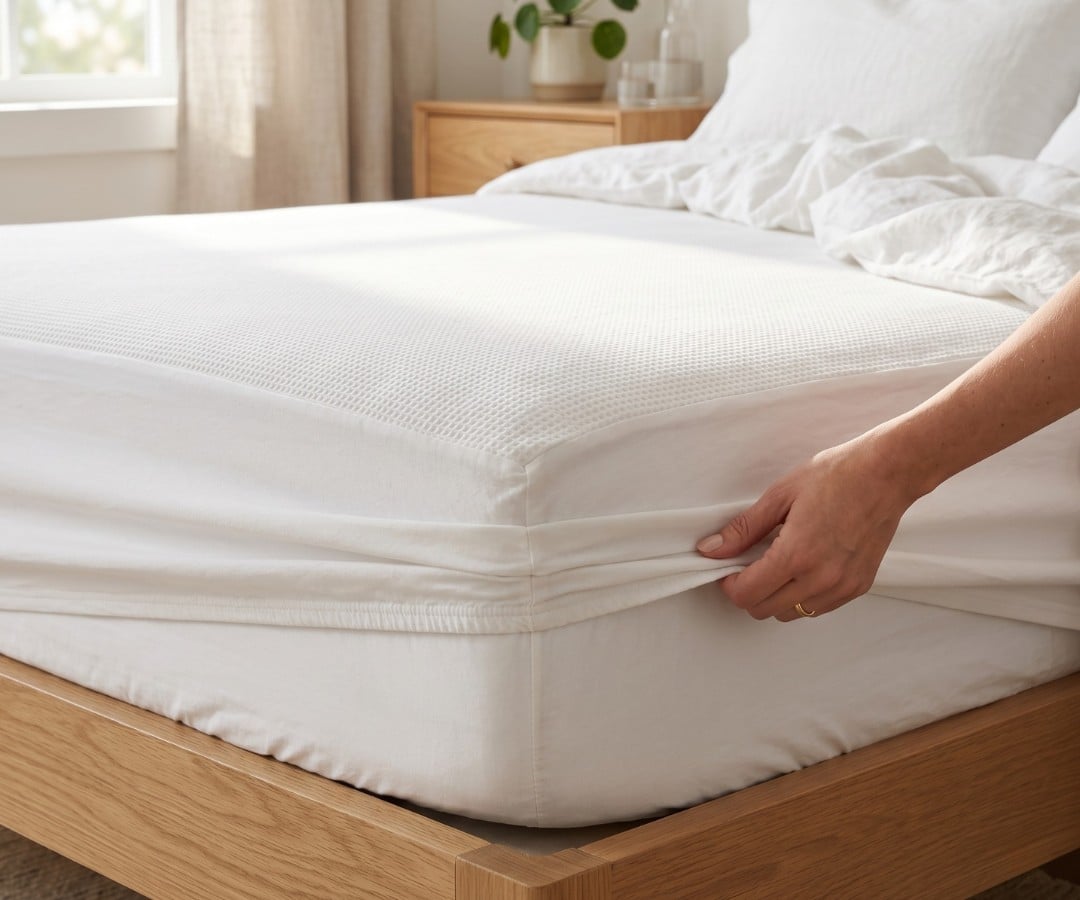
A waterproof mattress protector acts as a total barrier against fluids. It prevents perspiration from penetrating the foam. It is essential for maintaining perfect hygiene. Choose a model that allows air to circulate to avoid a stuffy effect.

Breathability is the key criterion for your night-time comfort. A good mattress protector releases water vapour without letting liquids through. This regulates the temperature of your bed.

Are you looking to extend the lifespan of your mattress effectively? Investing in quality accessories is the secret of relaxed parents. It is a sustainable choice for your home.

Effective protection extends the life of your investment. It is a simple gesture for healthy bedding over the long term.

Choosing natural materials such as organic cotton

Choose materials such as bamboo viscose or organic cotton. These natural fibres manage moisture far better than synthetic ones. They absorb and release water effectively.

Absolutely avoid PVC protectors that completely block air. Opt for breathable membranes certified Oeko-Tex. These labels guarantee the absence of harmful substances on your skin. Natural latex is also an excellent sustainable option.

  • Organic cotton
  • Bamboo viscose
  • Natural latex
  • Oeko-Tex membranes

For a truly healthy sleep, you can discover our waterproof organic cotton mattress protectors. They combine safety and respect for the environment.

Bed base and hygrometry: the unsung allies of healthy bedding

Beyond the mattress protector, the overall environment and the mattress support play a key role in guaranteeing your child a healthy sleep.

The importance of a ventilated slatted bed base

A slatted bed base is essential for air circulation. It allows the 300 ml of vapour expelled each night to escape. Without this space, moisture remains trapped.

Never place your mattress directly on the floor. Solid bed bases are also inadvisable as they block ventilation. At Nateo Concept, we use eco-friendly wooden panels to guarantee a healthy and durable structure.

It is essential to choose the right equipment to extend the lifespan of your mattress. Good ventilation from below prevents condensation from stagnating.

Controlling the humidity level in the bedroom

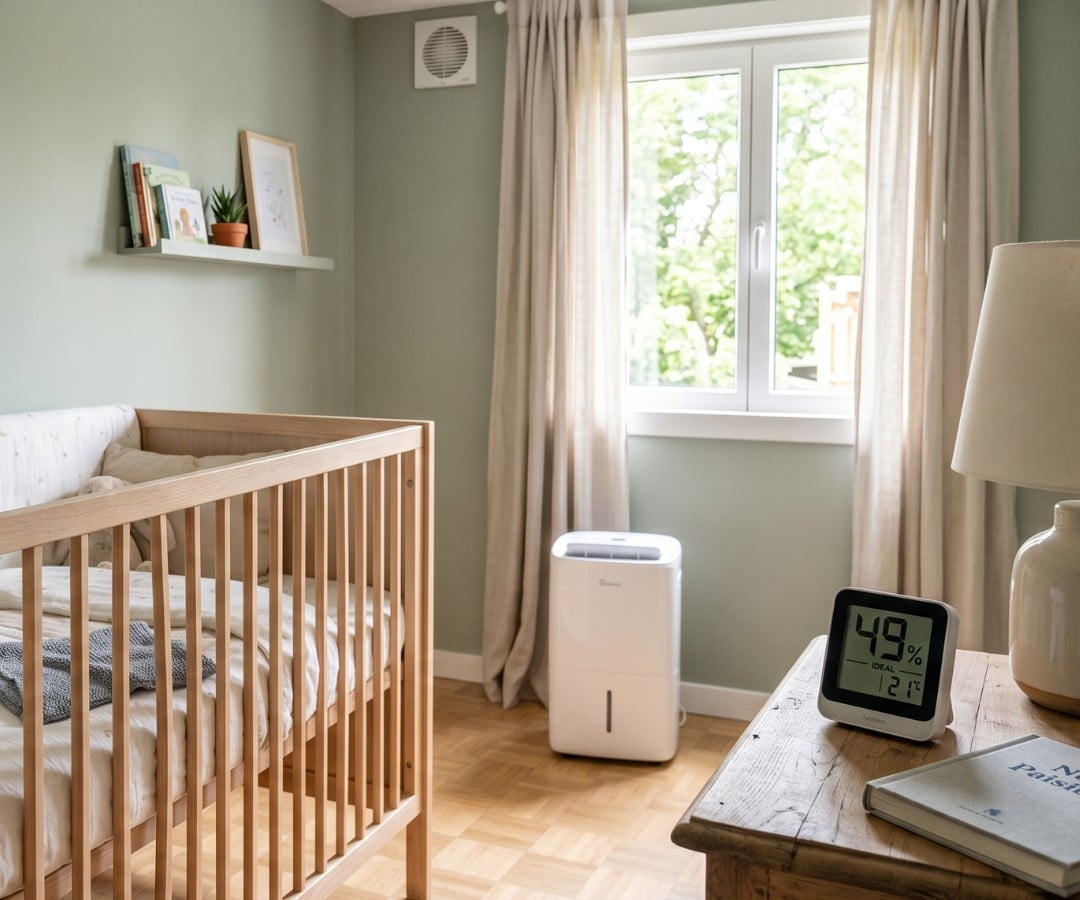
The ideal hygrometry for a bedroom is between 45 and 55 percent. Beyond that, the air becomes too heavy and encourages mould. Use a small sensor to monitor this level.

If your room is too humid, install an efficient dehumidifier. Also check that your mechanical ventilation system is working properly. Avoid placing too many houseplants near the bed. They release water vapour during the night.

For the safety of your little ones, keep a close eye on humidity in the baby's bedroom. Balanced air prevents respiratory irritations and ensures peaceful nights.

Regular maintenance: the right habits for long-lasting bedding

Finally, a simple maintenance routine keeps your bedding fresh for years.

Daily airing and seasonal turning

Get into the habit of leaving your bed unmade each morning. Open the window wide for at least ten minutes. This allows the night-time moisture to evaporate completely.

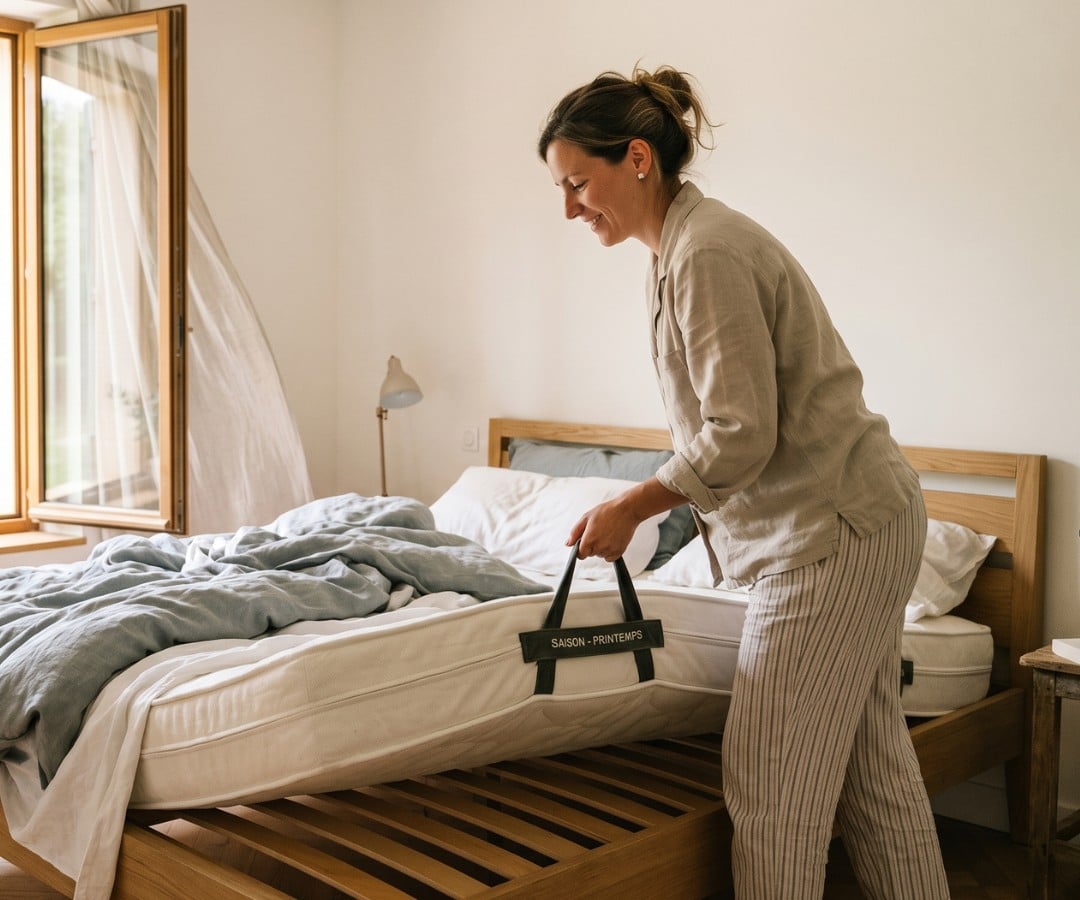
Turn your mattress at every change of season. This alternately ventilates both sides and prevents the fibres from sagging. It is a simple method to thoroughly freshen the filling. Use the side handles to make handling easier.

Adopting these habits helps maintain a healthy environment. To go further, discover our tips on natural cleaning to protect your children's health.

Cleaning and vacuuming to freshen the filling

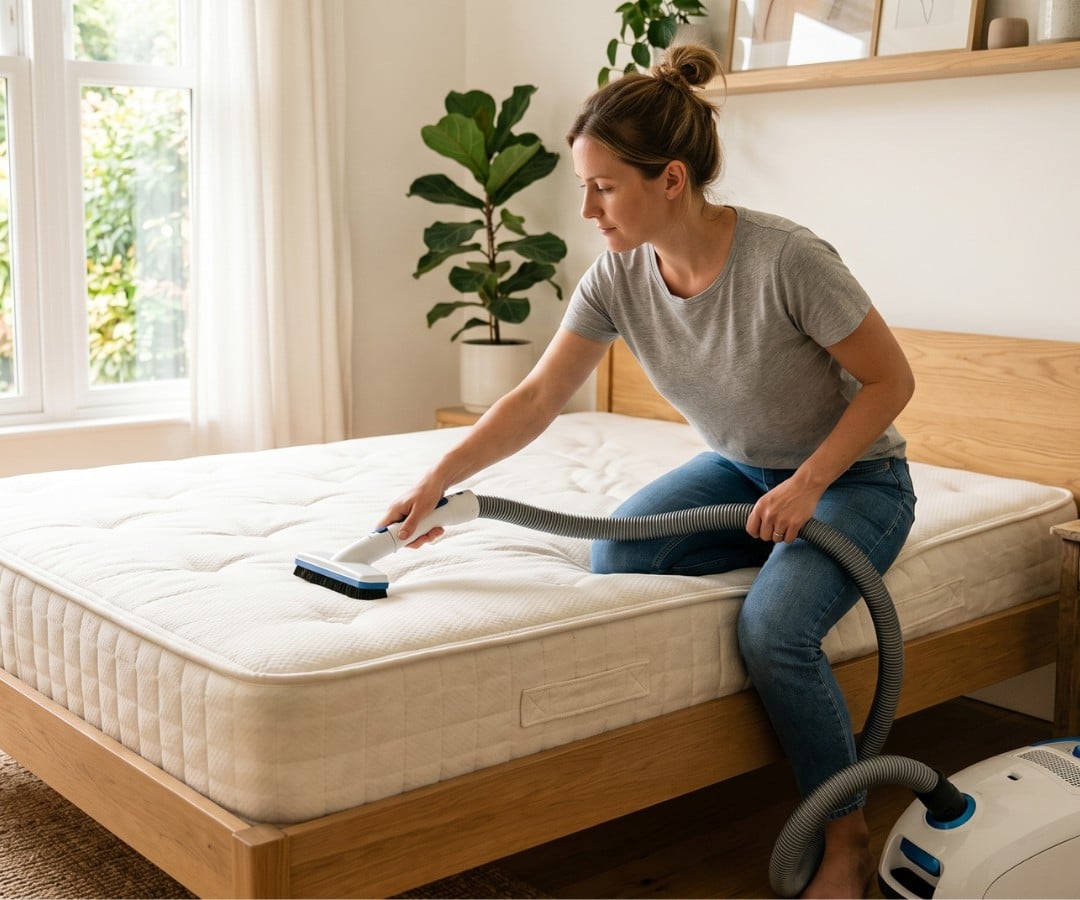
Vacuum your mattress once a month with a clean attachment. This removes damp dust and dust mites lodged on the surface. It is an essential hygiene practice for allergy sufferers.

Steam cleaning is possible but requires great care. Make sure the mattress can dry completely before putting the sheets back on. This method is ideal for disinfecting foam or spring mattresses. Never soak the core too much.

Well-maintained bedding ensures restful and long-lasting sleep. To complete your setup, feel free to browse our eco-responsible bed linen designed to last.

Summary of 7 habits for effective anti-moisture protection

Here is a summary of concrete actions for a healthy bedroom and a protected mattress.

To protect your mattress, rely on daily airing and a breathable mattress protector. Use a slatted bed base to ventilate the underside. Monitor your bedroom's humidity level. Regularly turn and vacuum your bedding. These habits guarantee healthy sleep.

  • 15min airing
  • Organic cotton mattress protector
  • Slatted bed base
  • Hygrometry 45-55%
  • Seasonal turning
  • Monthly vacuuming
  • Natural cleaning

At Nateo Concept, we design products using natural, Oeko-Tex certified materials. Our eco-responsible commitment ensures you durable bedding that respects your health. Finally sleep peacefully.

To durably preserve your bedding, rely on morning airing, a ventilated slatted bed base and an organic cotton mattress protector. Act today to protect a mattress from moisture and guarantee your family a healthy and restorative sleep. Finally enjoy peaceful nights in a perfectly pure environment.

FAQ

Moisture is the number one enemy of your bedding as it encourages the appearance of mould, yellowish stains and persistent unpleasant odours. For us as parents, it is also a health issue: a damp mattress becomes a breeding ground for dust mites and bacteria, which can worsen respiratory problems or allergies in young children.

By protecting your mattress, you ensure a healthy and dry environment for your child. This not only preserves their night-time hygiene, but also durably extends the life of your investment by preventing premature sagging of the filling fibres.

The simplest and most effective step is to air the bedroom daily, ideally from the moment you wake up, for around ten minutes. This releases the 300 ml of perspiration expelled each night. Maintaining a temperature between 18 and 19 °C also limits excessive sweating and the condensation caused by thermal shock.

We also recommend using a slatted bed base, which is essential for allowing air to circulate beneath the mattress. Absolutely avoid placing the mattress directly on the floor, as moisture would remain trapped there, producing invisible but harmful fungal spores.

For a child's or baby's bedroom, the ideal humidity level is between 30% and 55%. Air that is too humid encourages micro-organisms, while air that is too dry can irritate their sensitive respiratory tracts. For adults, levels can go up to 60% without risk.

You can monitor this level using a hygrometer. If you notice excess humidity, installing a dehumidifier or an efficient mechanical ventilation system is recommended. Also make sure not to place too many houseplants near the bed, as they release water vapour at night.

The choice depends on your needs: the waterproof mattress protector is essential for children to block liquid accidents and urine thanks to a waterproof membrane. At Nateo Concept, we favour polyurethane membranes, which are softer and quieter than PVC, to guarantee total protection without a plastic feel.

The breathable mattress protector, often made from organic cotton or bamboo viscose, is ideal for absorbing perspiration while still allowing air to circulate. For optimal and long-lasting protection, the best option is to choose a waterproof protector that uses natural materials on the surface to combine thermal comfort and absolute safety.

Latex mattresses, whether natural or synthetic, are particularly high-performing thanks to their cellular structure, which allows for constant self-ventilation. Pocket spring models also offer excellent air circulation between the springs, effectively releasing heat and water vapour.

Conversely, we recommend being cautious with classic memory foam, which tends to retain heat and moisture. Always favour natural fillings such as organic cotton or virgin wool, which naturally regulate your child's body temperature.

In addition to daily airing, get into the habit of vacuuming your mattress once a month with a clean attachment to remove damp dust and dust mites. Turning the mattress at every change of season also alternately ventilates both sides and evens out fibre wear.

If you need to store a mattress, remove the sheets and use a breathable protective cover or newspaper to absorb ambient moisture. Regularly washing bed linen and protectors is the last line of defence to ensure fresh and long-lasting bedding.