How to place a bed in a bedroom for healthy and restful sleep

- Categories : Tips

Nateo CONCEPT

Where to place your bed for better sleep?

Headboard against a wall, circulation space, orientation, or small bedroom layout: several criteria can help you choose the best position for your bed. Discover our tips for creating a comfortable, functional bedroom that is conducive to rest.

The key takeaways

To sleep well, the ideal is to place the bed with the headboard resting against a solid wall, in a clear and stable area. It is recommended to leave approximately 60 cm of space to move around the bed. In small bedrooms, beds with storage or mezzanine beds allow you to optimize space without sacrificing comfort.

Why does bed placement affect sleep?

The layout of the bedroom has a direct impact on the feeling of comfort and security, which affects sleep quality.

A poorly positioned bed can create:

  • a feeling of insecurity (back exposed to open space, passage behind you)
  • discomfort related to light or drafts
  • a visually cluttered space, less soothing

Conversely, a good placement contributes to a calmer, more structured environment that is conducive to falling asleep.

The 3 essential rules for positioning your bed correctly

1. Always opt for a solid wall behind the headboard

The headboard must be placed against a solid wall, with no window or opening.

This allows:

  • a feeling of stability
  • improved psychological comfort
  • protection against drafts

To enhance this comfort, a headboard can also serve as thermal insulation between the wall and the mattress.

2. Allow sufficient circulation space

It is recommended to leave 60 to 80 cm around the bed.

This allows:

  • to move around the bedroom easily
  • to make the bed without constraints
  • to keep the room fluid and pleasant to live in

In a double bedroom, access from both sides is ideal for greater everyday comfort.

3. Avoid unfavorable positions

Some configurations should be avoided:

  • under a window (light, noise, temperature fluctuations)
  • directly in line with the door (feeling of exposure)
  • pushed against bulky furniture (cluttered effect)

The goal is to maintain an airy and balanced space.


Adapting bed placement to the bedroom configuration

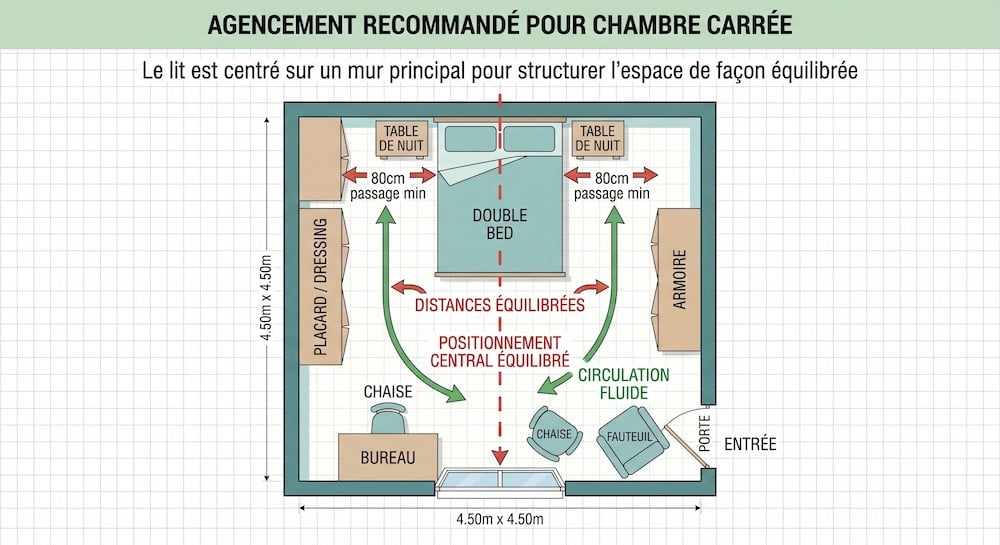
Square bedroom

The bed is generally centered on a main wall to structure the space in a balanced way.

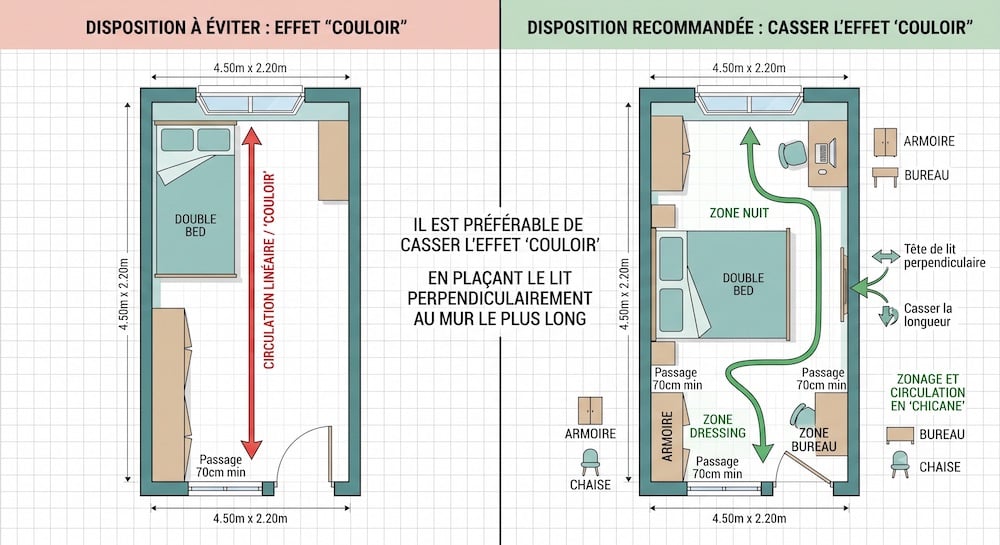
Long narrow bedroom

It is preferable to break the "corridor" effect by placing the bed perpendicular to the longest wall.

A few additional tips:

  • use rugs to structure the space
  • opt for low-profile furniture
  • free up the walls to visually lighten the room

Small bedroom (e.g. 9 m²)

In a small space, every square meter counts.

The most effective solutions:

  • angled bed placement to free up the center
  • beds with integrated storage (drawers, ottoman base)
  • mezzanine beds to make use of ceiling height

👉 In this type of space, the goal is to maximize the floor area to keep the bedroom functional and airy.

Can you place a bed in the center of the bedroom?

Yes, but only in large bedrooms.

This type of layout transforms the bed into the central feature of the room. It allows:

  • to free up the walls for storage
  • to create a "master suite" effect
  • to add a truly decorative dimension

However, it requires enough space to remain fluid and comfortable on a daily basis.


Optimizing space with suitable furniture

The choice of bed is just as important as its placement.

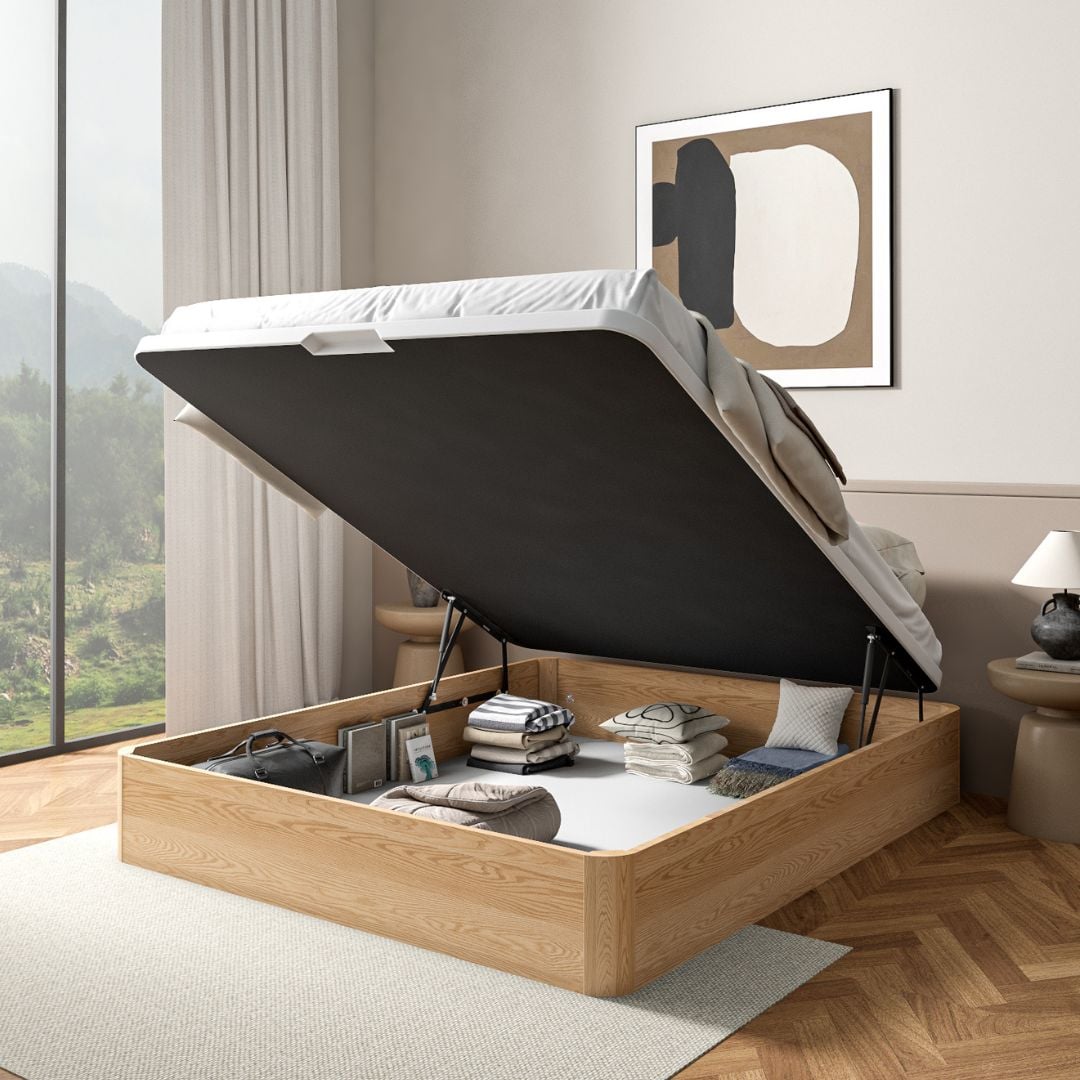
Lit coffre en bois massif HOYA

Beds with storage

They help save space by integrating drawers or an ottoman base under the sleeping area. Ideal for storing bed linen, clothing, or toys.

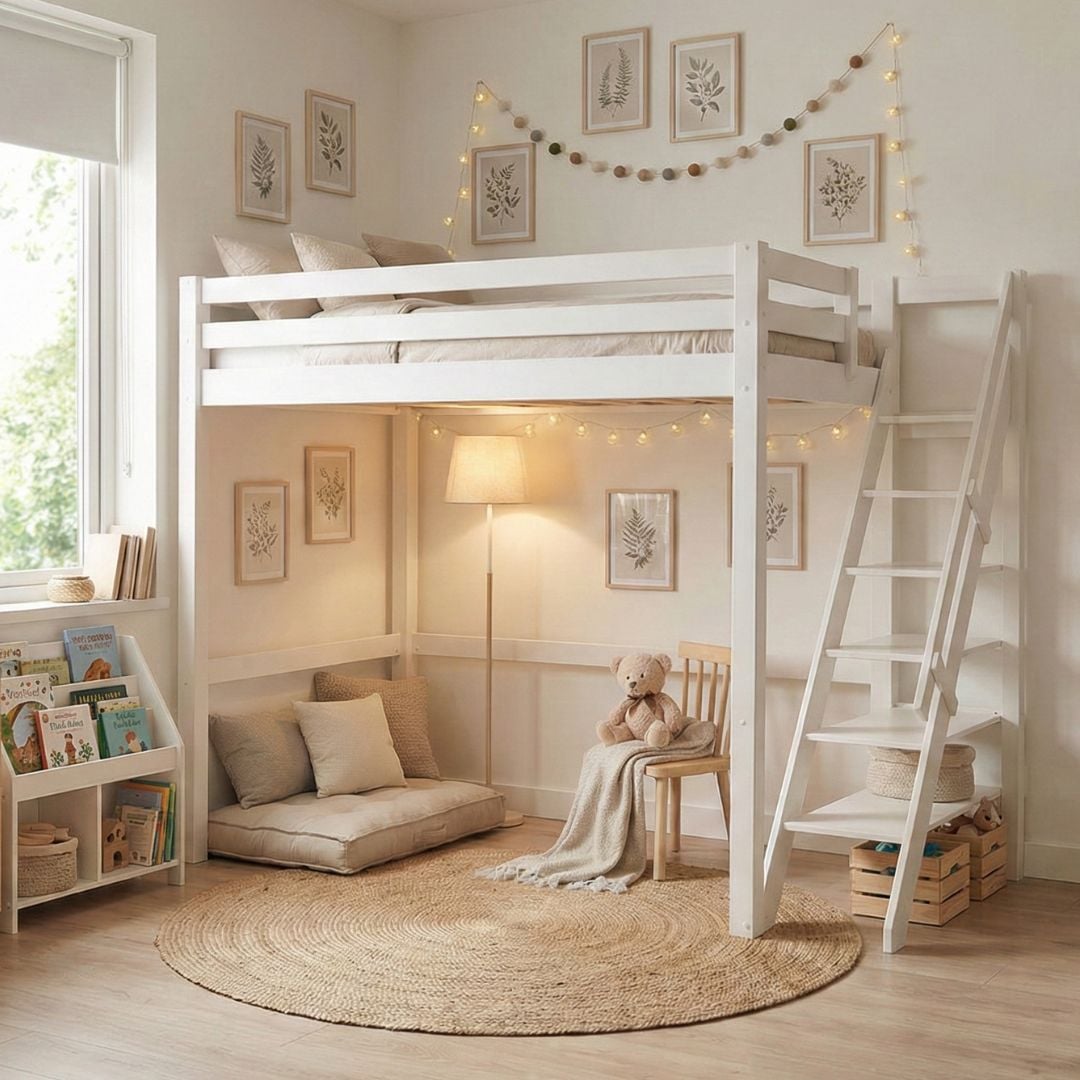
Mezzanine beds

They make use of the bedroom's ceiling height to completely free up the floor. This allows you to create a desk or a play area underneath.

At Nateo Concept, beds are designed in responsibly sourced wood, with VOC-free finishes, to ensure a healthy environment in the bedroom.

Lit mezzanine 2 places DARIO

Bed orientation: does it really matter?

Some approaches such as Feng Shui recommend an orientation facing East or South to promote energy and vitality.

Without going into an overly symbolic interpretation, what matters most is:

  • avoid drafts
  • limit direct light sources
  • favor a feeling of stability and calm

FAQ – How to properly position a bed in a bedroom?

The most important thing is to place the headboard against a solid wall, in a calm and clear area, away from drafts and direct light.

It is recommended to allow between 60 and 80 cm to move around easily and keep the bedroom flowing.

This is not recommended, as it exposes the sleeping area to temperature fluctuations, noise, and light.

It is advisable to make the most of corners and use multifunctional furniture such as beds with storage or mezzanine beds.

Conclusion

Positioning your bed well is the foundation of a comfortable and functional bedroom. By following a few simple layout rules, it is possible to create a more soothing space, even in a small area.

With suitable and well-thought-out furniture, the bedroom becomes a true everyday haven, functional and pleasant to live in.