Solid wood and wood panels: what do these terms mean?
Nateo CONCEPT
Solid wood or wood panels?
When furnishing a bedroom, the question almost always comes up when comparing two similar pieces: one is described as “solid wood,” the other as “wood panels,” and the price difference can be substantial. Solid wood has a reputation as the only “real” wood, while panels are seen as a low-end material. The reality is more nuanced. Strength, stability, environmental impact, and air quality depend largely on the quality of the panels, glues, and finishes, and where the wood comes from. Here’s what you need to know to make an informed choice, piece by piece.
Solid wood and wood panels: what do these terms mean?
Solid wood
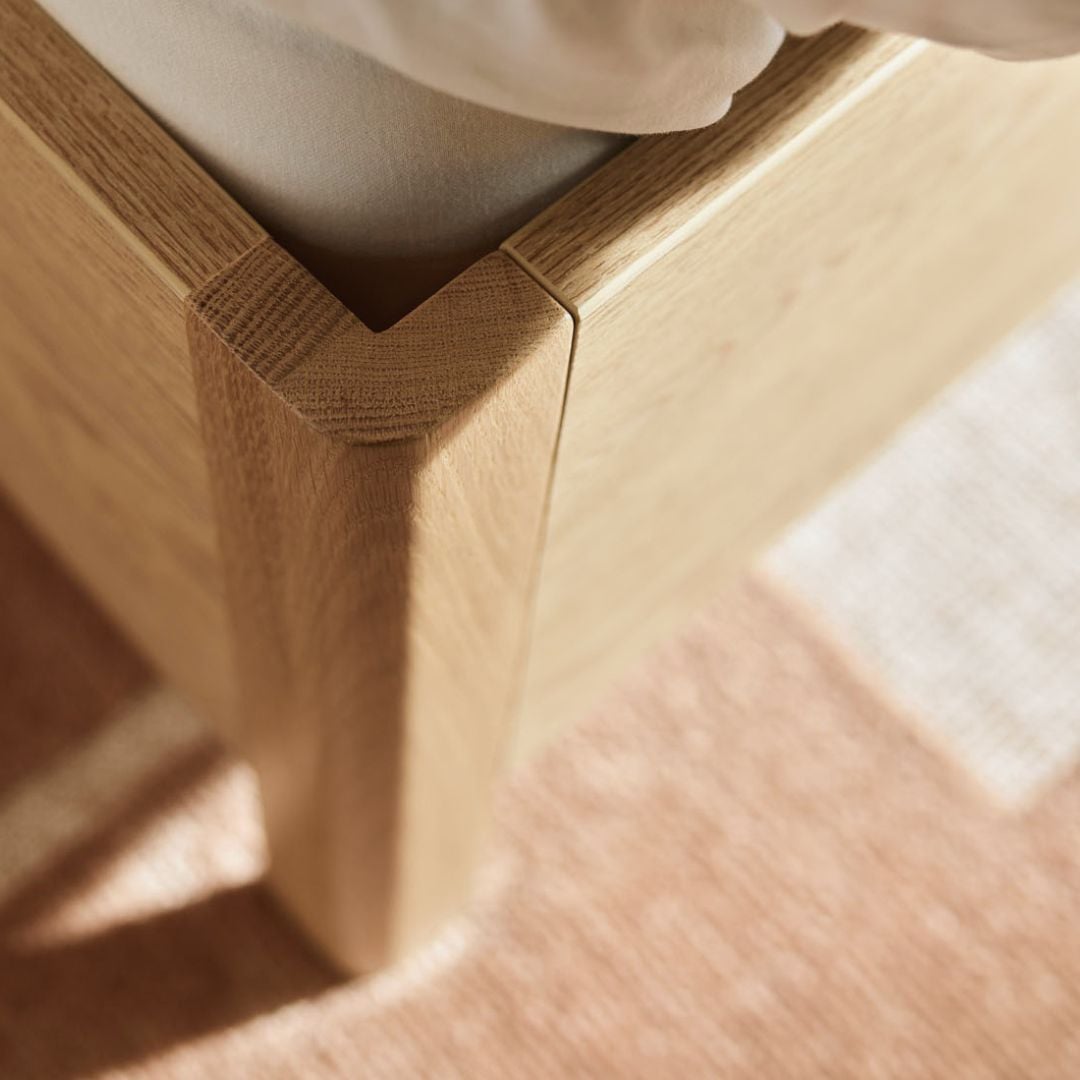
Solid wood furniture is made from pieces sawn directly from a tree trunk: boards, posts, and slats. In today’s furniture, large surfaces such as a bed side or tabletop are often made from several solid wood strips glued together (known as finger-jointed or laminated wood). It’s still solid wood: no reconstituted particles or fibers. The most common woods used in bedroom furniture are pine, beech, oak, and birch.
Wood panels
Wood panels are made from wood that is processed and then reconstituted. Three types are common in furniture:
- Particleboard (or chipboard): wood chips and sawdust pressed together with glue. Economical, it’s often used for cabinet frames, sides, and shelves.
- MDF (medium-density fiberboard): wood broken down into very fine fibers and then pressed. Its smooth, uniform surface is ideal for lacquered finishes and rounded shapes.
- Plywood: thin sheets of wood glued together with the grain running in alternating directions. Lightweight and strong, it’s often used for drawer bottoms.
A panel is almost never left unfinished. It’s covered with a decorative melamine surface, veneer (a thin sheet of real wood), or paint. That covering gives the furniture its oak or white appearance.
Furniture made with both materials
Many pieces of furniture combine the two materials: a panel structure with heavily used parts made from solid wood, such as legs, rails, or bed slats. Our PALME convertible crib, for example, combines veneered fiberboard panels with solid beech rails. This isn’t a second-rate compromise: each material is used where it works best.
Solid wood or panels: a comparison
| Criteria | Solid wood | Wood panels |
|---|---|---|
| Durability | Good structural strength, depending on the wood species. | Strength varies with density and thickness. |
| Stability | Sensitive to changes in humidity. | Good dimensional stability under normal use. |
| Appearance | Natural appearance and unique grain. | Many finishes and colors available. |
| Price | Generally higher. | Often more affordable. |
| Repair | Can be sanded and refinished. | Repair options vary by covering. |
| Care | Care suited to the wood’s finish. | Easy to maintain, with precautions against moisture. |
Solid wood: advantages and limitations
The advantages. Solid wood is sturdy and ages well. A scratch or stain can be sanded away, and the furniture can be revarnished or repainted several times over its lifetime. It also holds up very well through moves and repeated disassembly, which matters for a bed that will follow a child for years.
The limitations. It costs more and weighs more. Above all, it’s a natural material that responds to its environment: it shrinks when the air is dry and swells when it’s humid. In a bedroom heated during winter, this can cause small cracks or slight looseness in the joints, which can simply be tightened from time to time. Style options are also more limited: pine has knots and variations in color, while very smooth lacquered finishes or rounded shapes are harder to achieve.
Wood panels: advantages and limitations
The advantages. A panel doesn’t expand and contract like solid wood. Closet doors stay aligned and drawer fronts don’t warp, even in a room where the temperature fluctuates. Panels also offer plenty of design freedom: two-tone white and oak finishes, lacquered surfaces, rounded corners, and combination cribs with dressers. They also make it possible to offer furniture made in France at a more accessible price.
The limitations. Water is their biggest enemy when an edge is damaged, because the panel can then swell. Screws hold less securely in a panel than in solid wood if the furniture is repeatedly taken apart and reassembled. Above all, quality varies enormously from one manufacturer to another: thickness, density, and type of glue all matter. The word “panel” alone tells you very little.
A misconception worth correcting. “Particleboard” doesn’t mean “fragile.” A thick, dense, well-assembled panel can last for years. The quality gap between a low-end panel and a high-quality panel is often greater than the gap between a good panel and solid wood.
Which is more environmentally friendly?
Solid wood is the obvious first thought. The answer is more nuanced.
Solid wood stores carbon throughout the furniture’s life, but it requires high-quality logs, and sawing produces a lot of waste. Panels make use of those offcuts, as well as sawdust, wood from forest thinning, and sometimes recycled wood. Our JULIA dresser, for example, is made with panels containing 50% recycled wood.
The factors that really make a difference are elsewhere:
- Where the wood comes from: FSC or PEFC certification guarantees it comes from sustainably managed forests.
- Where it’s made: furniture made in France travels far fewer miles than furniture shipped from Asia.
- The glues and finishes: water-based paint and low-emission glues.
- Its lifespan: a convertible bed used for ten years has a better overall environmental impact than a solid wood bed replaced after three years because it no longer suits the child’s age.
- Repairability: furniture doesn’t need to be thrown away if a part can be replaced.
Health: what to check for formaldehyde and VOCs
This is often parents’ real concern, and understandably so. Formaldehyde is present in some glues used to make panels. It can be released into indoor air, especially during the first few weeks. VOCs (volatile organic compounds), meanwhile, come from solvent-based paints and varnishes, which can also be used on solid wood furniture.
Regulations have become stricter. Since August 6, 2026, European Regulation (EU) 2023/1464 has prohibited placing furniture and wood-based articles on the market if they emit more than 0.062 mg/m³ of formaldehyde under the specified test conditions. Panel manufacturers also use emissions classes: class E1 (a maximum of 8 mg per 100 g of panel material) serves as a benchmark, while panels labeled E0.5 contain less than 4 mg per 100 g.
Before buying, check three things:
- The panels’ formaldehyde content or emissions class.
- The type of finish: solvent-free, water-based paint or varnish.
- For a baby’s room, assemble the furniture a few weeks before your child arrives and air out the room every day.
Which material should you choose for each piece of bedroom furniture?
The crib and convertible crib. Both materials work, provided the crib meets the NF EN 716 standard and the panels have low emissions. Panels allow for designs that transform over the years, such as a combination crib with a dresser that becomes a child’s bed and then a desk. Explore our selection of convertible cribs.
The dresser and closet. Panels are ideal here: their stability keeps doors and drawers properly aligned, even with soft-close mechanisms. See our dressers.
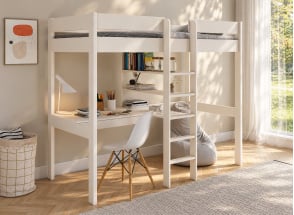
The house bed, loft bed, and bunk bed. These beds get a lot of use: children climb on them, play on them, and sit on them together. Solid wood, particularly pine, is especially well suited to the posts and rails. Our THEO house bed, for example, is made from FSC-certified solid pine. For loft and bunk beds, also check that they meet the NF EN 747 standard. See our house beds.
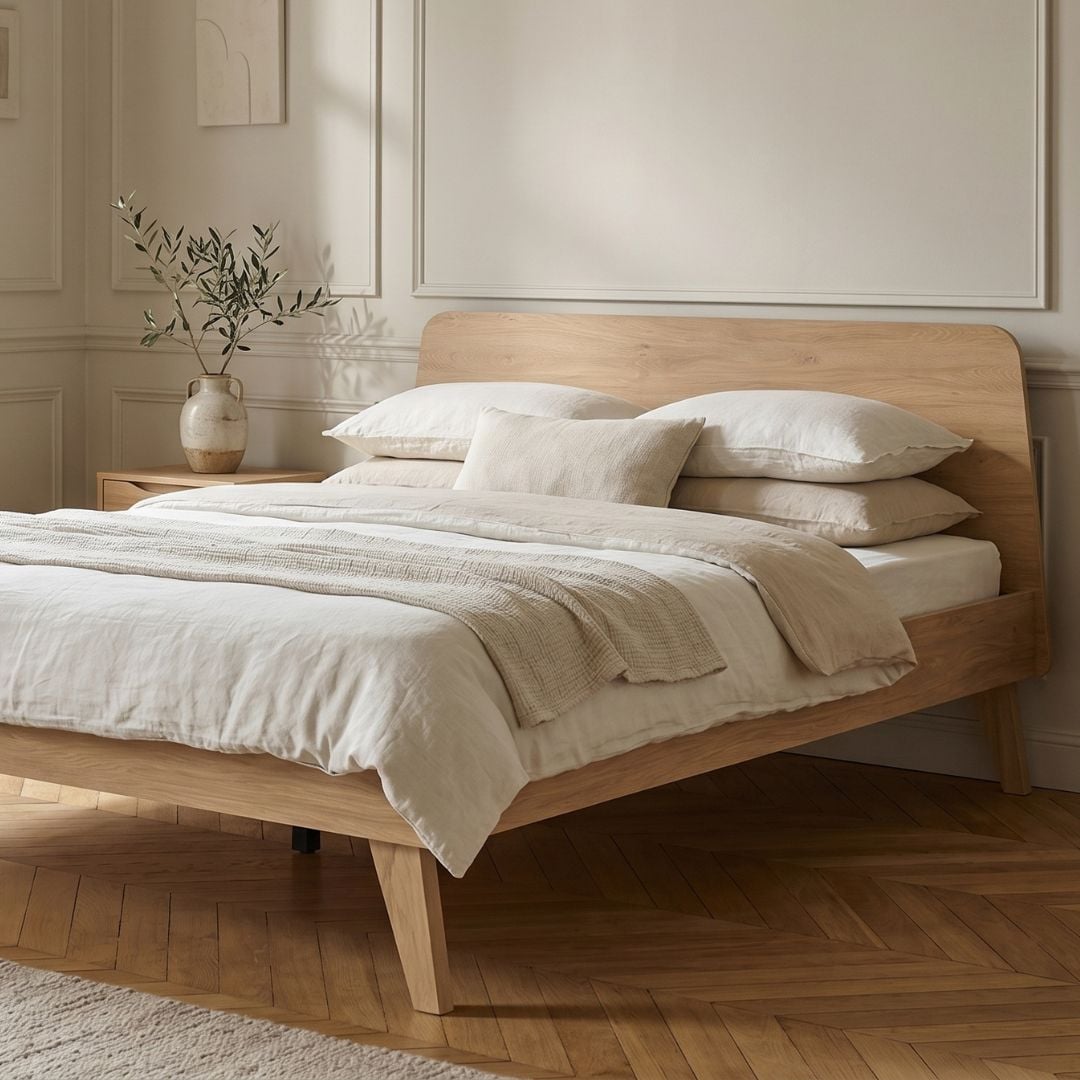
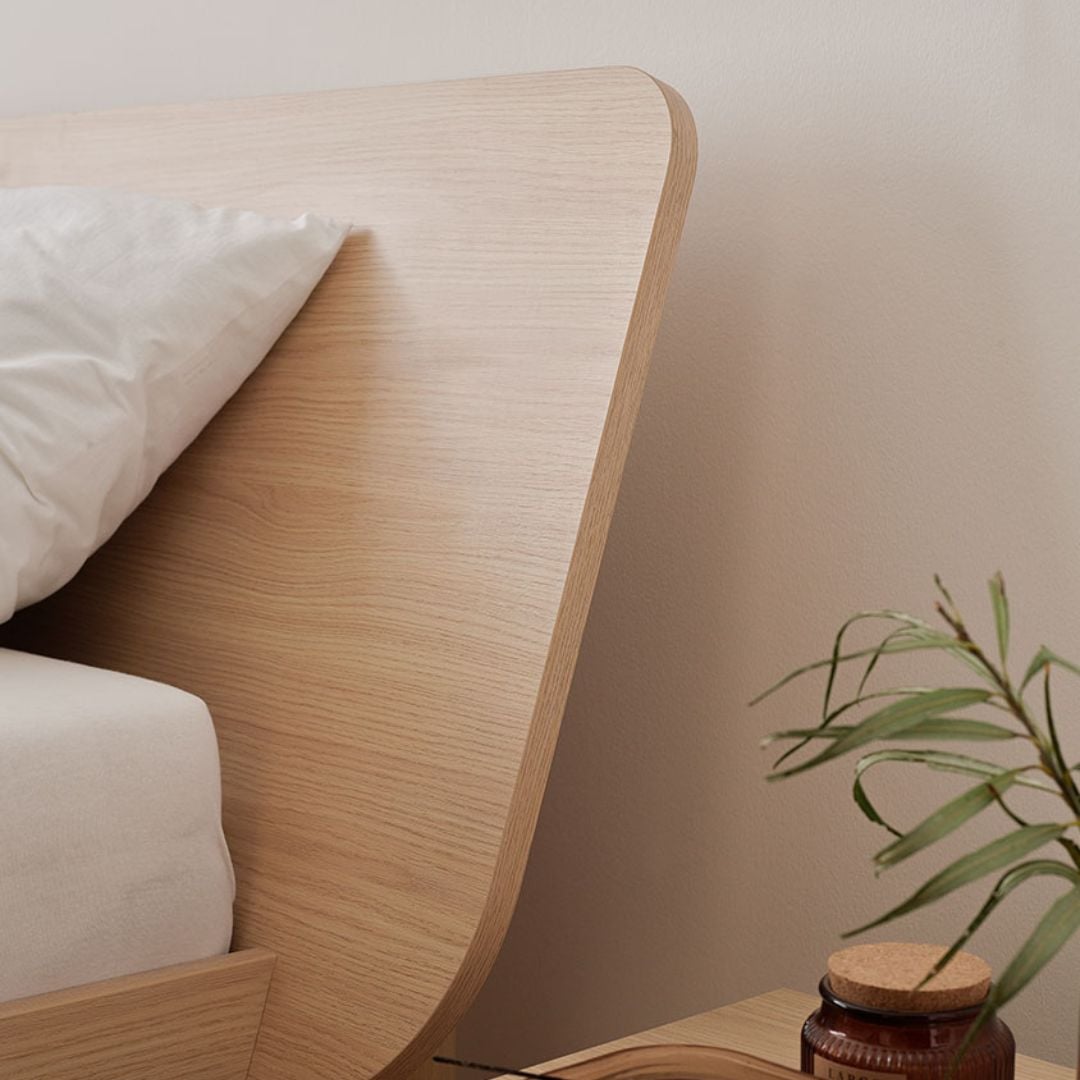
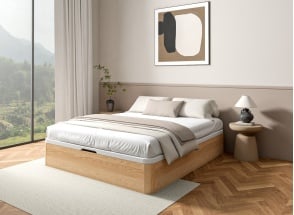
The adult bed. A panel headboard offers more style options, while a solid wood slatted bed base provides support. See our double beds.
The desk. A thick panel desktop with a melamine finish stays flat, resists scratches, and wipes clean with a sponge—especially useful for homework and marker stains.
At Nateo: mostly panels, chosen for health and durability
We believe in being transparent: most of our furniture is made from wood panels. A few models are made from solid pine, such as the SCOTT children’s bed and THEO house bed, while others combine both materials. We made this choice because panels allow us to offer stable, adaptable furniture made in France at a reasonable price. But panels are only worthwhile if they’re carefully chosen. Here are our commitments:
- 100% FSC- or PEFC-certified wood. Our furniture made in France uses PEFC-certified wood from sustainably managed French forests.
- 95% of our furniture is made in France by manufacturing partners, including in Charente-Maritime.
- Low-formaldehyde panels. For our baby furniture, we use E0.5 panels, containing less than 4 mg per 100 g of panel material—half the limit for the benchmark E1 class.
- Water-based paints and varnishes, free of solvents and VOCs.
- Recycled wood in some panels, such as those used for the JULIA dresser.
- Repairable furniture. Designed to last beyond childhood, our furniture can be passed on. If a part ever needs replacing, we can send you one on request, subject to availability.
The right questions to ask before buying
Whatever the material, these questions will help you make a meaningful comparison between two pieces of furniture:
- What is each part made of? The structure, fronts, bed slats, and drawer bottoms.
- Is the wood FSC- or PEFC-certified?
- What is the formaldehyde content of the panels?
- Is the paint or varnish water-based?
- Where is the furniture made?
- Does the bed meet the NF EN 716 (crib) or NF EN 747 (bunk bed, loft bed) standards?
- Does the manufacturer provide replacement parts?
Frequently asked questions
Is furniture made of wood panels sturdy?
Yes, if it’s made with thick, dense panels and assembled well. A bed or dresser made from quality panels can easily withstand daily use for years. The weak point is repeated disassembly and reassembly: avoid taking the furniture apart unnecessarily.
Is MDF harmful to your health?
No, not in itself. The risk comes from the glue used, which may release formaldehyde. Low-emission MDF finished with water-based paint is suitable for a child’s bedroom. Ask about its emissions class or formaldehyde content.
How can you tell if furniture is made of solid wood?
Look at the edges of the pieces. With solid wood, the grain continues onto the edge. A panel’s edge is covered with edge banding or reveals a uniform material. Weight can also be a clue, but the product specifications are the most reliable source.
Can you repaint furniture made from panels?
Yes. Lightly scuff-sand the surface and apply a bonding primer before using water-based paint. Veneer, however, should only be sanded very lightly because the layer of real wood is thin.
Solid wood or wood panels for a baby’s room?
Both are suitable. The deciding factor isn’t the material but air quality: panels with very low formaldehyde content and solvent-free, water-based paint. Also consider how the bed can adapt as your child grows: a bed that grows with them means you won’t need to buy a new one two or three years later.
In summary
Solid wood appeals for its authentic character and ability to be refinished. Wood panels come out ahead for stability, style options, and price. Rather than treating them as opposites, look at what really determines furniture quality: where the wood comes from, formaldehyde content, the finish, where it’s made, and whether it can be repaired. These are the criteria we use to select every piece of furniture.
What furniture should you choose for your baby's room?
Adult bedroom decor ideas: 8 styles for a bedroom that feels good to be in
Christmas gift ideas for kids: 10 pieces of furniture for their rooms