Children's bunk bed: standards and safety
Nateo CONCEPT
Save space with a bunk bed without neglecting safety
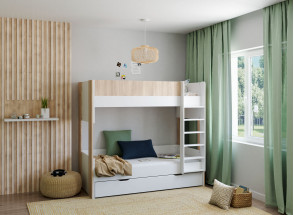
A classic in children's rooms, the bunk bed appeals to both the youngest and parents. An ideal solution for saving space, it allows children to share their room while each having their own space. To ensure safe nights, certain standards must however be taken into account for the manufacture of a children's bunk bed.
What is a bunk bed?
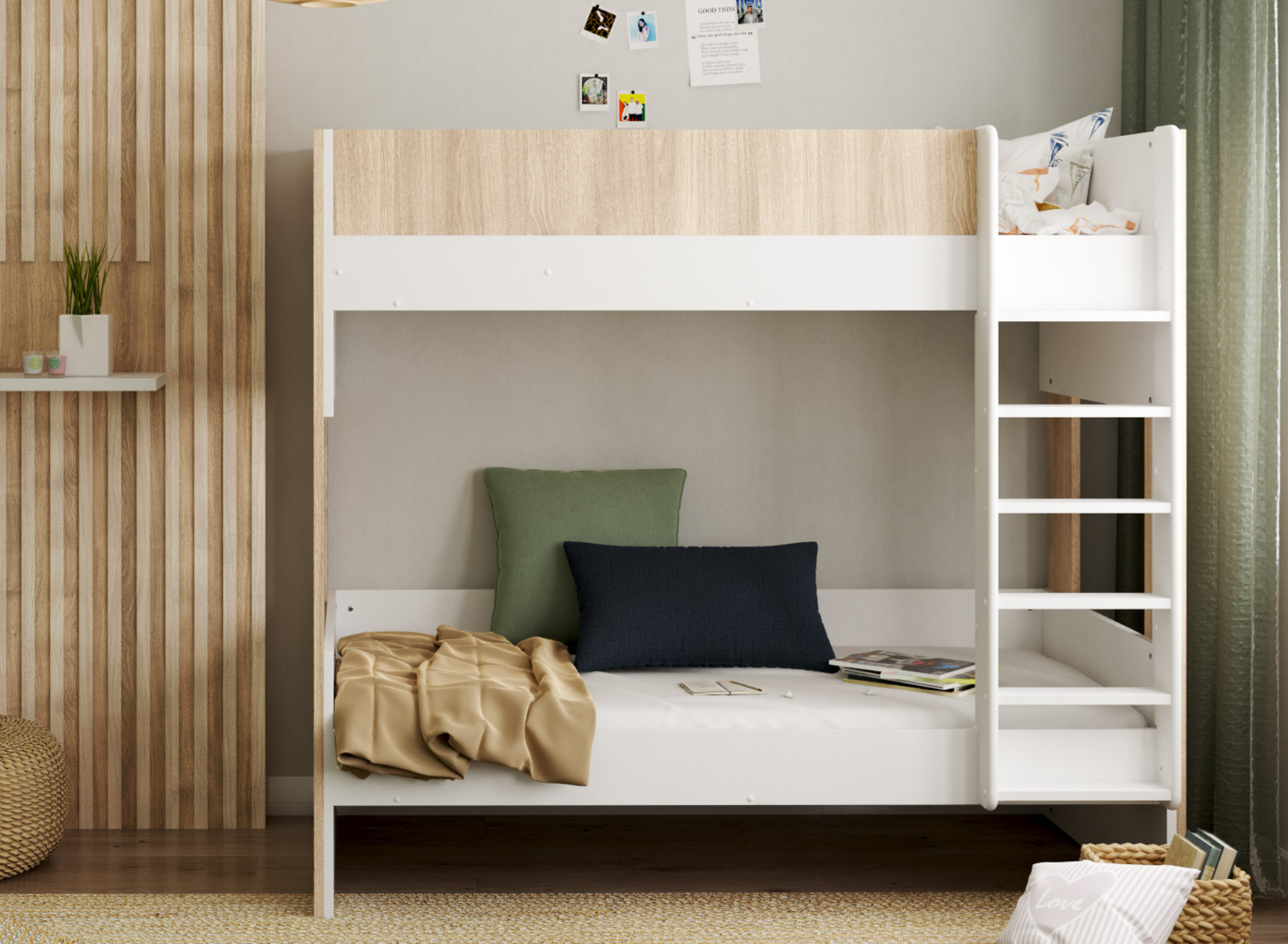
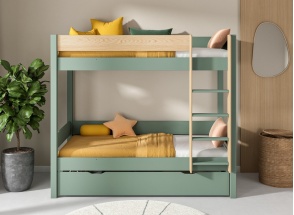
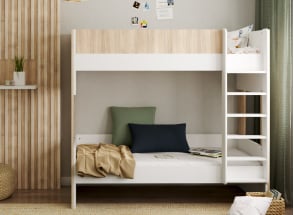
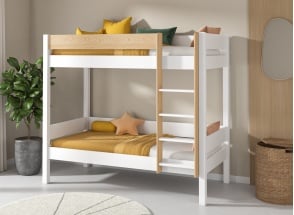
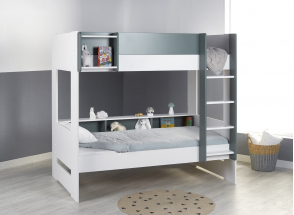
Whether it's a wooden bunk bed, metal or other material, the principle remains the same: it's a piece of furniture that stacks two beds (and sometimes more) one above the other. The first sleeping area of the children's bunk bed is therefore accessible from the ground and the second usually with the help of a small ladder.
Most often, it's a 90x190 bunk bed that's in question. This is the standard size for a single bed. However, there are bunk beds with other dimensions.
Generally, this type of bed is found in a child's room. It is most often chosen when two children share the same room and space is likely to be lacking. Therefore, bunk beds allow you to save floor space while providing a real sleeping area for each child.
The different types of bunk beds
There are several types of bunk beds that can be installed in a child's room:
- The separable bunk bed or dissociable: like our ANGEL model which gives the option to separate or stack the beds as desired.
- The storage bunk bed: it contains storage spaces such as an under-bed drawer for example, which allows for even more space saving.
- The 3-bed bunk bed: it stacks 3 beds instead of 2 as is traditionally the case.
- The parent-child bunk bed: which offers a double bed on the bottom and a single bed on top.
- The trundle bunk bed: which incorporates a third bed in a drawer placed under the bottom bed like our MANLY 3-bed bunk bed.
We can also mention the different styles of beds such as the white bunk bed, coloured, wooden, metal, etc. Therefore, each parent can opt for the style of bed that best corresponds to their children and the space they have available.
- -12%
ANGEL 90x190 Separable Bunk Bed - White
- -12%
- Pack
Triple bunk bed 3 sleepers 90x190 ANGEL - White
- -40%
MANLY 90x190 bunk bed with wardrobe - White/Blue
- -15%
HOYA solid pine bunk bed 90x190 - Khaki/Pine
- -15%
- Pack
3-bed solid pine bunk bed 90x190 HOYA - White/Pine
- -15%
- Pack
3-tier solid pine bunk bed 90x190 HOYA - Khaki/Pine
- -15%
Bunk bed with storage 90x200 MILANO - White/Oak
- -16%
MANLY 90x190 Bunk Bed with Storage - White/Oak
What are the advantages of stacking beds?
The main advantage of the children's bunk bed is of course the space it allows to save in a room. Indeed, a child's room that contains two beds can quickly become very cluttered. We then lose space that could have been dedicated to creating a larger play area for example. With a 90x190 bunk bed, this problem is much less present.
Moreover, children often appreciate being offered this type of space. The top bunk is an opportunity to gain height for the children's greatest amusement, and the bottom one is an opportunity to create a reassuring cocoon.
What standards must be respected for this sleeping arrangement?
The use of a children's bunk bed of course implies ensuring compliance with certain safety standards. First of all, it should be noted that the top bed is not recommended for children under 6 years old and generally cannot accommodate a weight greater than 100kg.
In France, it is decree 95-949 of August 25, 1995 that defines the rules relating to this type of bed. It specifies that certain mentions must be obligatorily present such as the mentions:
- "Compliant with safety requirements"
- "Compliant with NF Standard"
- "The upper bunk is not suitable for children under 6 years old"
The safety standards and requirements referred to impose:
- The presence of four barriers with a minimum height of 26cm for a high sleeping area
- Rounded structure edges
- No more than 20cm between each rung of the ladder
As it is often a children's bunk bed to be assembled by oneself, parents must ensure:
- Assembly in accordance with the instructions in the manual
- Proper fixing of the guardrails
- A maximum space of 7.5cm between the frame and the guardrails, and 7cm between the guardrail bars
- The presence of solid and well-fixed crossbars
- Mounting the ladder along the frame
The children's bunk bed according to Nateo
At Nateo Concept, we are of course extremely vigilant about respecting the current standards for the construction of each children's bunk bed. We only work with trusted manufacturers to offer quality products made in France.
Moreover, our beds are made from wood sourced from eco-managed forests, the panels contain only a low level of formaldehyde, our paints are water-based, etc. It is important for us to offer products that are practical, aesthetic, but also of quality and eco-responsible.
And for the mattress?
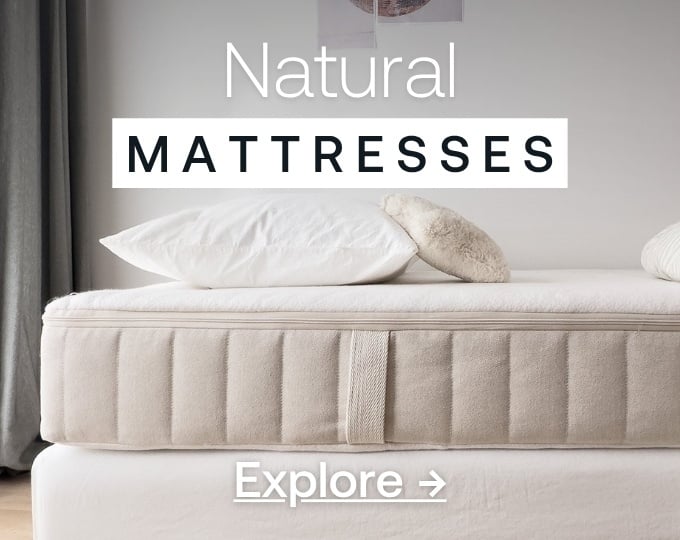
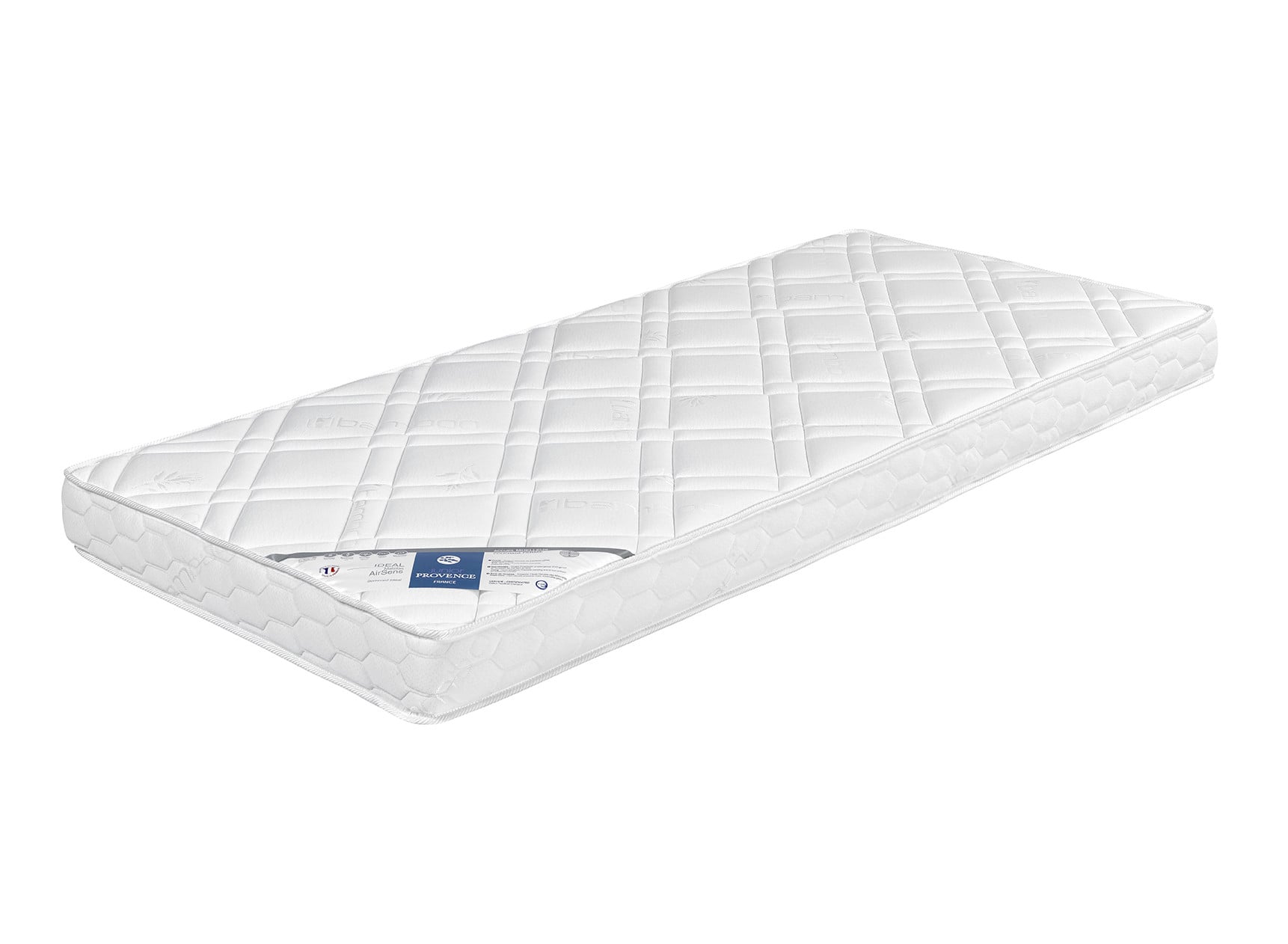
Buying a children's bunk bed doesn't necessarily imply the presence of mattresses with the structure. Most often, they must be purchased separately. For a 90x190 bunk bed, you therefore choose two 90x190 mattresses. Our range of children's mattresses is again an opportunity to make a more eco-responsible choice that is more suitable for children's well-being.
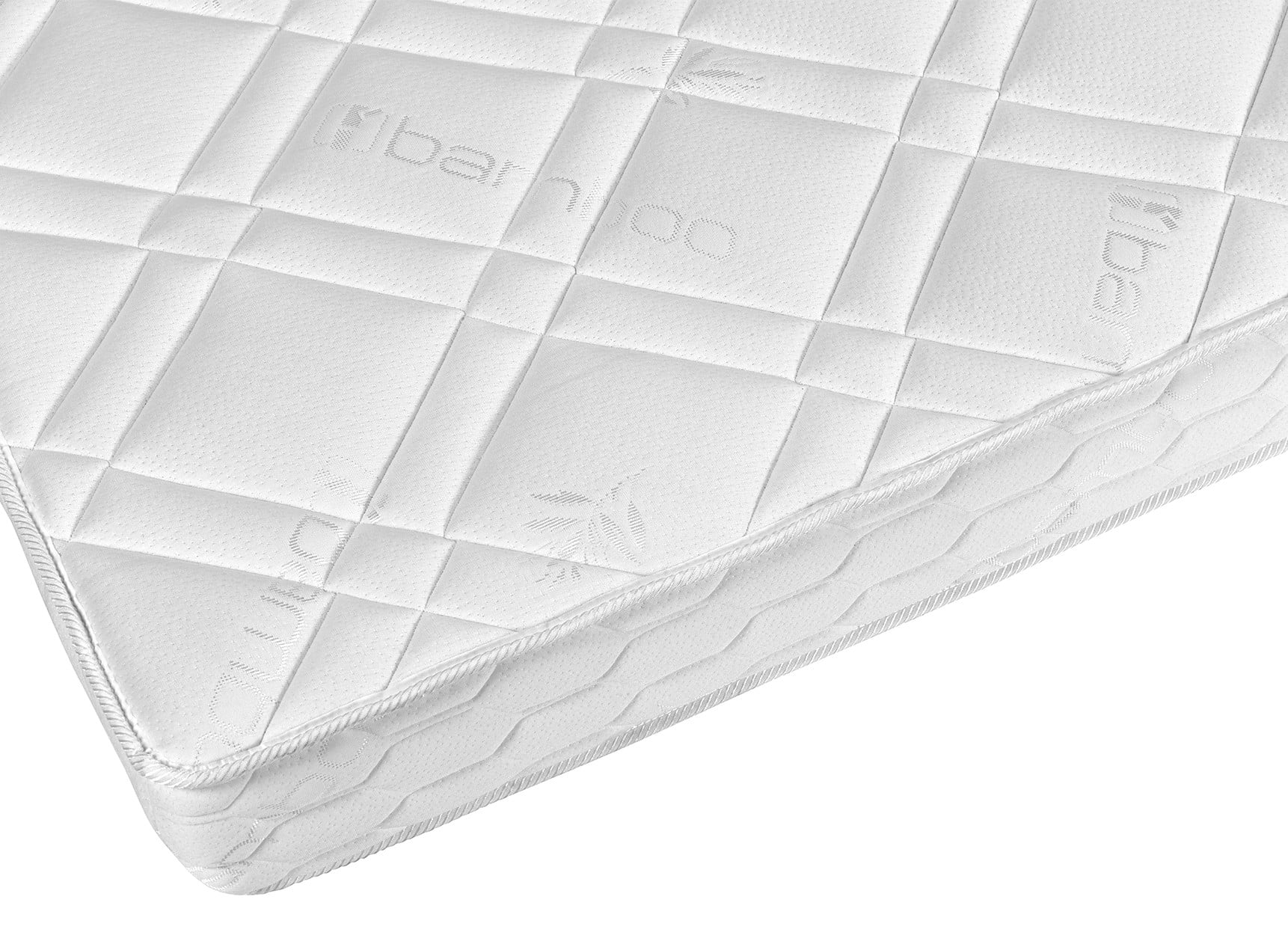
Bamboo or cotton are fantastic materials for choosing a natural mattress, but also one with optimal protection against dust mites and bacteria.
Once you've chosen your bunk bed, remember to take a look at our selection of eco-friendly children's mattresses to complete the set!
Sage green and wood bedroom: how to create a natural and soothing space
Children's bed size: the complete guide for healthy and safe sleep
How to decorate your bedroom with healthy materials?