Complete guide to choose the ideal single bed size

- Categories : Tips

Nateo CONCEPT

Single bed: which size to choose?

Are you hesitating between several single bed sizes? This guide helps you make the right choice based on age, space, and comfort needs.

Standard dimensions: what manufacturers never say

The single bed is much more than a simple furniture item. It's a strategic choice, influenced by the morphology of the sleeper, the available space, and comfort needs. If we look at its dimension, the classic format is established around 90 cm wide by 190 cm long, or 0.90 x 1.90 in metres. This format meets the most common European standards.

But beware! This standard hides a much more nuanced reality. Several countries slightly adapt their standardised measurements according to cultural habits and local preferences. For example, in Japan, single beds are often shorter — around 180 cm — to adapt to more compact rooms.

The so-called "XL" or "wide" models are gaining popularity: they offer up to 110 cm in width, while still remaining in the single bed category. Why? Because the population is growing! The need for space for nocturnal movement is becoming crucial.

The rise of 120x190: an emerging new standard

Long considered an ambiguous in-between, the 120x190 format is now a real phenomenon in the bedding market. What was once reserved for certain specialised establishments is now becoming the new norm for several major French and European manufacturers.

Why this enthusiasm? Because the 120x190 offers almost the same freedom of movement as a small double bed without taking up as much space in the room. It particularly appeals to young adults, students, or studio apartment residents.

This format optimises the ratio between floor space and sleep quality. And it allows for occasionally accommodating a second sleeper, temporarily. Yes, even for a short stay of a friend, or a new couple just starting out! That's why this type has seen explosive growth in sales since 2021, especially on specialised e-commerce platforms.

Bed types: when the market adapts to your needs

The market is evolving rapidly under the impulse of new urban and intergenerational lifestyles. Offering different types of single beds has become imperative.

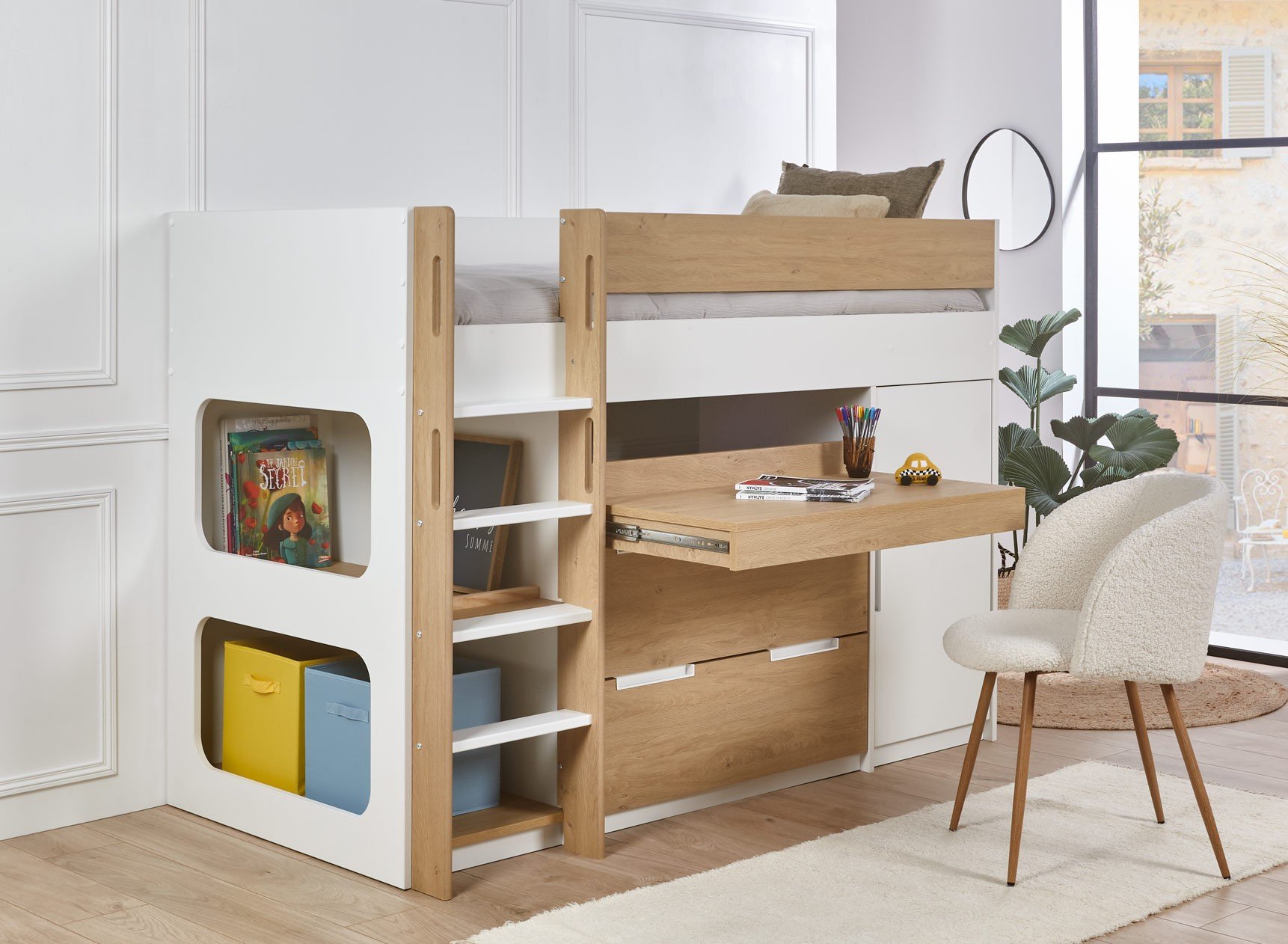
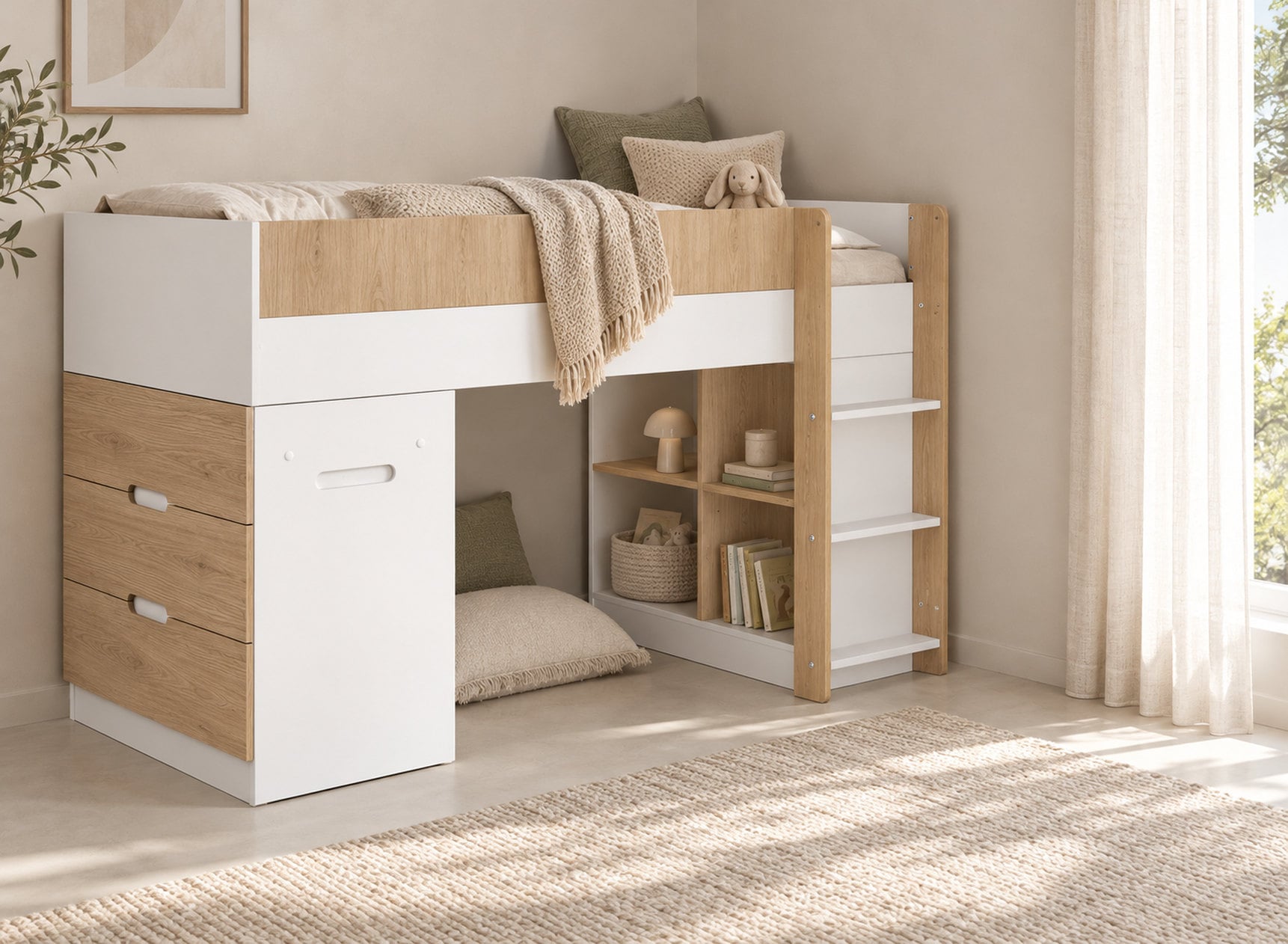
We thus find models with integrated drawers for storing bedding or clothes, lift-up frames to optimise vertical space, or even floating structures with minimalist design. Each manufacturer plays on modularity and innovation to offer solutions adapted to all contexts: teen's room, guest room, student residence or senior housing.

And that's not all! The direct integration of the bed base into the bed frame gives birth to "all-in-one" models, reducing floor space while maximising sleeping stability. A true silent revolution!

Adapting the single bed to your room

Space and layout: every metre counts

Do you have a small room? Then every centimetre becomes an opportunity or a trap. A well-chosen single bed can completely transform the use of a restricted space without sacrificing comfort or aesthetics.

In a room measuring less than 9 m², opting for a compact structure (without head or footboard) helps to visually free up the environment. Always keep at least 60 cm around the bed for free movement — it's a golden rule in layout design!

Smart furniture: when the model makes all the difference

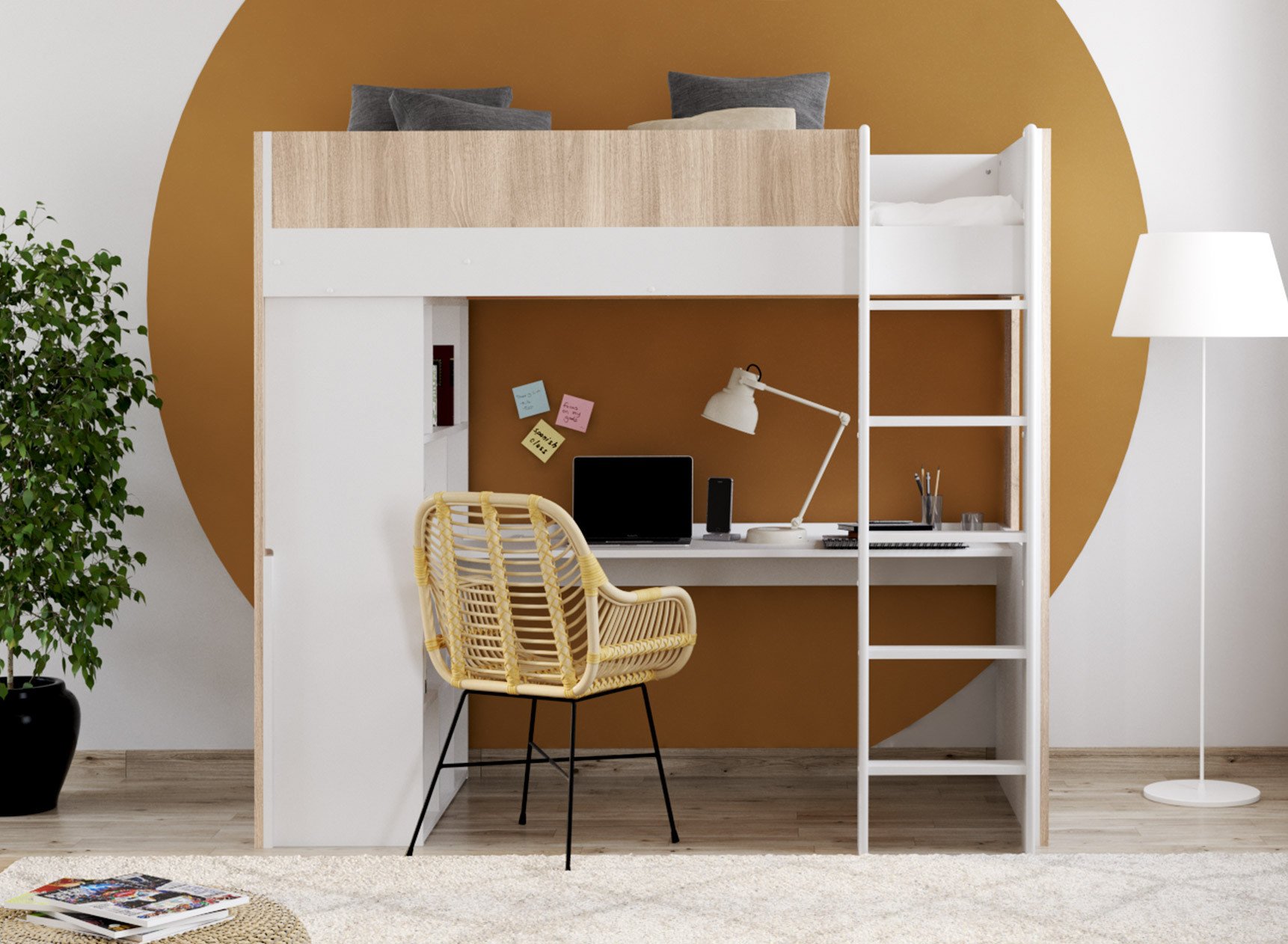
Optimising doesn't mean sacrificing. Some models now offer hybrid functions: integrated storage under the bed base, headboards with built-in shelves or touch-sensitive LED lamps... These innovations transform a simple sleeping surface into a true multifunctional centre.

A good model also helps avoid the "cramped" effect often seen in small rooms when furniture and bedding are not designed together.

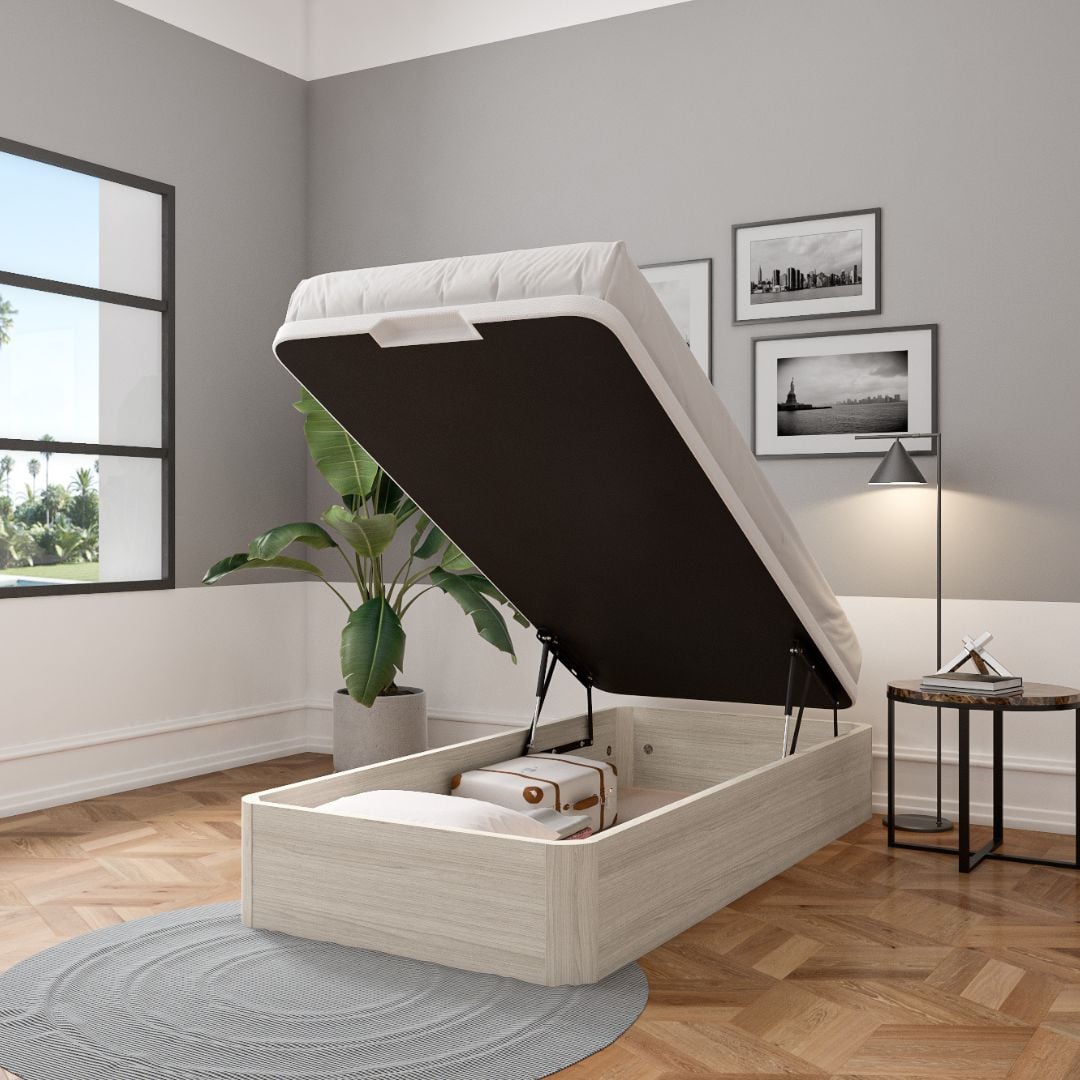
For example, our 90x200 BASTIA White storage bed allows you to store bedding or clothing under the bed without cluttering the room. It's also available in whitewashed oak and natural oak colours.

Lit coffre BASTIA

Intelligent design = function + aesthetics

Successful design is not just about looks! It must respond to ergonomic logic: facilitating access to the bed (especially if it's intended for a senior), effectively supporting the mattress (via a suitable bed base), harmoniously integrating with the rest of the furniture...

Good design is invisible but felt every day in its daily use!

Choosing the right mattress for your single bed

Mattress & comfort: understanding your deep needs

Choosing the right mattress is decisive for ensuring truly restorative sleep. Too soft? You sink in and damage your back posture. Too firm? Your pressure points become inflamed.

Each sleeper has a unique sensitivity related to their weight, morphology and sleep style (on the back, side or stomach). For a teenager, for example, we would favour a balanced high-resilience foam mattress; for a heavier adult (>90 kg), it's better to opt for reinforced pocket springs combined with memory foam.

Hypoallergenic? Memory foam? Materials hide their game

Did you know that some hypoallergenic treatments lose their effectiveness after just ten washes? Or that some so-called "memory" foams react poorly to extreme temperatures?

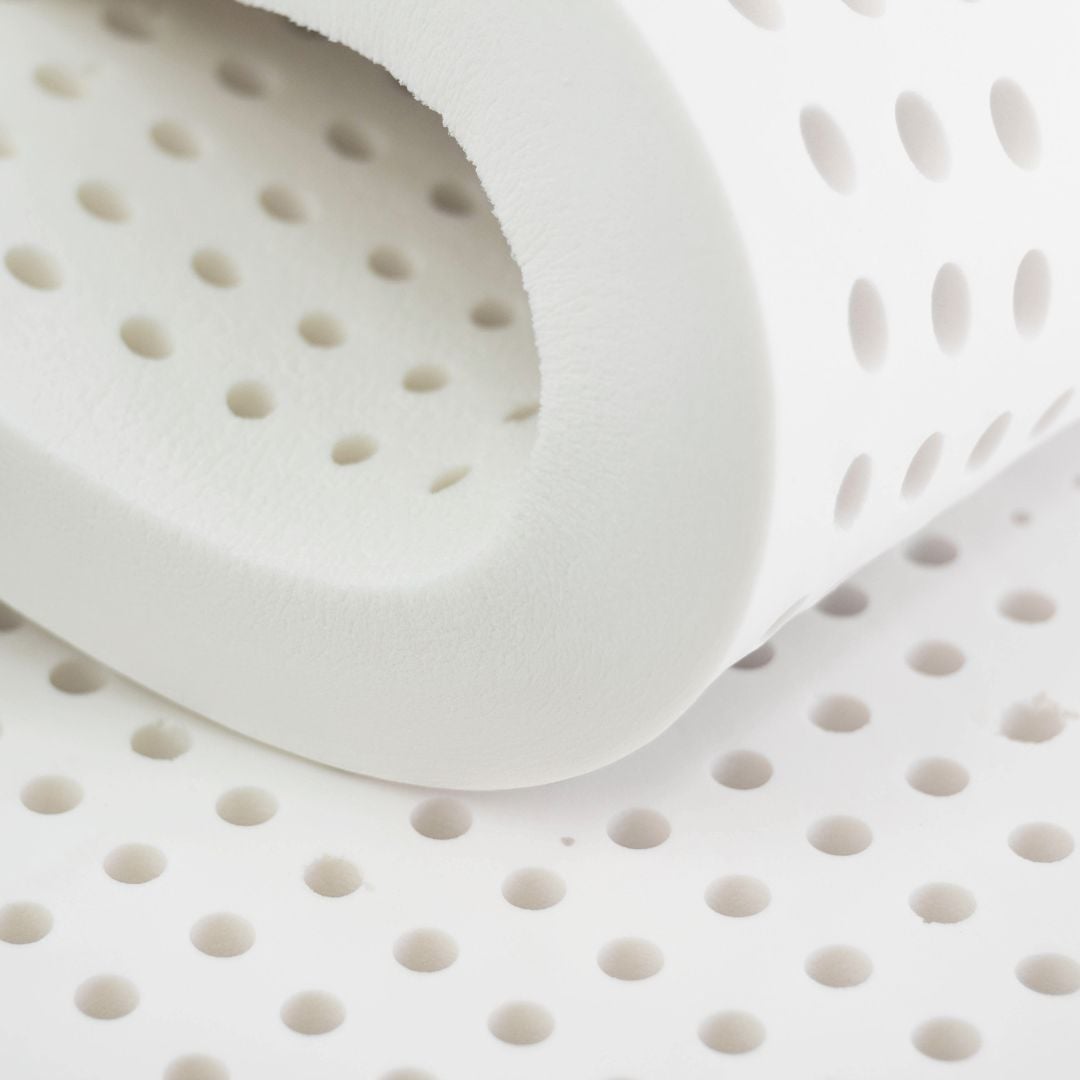
Therefore, prefer Oeko-Tex® certified foams, ventilated natural latex or thermoregulated technologies like gel-infused to avoid excessive perspiration and persistent dust mites. Discover our selection of healthy and eco-friendly single mattresses.

Bed base & bedding: an inseparable duo

An excellent mattress will lose up to 40% of its potential if it rests on an unsuitable bed base!

The role of the bed base goes far beyond simple support: it absorbs up to 30% of nocturnal movements and considerably extends the overall lifespan of your bedding.

Opt for active multi-ply slatted bases if you're looking for flexibility and morphological precision; prefer rigid upholstered bases if you're aiming for absolute firmness.

The advantages of a single bed

For children, teenagers... and much more!

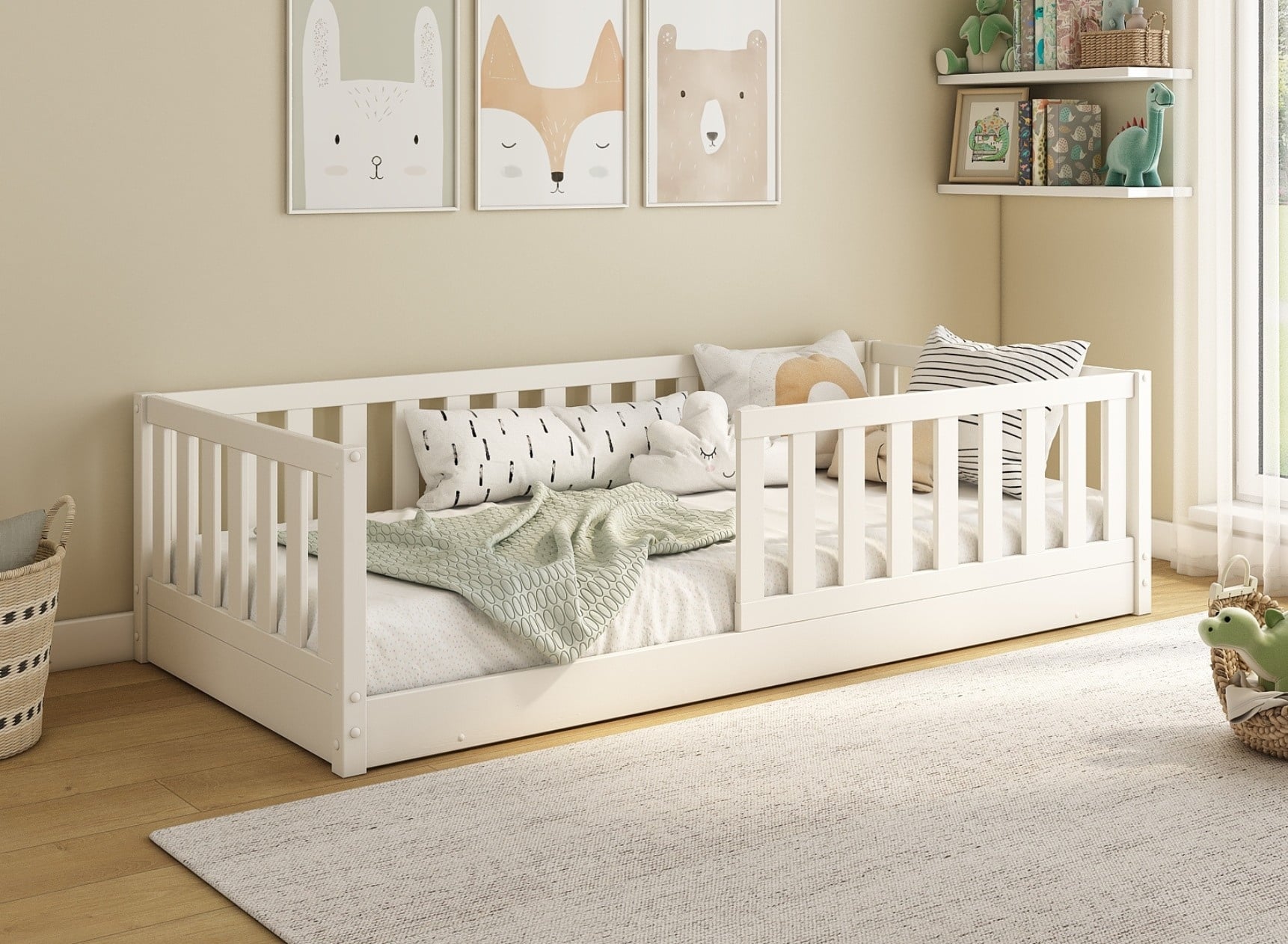
The single bed is not just for children! Sure, it perfectly accompanies their growth thanks to its modularity and adapted size... But it's also suitable for young adults living alone or temporarily sharing their accommodation.

The ergonomics of a real individual sleeping surface effectively supports all body types up to about 100-110 kg depending on the quality of the chosen mattress.

Seniors & specific pathologies: targeted comfort

For the elderly or those suffering from chronic pain (cervical arthritis, lower back pain...), a model with an electric backrest lift option literally changes the game!

By optimising thoracic inclination without physical effort, this type of bedding accessory prevents nocturnal gastric reflux and significantly improves respiratory quality during deep sleep.

Small spaces = big ideas!

Urban studios? Holiday homes? Guest rooms? The single bed remains unbeatable when it comes to combining maximum functionality with spatial minimalism.

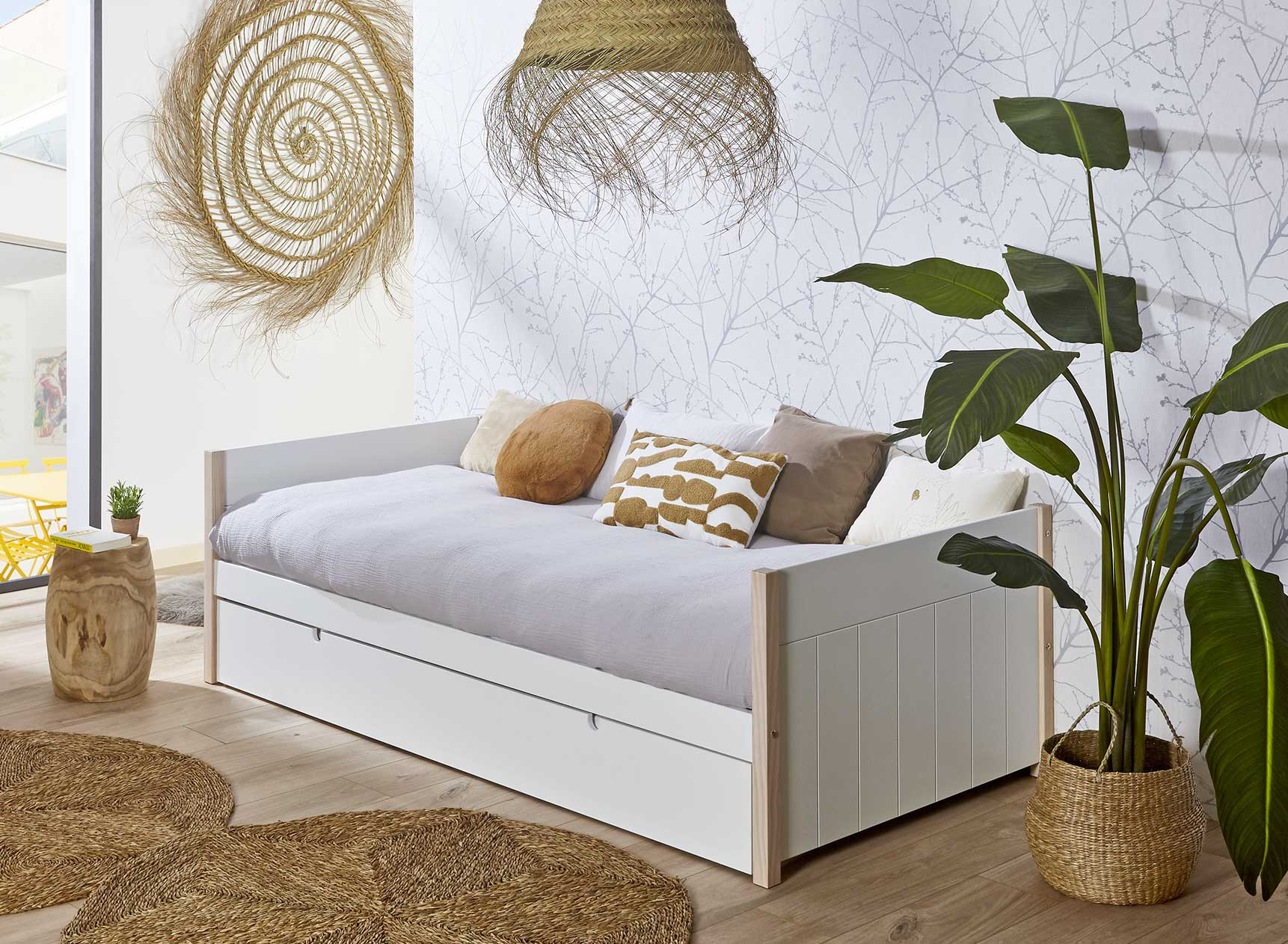
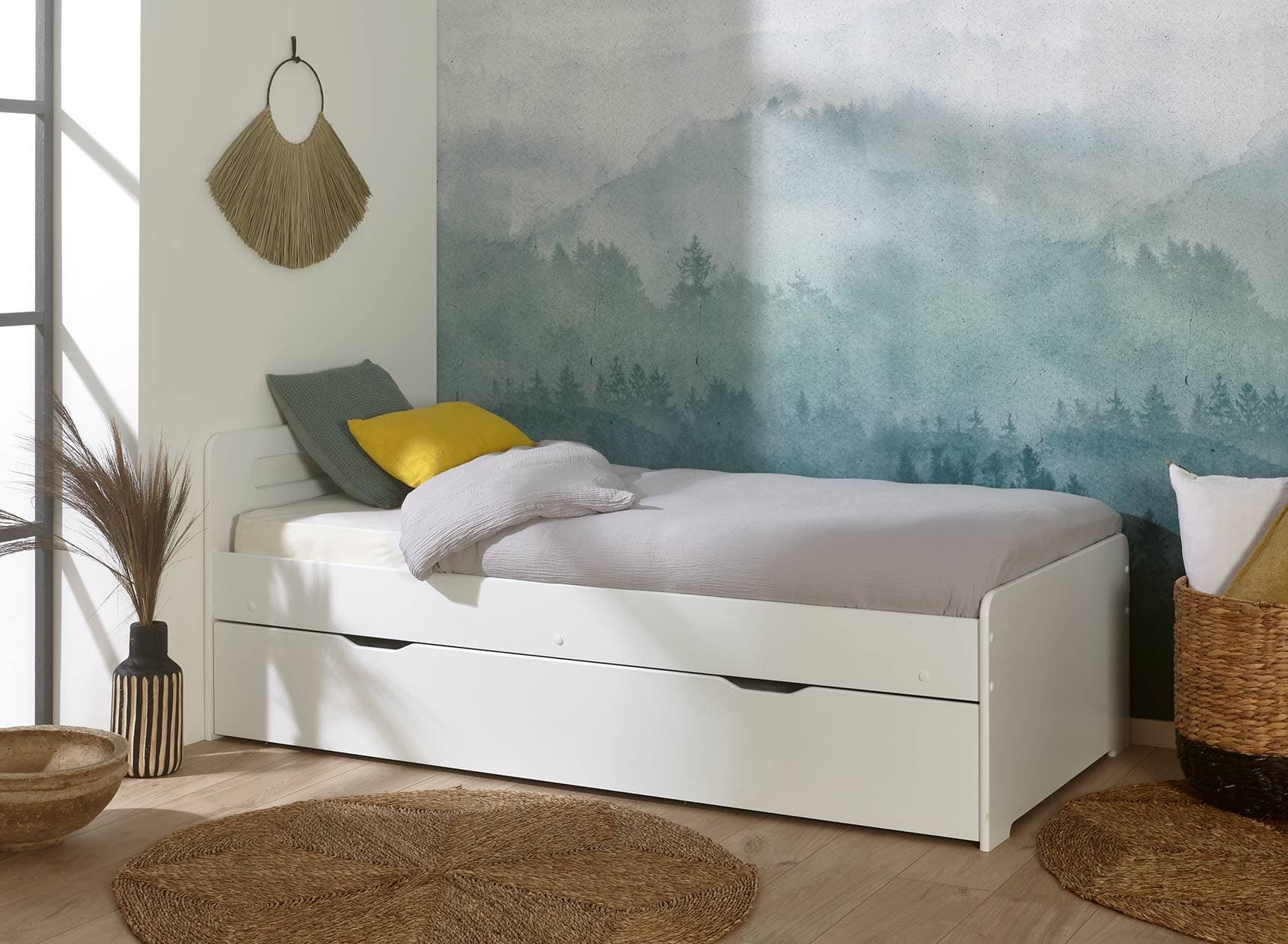
Its small footprint also allows for the occasional addition of a second sleeping space via a pull-out trundle bed — ideal for hosting without compromising on your own comfort!

To learn more about the trundle bed, check out our blog article.

Aesthetics and style of the single bed

Irresistible modern colours & styles

Neutral colours like pearl grey or sand beige currently dominate decor trends — perfect for visually enlarging a room while maintaining warmth and elegance. But beware of glossy finishes that reflect artificial light too much!

Classic design revisited with boldness

Solid wood frames revisited with clean geometric lines are seducing several brands! The idea? Preserve traditional robustness while subtly modernising the overall look with a few contemporary details (invisible feet, rounded corners...).

Perfect harmony = assured serenity

A good aesthetic choice is one that soothes you as soon as you enter your room. Therefore, prioritise harmony with your existing curtains, floors (light parquet?) and soft lighting fixtures. Lasting elegance always arises from overall coherence!

Maintaining your single bed

Easy but regular cleaning

Airing your mattress twice a week prolongs its natural freshness! Also use a breathable waterproof cover — an essential anti-dust mite barrier, especially for children or pregnant women with allergies!

Controlled durability through good practices

Turn your mattress every three months (head/foot direction + front/back) if not reversible; regularly vacuum the bed base/frame; avoid violent impacts against walls...

These simple gestures increase the average lifespan of good bedding by up to +5 years!

Safety first

Always properly secure your bed frame to the floor using non-slip pads; regularly check screws/central supports, especially if frequently used intensively (hyperactive child, for example).

Price & smart buying

Controlled cost without sacrificing quality?

A good complete single bed (frame + base + mattress) starts around £220 but can go up to £1300 depending on materials used (natural latex...), brand/manufacturer and chosen options (motorised leg lift...).

Smart investment = long-term peaceful sleep

Think long-term! A thoughtful investment in quality bedding considerably reduces musculoskeletal disorders linked to poor sleeping conditions... thus fewer indirect medical expenses!

Smart comparison = guaranteed net advantage

Don't hesitate to compare packaged offers including bedding accessories like ergonomic pillows or high-end mattress protectors; these details often make all the difference over several years of effective daily use!

Discover our furniture