How to choose a headboard: width, wall-mounted or floor-standing, and storage

- Categories : Adult bedroom
Nateo CONCEPT

How do you choose a headboard?

The headboard is often the first piece of furniture you notice when you enter a bedroom. It dresses up the wall, protects the paint, and makes reading in bed more comfortable. But it's easy to get it wrong: a headboard that's too narrow, a wall-mounted model that requires drilling, or a storage version that's too deep for the room.

In this guide, we answer the three questions that shape your choice: how wide it should be for your bed, whether it should be wall-mounted, floor-standing, or attached to the bed, and whether you need storage. You'll also find guidance on height and materials, whether you're choosing an adult headboard or furnishing a child's bedroom.

At a glance

  • Choose a headboard at least as wide as your bed, ideally 5 to 10 cm wider: 145 to 170 cm for a 140 cm bed, or 165 to 180 cm for a 160 cm bed.
  • Floor-standing if you don't want to drill, wall-mounted to keep the floor clear, or attached to the frame so it moves with the bed.
  • With storage if the bedroom lacks nightstands; without storage if every centimeter of depth counts.

How wide should your headboard be for your bed?

A headboard should be at least as wide as the bed, and preferably a little wider: 5 to 10 cm on each side is enough to give it visual balance. If it's narrower, the bed appears to stick out; if it's much wider, it takes up space for nightstands.

Before ordering, measure the width of the bed frame, not the mattress. A 160 x 200 cm bed is often 165 to 170 cm wide overall, depending on the thickness of its frame. If you're still deciding on the size of the bed itself, our guide to choosing a double bed size can help.

Wider than the bed: the headboard that replaces nightstands

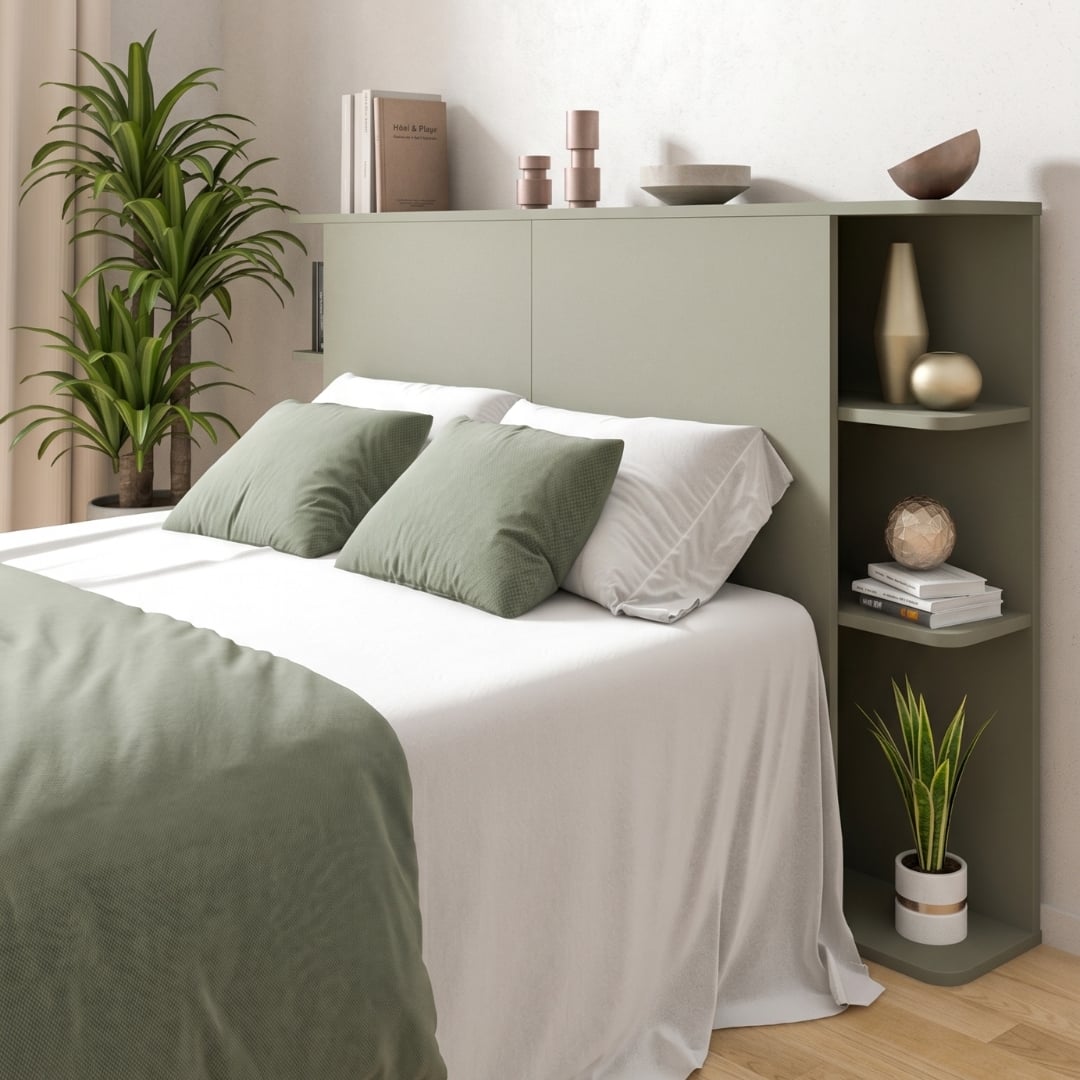
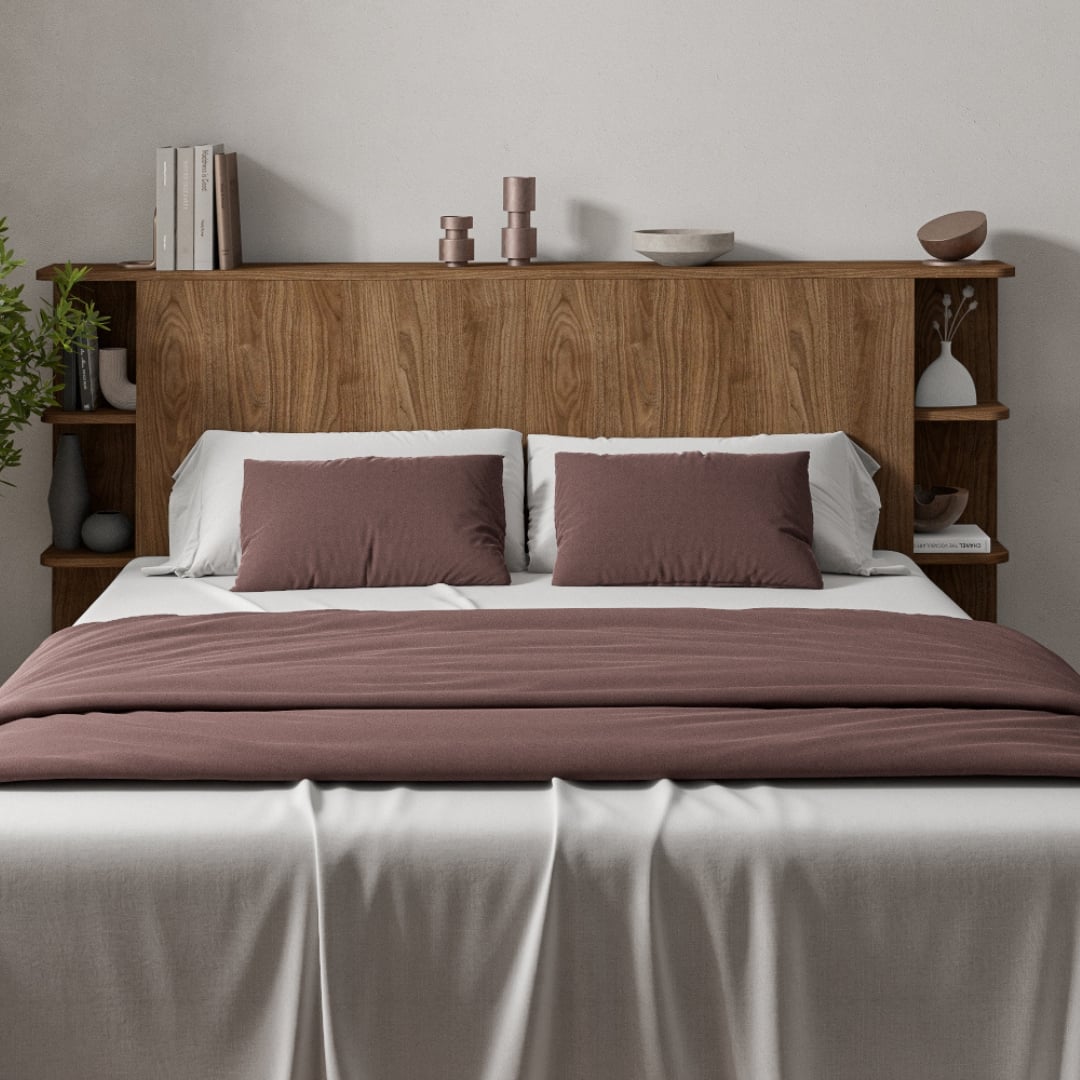
Some headboards deliberately extend beyond the width of the bed to include storage on the sides. The COLETTE headboard is 202 cm wide, with a 159 cm solid center section: the cubbies on either side serve as nightstands. In this case, allow for the full width of the furniture, not just the bed, and check that there's still a comfortable walkway to the window or closet.

What about height?

To lean back comfortably, a headboard should rise at least 40 cm above the mattress. Since a double bed with a bed base is generally 45 to 60 cm off the floor, most adult models are 100 to 120 cm high: 106 cm for COLETTE, 113 cm for BILLIE with its raised storage unit, and 120 cm for ALOE.

A lower model is preferable beneath a window, under a sloped ceiling, or in a child's bedroom. Consider how it lines up with your nightstands, too: our article on the ideal nightstand height offers useful guidance.

Wall-mounted, floor-standing, or attached to the bed: which headboard should you choose?

Installation matters as much as style: it determines whether you'll need to drill, whether the bed can be moved, and whether the headboard can come with you when you move.

Criterion Wall-mounted Floor-standing Attached to the bed frame
Drilling Yes, into the wall No (anti-tip wall attachment recommended) No, screwed to the bed
Moves with the bed No No Yes
Compatible with all beds Yes Yes No; check the mounting points
Ideal for Clear floor space; a floating-look bed Renting; frequent decor changes Beds moved often; beds in the middle of the room

The floor-standing headboard

Placed against the wall, it installs without any work and is as easy to change as your decor. It's the most versatile solution, since it pairs with almost any bed. The COLETTE headboard is designed to rest on the floor, while the ALOE padded headboard leans against the wall on two rubber pads, with a rear cutout that accommodates a baseboard up to 12 cm high.

Looking for a floor-standing 160 cm headboard for a double bed? Compare the models in our selection and check the installation method on each product page. In a child's bedroom, always add an anti-tip wall attachment, even if it's discreet.

The wall-mounted headboard

Attached directly to the wall, it leaves the floor completely clear and suits beds without visible legs or low bed bases. It does, however, require drilling into a load-bearing wall or a partition that can support its weight, and positioning it precisely at the right height. It's a lasting choice, but less suitable if you rent.

The headboard attached to the bed frame

Screwed to the frame, it forms a single unit with the bed: nothing shifts when you lean back, and you can move the bed without removing the headboard. It's also the only practical option if you place your bed in the middle of the room. Just check that the mounting points are compatible: the ACHILLE solid beech solid-panel headboard, for example, attaches to the ACHILLE 160 x 200 cm solid wood bed without any special tools.

Headboard with or without storage?

It all depends on the space available on either side of the bed and how much depth you can spare. A headboard with storage moves the bed 20 to 25 cm farther into the room; a solid-panel model is barely 12 cm deep.

With storage: cubbies, shelves, and built-in nightstands

A headboard with storage replaces one or two nightstands and keeps a lamp, book, and phone within reach. It's a good option when there's too little space beside the bed for furniture, or when you want the bedroom to feel less cluttered.

  • Open cubbies: COLETTE (202 x 106 x 25 cm) combines upper and lower cubbies, with a built-in cable opening so you can plug in a lamp or charger without a visible cord.
  • Closed storage: the BILLIE 160 cm with raised storage unit combines three large open cubbies with shelves hidden behind doors for things you'd rather keep out of sight.
  • Built-in nightstands: on a bed with built-in nightstands like the PAVEL 140 x 190 cm bed, the headboard and nightstands form one perfectly aligned piece of furniture.

Without storage: the solid-panel headboard

A solid-panel headboard puts the focus on its shape and material. At 11.5 cm deep, the ACHILLE solid-panel headboard barely moves the bed farther into the room, which matters in a small bedroom. It's also the simplest choice if you already have nightstands you love or want a very uncluttered bedroom.

The alternative: under-bed storage

If it's mainly bedding or seasonal items that need a home, storage under the bed may be a better fit. A storage bed with a headboard like the BASTIA 160 x 200 cm combines both: a matching headboard and a large storage compartment. To choose between a storage compartment and drawers, read our storage bed vs. drawer bed comparison.

Which material and model suit your bedroom?

Once you've settled on width, installation, and storage, the material makes a difference in everyday use: durability, upkeep, and the feel of the room.

Solid wood, veneered wood, or fabric

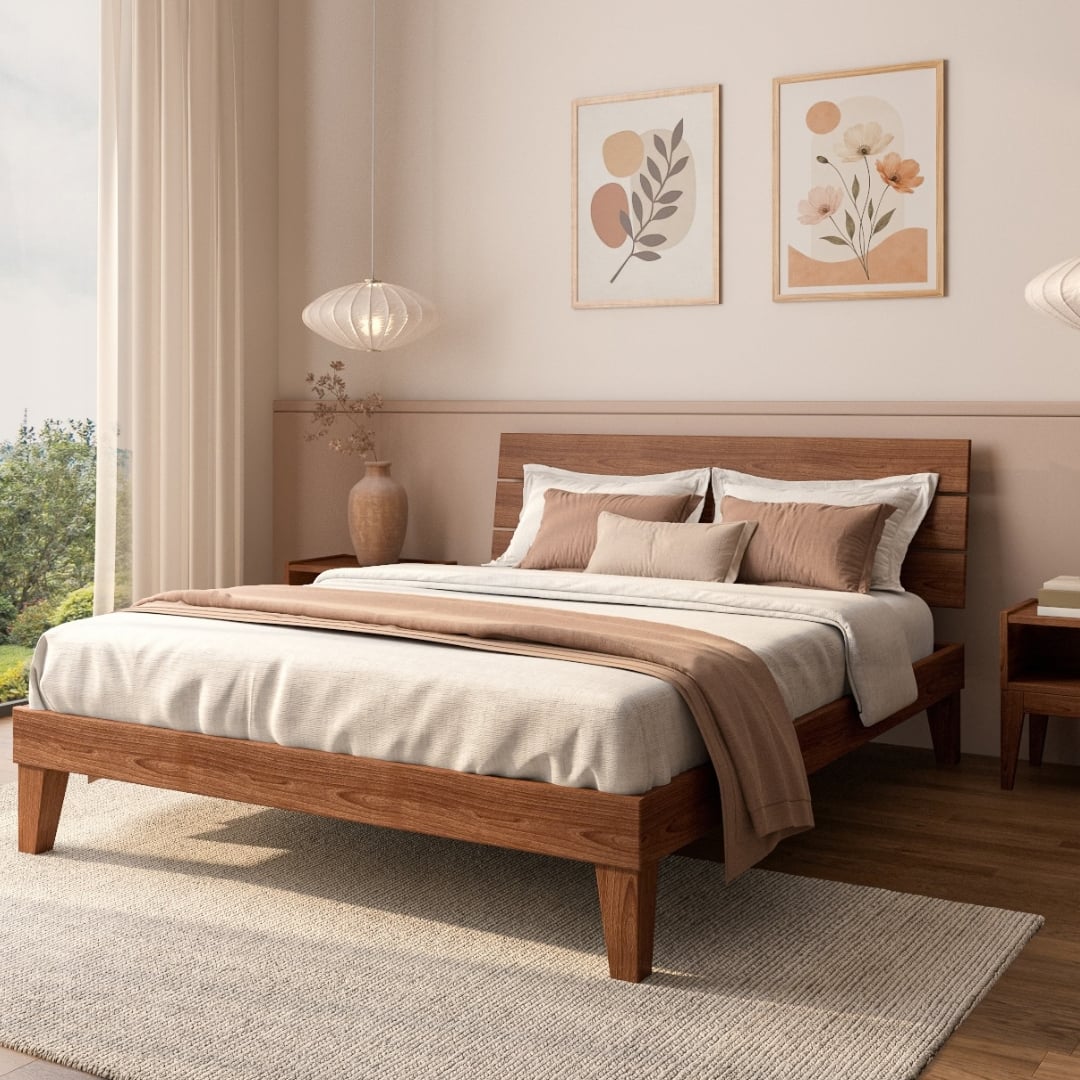
  • Solid wood: the most durable option, it develops a patina over time. The ACHILLE range is made from PEFC-certified solid beech, with no particleboard. Explore all our wooden headboards and matching solid wood beds.
  • Veneered panels: they allow for more structured designs, with cubbies and doors. COLETTE and BILLIE use PEFC-certified panels with low formaldehyde content.
  • Padded fabric: the most comfortable option for leaning back to read, it adds a soft touch. ALOE's textured fabric (440 g/m²) resists pilling and repels splashes.

For an adult bedroom

Choose a generous width and a height of 100 to 120 cm to give the wall structure. A 140 cm headboard or a 160 cm headboard pairs with an existing double bed; if you're replacing everything, a bed supplied with its headboard ensures the proportions are right. Explore the options in our adult bedroom collection.

For a child's bedroom

There's no need to add a headboard to a crib: it becomes useful when your child moves to a child's bed. Choose a 90 cm children's headboard made of wood, with softened corners, and always secure it to the wall or bed to prevent it from tipping over. Avoid loading shelves above your child's head.

For a teen's bedroom

Teenagers spend a lot of time in bed: reading, using their phones, and doing homework. A PRADO 90 cm headboard with raised storage unit has cubbies for books and an alarm clock, without adding a nightstand to a room that's often already quite full.

FAQ: your questions about headboards

For a 160 x 200 cm bed, aim for a headboard 165 to 180 cm wide: the width of the frame plus a few centimeters on each side. Allow for a height of 100 to 120 cm so you can lean back comfortably.

Ideally, yes—by 5 to 10 cm on each side. At a minimum, it should match the width of the frame. A much wider headboard only makes sense if it includes nightstands or cubbies.

A floor-standing or wall-mounted headboard works with almost any bed because it isn't attached to the bed. A model attached to the frame, however, requires compatible mounting points: check the product page before ordering.

Choose a floor-standing headboard held between the wall and the bed, or a model attached to the bed frame. In a child's bedroom, a small anti-tip attachment is still recommended.

A headboard with storage is more compact if space is tight beside the bed or you want a perfectly aligned look. Nightstands offer more surface space and drawers: browse our selection of nightstands.

Conclusion: the right headboard in 3 questions

To choose the right headboard, keep three things in mind. It should be at least as wide as the bed frame, ideally extending 5 to 10 cm beyond it on each side. Choose the installation method to suit your needs: floor-standing to avoid drilling, wall-mounted to keep the floor clear, or attached to the bed so it moves with it. Finally, built-in storage makes sense when there's no room for nightstands, though it adds 10 to 15 cm of depth.

Have your measurements ready? Browse all our wooden headboards made in France, or shop by size: 140 cm headboards, 160 cm headboards, and children's headboards.