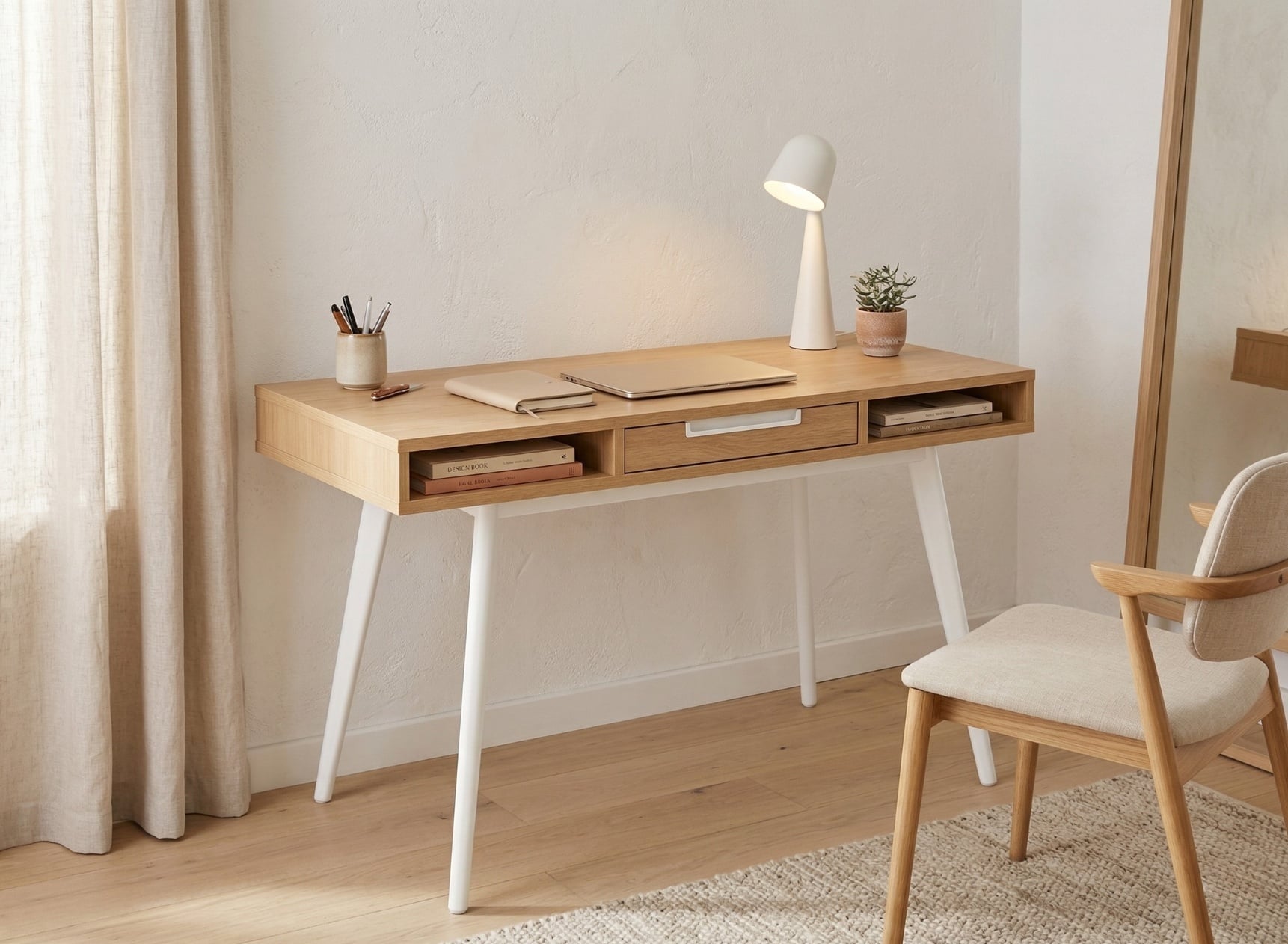
Organizing your desk: declutter, sort and tidy
Nateo CONCEPT
Tidy desk, clear mind
Is your desk overwhelmed with clutter? Decluttering, sorting, and optimizing your workspace are important steps to improve your productivity and daily well-being. Discover simple and effective methods to sustainably organize your work environment, combining practical tips and ergonomic space management.
2 ultra-effective methods to organize your desk
The 5S principle for optimizing your professional environment
The 5S (Seiri, Seiton, Seiso, Seiketsu, Shitsuke) methodically organize each element of the desk to improve efficiency and mental clarity.
- Start by eliminating unnecessary supplies (Seiri)
- Assign a home to each item (Seiton)
- Clean regularly (Seiso).
- Standardize these practices daily (Seiketsu)
- Maintain them sustainably (Shitsuke).
The Marie Kondo method adapted to workspace
The KonMari method, adapted to offices, is based on sorting by category and keeping objects that spark joy.
Group all pens, scissors, and staplers together to visualize the whole. Classify them as "use daily", "occasionally", and "never". Keep only those that facilitate your work or enhance your day.
Fundamental principles of desk decluttering
Understanding the difference between sorting, organizing, and decluttering
Sorting involves categorizing items according to their usefulness, organizing means placing them in a dedicated space, and decluttering means eliminating the superfluous to free up space. Each of these steps plays a specific role in transforming a work environment. A well-organized desk relies on a structured approach: decluttering frees up space, sorting establishes logical classification, and organizing assigns a place to each item. These successive actions improve productivity and reduce stress by facilitating access to daily work tools.
The benefits of a well-organized workspace
An organized workspace improves productivity by reducing time lost searching for tools or documents. Concentration increases and stress decreases thanks to better control of your professional environment.
Organization optimizes time management by making it easier to locate important items. An ergonomic environment promotes concentration and physical well-being.
Optimizing workspace allows for increased efficiency and transforms your workplace into a space conducive to professional performance.
Evaluate your space and identify problem areas
A visual analysis reveals cluttered areas. Start by observing surfaces covered with unused items, hard-to-access drawers, and overloaded shelves. This preliminary assessment guides the decluttering process. Critical areas include:
- Work surfaces cluttered with unsorted documents
- The drawers where useless supplies accumulate
- The shelves overloaded with obsolete files
- The dead corners under furniture where forgotten items pile up
- The poorly ventilated storage spaces between frequently used items and rare accessories.
To establish a personalized action plan, start by identifying priorities based on their influence on your daily work. Assign an urgency level to each area and set a realistic schedule for interventions. Adapt storage solutions to your desk configuration by combining vertical storage and storage adapted to item sizes.
Declutter in stages for lasting results
Break down the process into manageable steps: documents, supplies, electronic accessories. Prioritize heavily cluttered areas for progressive and motivating cleaning.
Label three boxes: "keep", "donate", and "digitize". Place each item in one of them after use. An intuitive system with logical storage and immediate accessibility prevents disorder.
Practical storage solutions to maximize space
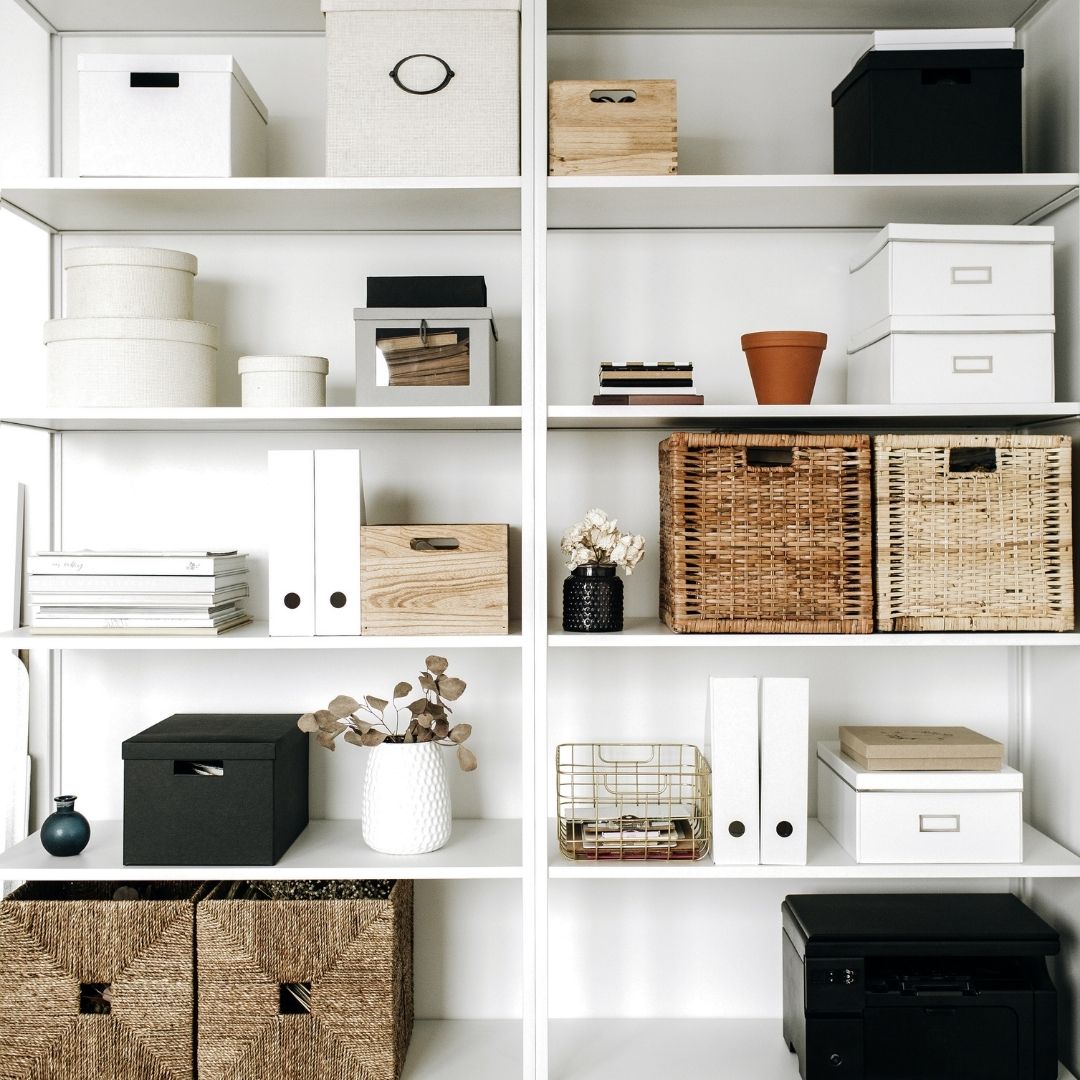
Use vertical space with shelves and wall storage
Wall shelves transform walls into useful storage spaces. They free up floor space and keep items within reach.
Bookcases optimize vertical space for books and files. Install shelves above the work table to declutter surfaces. Place frequently used documents at eye level for quick access.
Organize drawers and cabinets with suitable dividers
Dividers split drawers into functional compartments. They adapt storage space to the size of stored items.
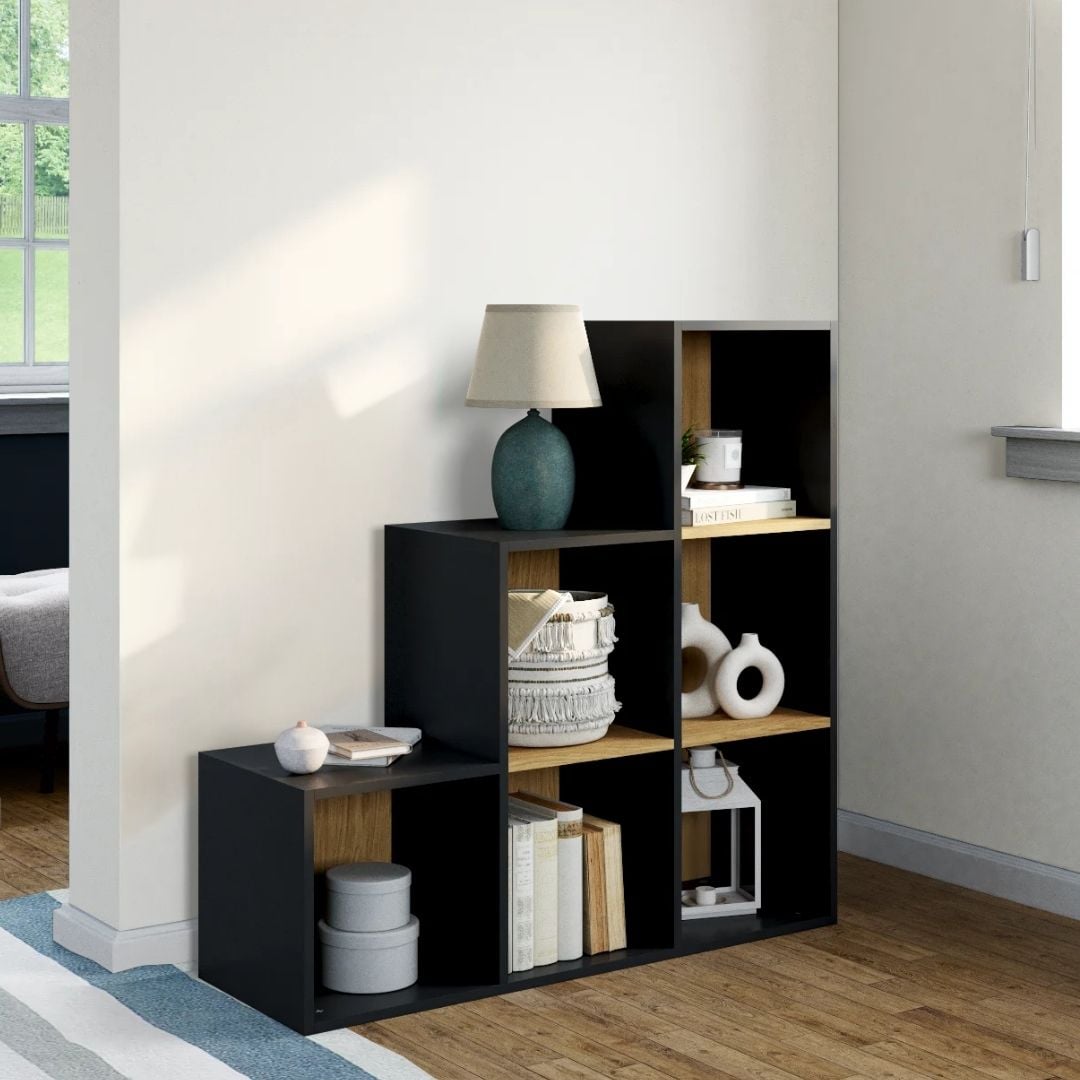
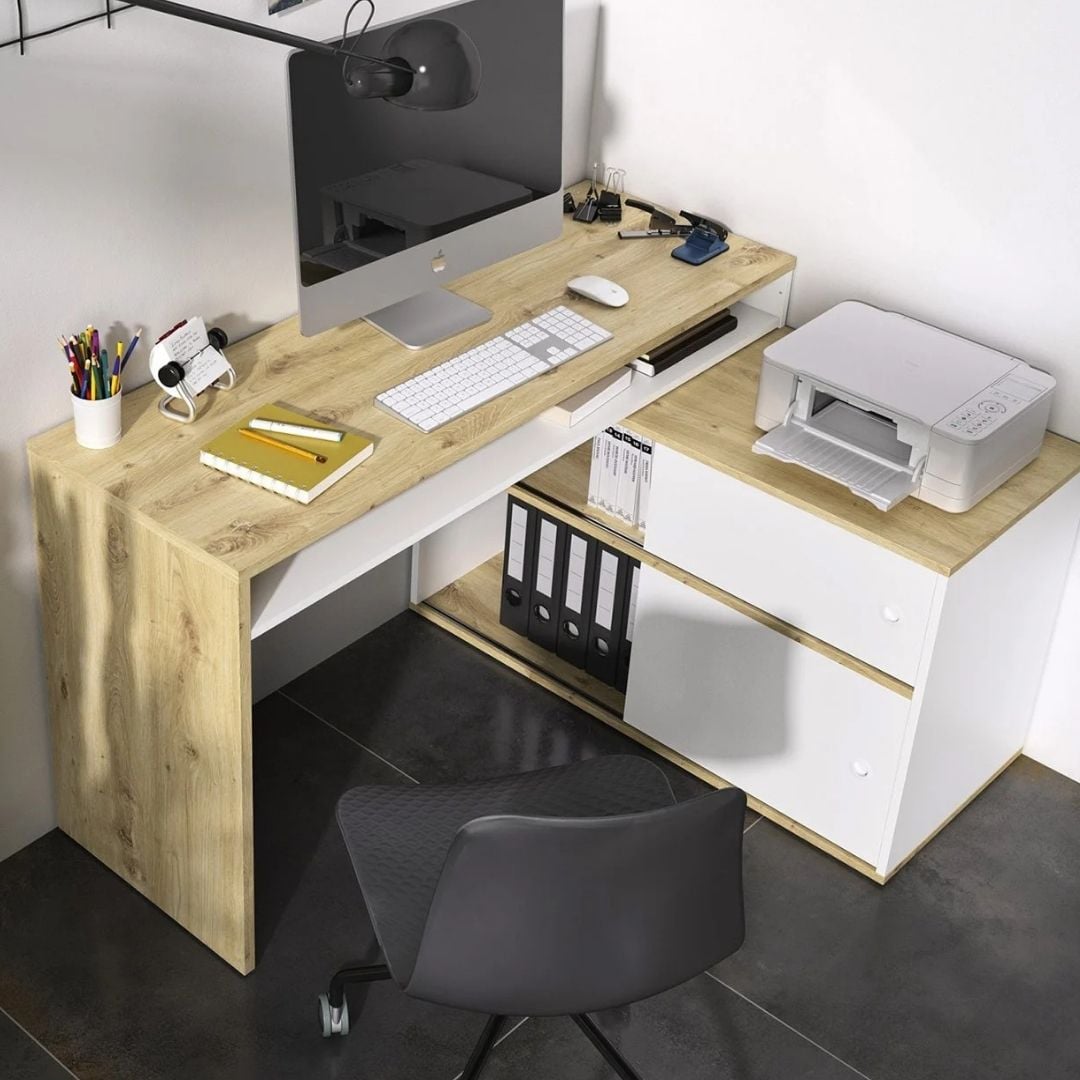
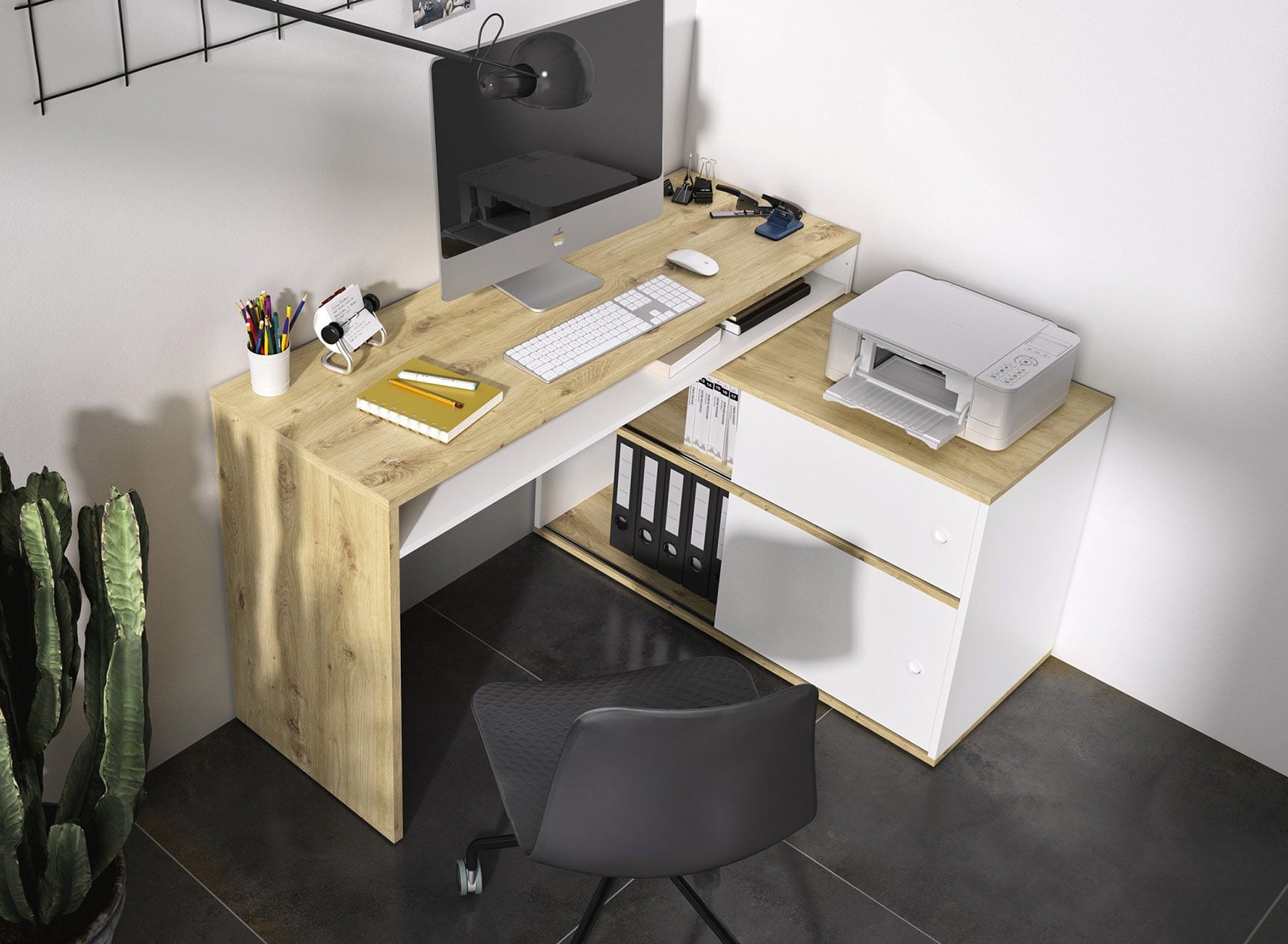
Use modular storage, which you'll find at Nateo Concept such as the modular adult desk ERIK with integrated storage to group supplies and accessories by frequency of use.
Multi-level drawers store documents and files without clutter.
Storage boxes and baskets: how to use them effectively
Boxes and baskets offer solutions adapted to each type of item. Their choice depends on the content to be stored and the available space.
To organize your children's desk or adult desk, use these storage solutions:
- Vertical filing boxes for sensitive documents and multi-level drawers for quick access to frequent files
- Modular drawer organizers for office supplies, with compartments adapted to item sizes
- Small compartmentalized or transparent boxes for storing pens, paper clips, and other technological accessories
- Plastic or wooden boxes for heavy items, combined with fabric baskets for portable supplies
- Stackable plastic bins with lids to protect documents from moisture and optimize vertical space
Decluttering, sorting, and organizing aren't enough: optimizing your workspace requires a structured method and an ergonomic vision.
Techniques like 5S or the Marie Kondo method show that an organized desk reduces stress and maximizes productivity. Starting now, assign a place to each item, use vertical space, and transform your environment for a smoother and more inspiring professional life.
Sage green and wood bedroom: how to create a natural and soothing space
Children's bed size: the complete guide for healthy and safe sleep
How to decorate your bedroom with healthy materials?