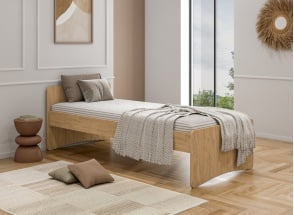
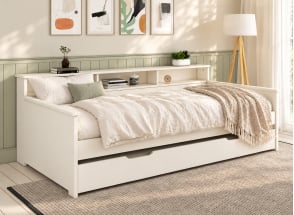
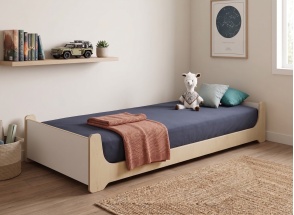
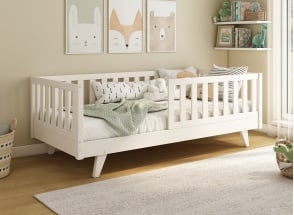
Children's bed size: the complete guide for healthy and safe sleep
Nateo CONCEPT
Children's bed size: the guide
Understanding how to choose the right children's bed size is no small task. This choice, seemingly simple, has a direct impact on comfort, safety, and even the harmonious growth of your child. Between safety standards, dimensions to respect according to age, and transitions to a junior bed or an adjustable bed, it is easy to feel overwhelmed. Are you a parent? Do you want to make the right choice from the start? This guide is for you. It brings together advanced data, little-known tips, and practical advice to navigate this complex world… with confidence.
What children's bed size should you choose?
| Age | Recommended bed size | Mattress size | Duvet size | Duration of use |
|---|---|---|---|---|
| 0 – 2 years | 60×120 cm (cot) | 60×120 cm | 75×100 cm | ~2 years |
| 2 – 6 years | 70×140 cm (transition) | 70×140 cm | 100×140 cm | ~4 years |
| 6 – 10 years | 90×190 cm (single) | 90×190 cm | 140×200 cm | ~5 years |
| 10+ years | 90×200 cm (adult standard) | 90×200 cm | 140×200 cm | Long term |
| Adjustable | 60→90×190 cm | Adaptable | By stage | 10+ years ✓ |
Choosing the right children's bed size is not a minor detail: it has a direct impact on sleep quality, safety, and your child's development. Between rapid growth, available space, and safety standards such as EN 716, the decision can quickly become complex.
A well-sized bed acts like a "second skin" for sleep: it accompanies every movement without restriction. At Nateo Concept, the choice of PEFC-certified solid wood and solvent-free finishes guarantees a healthy environment, from the very first nights.
Finding the ideal children's bed size by age
Choosing the right size is like fitting shoes: too small is uncomfortable; too large feels unsafe. Each age group corresponds to a specific need.
From 0 to 3 years: the reassuring cocoon of 60x120 or 70x140 cm
At this age, the child needs a contained space. The 60×120 cm bed creates a reassuring environment, close to a cot.
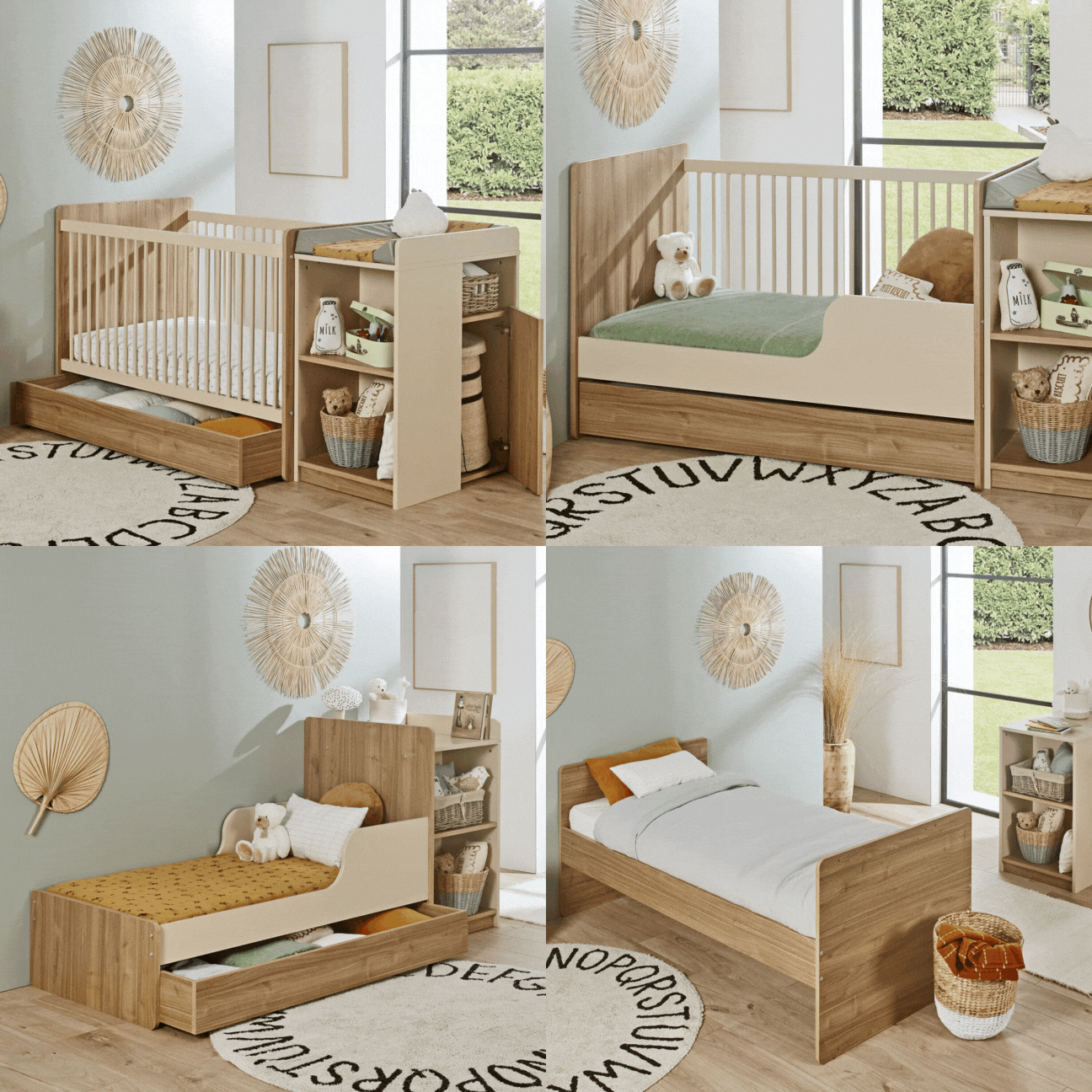
The transition to a 70×140 cm bed allows for a gentle transition, particularly with a removable safety guard rail. It is the perfect balance between independence and protection, like a small nest that gradually opens up.
To find out more, read our blog article: "until what age to use a 60x120 baby bed"
From 6 to 10 years and beyond: the move to the standard 90x190 cm
From age 6, growth accelerates. The 90×190 cm bed becomes the reference.
It offers a space similar to an adult bed while remaining suited to the child's build. For smaller bedrooms, an 80×160 cm alternative can serve as a smart transition.
Did you know?
A poorly sized bed can increase micro-awakenings by up to 30%, directly impacting the child's concentration and mood. Choosing the right size therefore acts as a true "sleep regulator".
Dimensions and comfort: the 20-centimetre rule
A bed that is too short is like sleeping in a bag that is too tight: every movement becomes an invisible constraint.
The 20 cm rule is simple: the bed must measure at least 20 cm more than the child's height. This margin helps maintain optimal spinal alignment and promotes deep sleep.
A proportionate space acts as a natural buffer against micro-awakenings. The child can move freely without hitting the ends of the bed, which improves the overall quality of rest.
3 key criteria for choosing the right children's bed size
Choosing a bed is like building a foundation: everything rests on it. Three pillars should guide your decision.
- The child's height + 20 cm margin
- The available space in the bedroom
- Durability (adjustable or standard bed)
The first criterion is biological: it follows growth.
The second is spatial: it determines circulation and visual comfort.
The third is strategic: investing in an adjustable bed means planning ahead, just as you would with adjustable clothing.
A well-chosen bed then becomes a "growth companion", capable of following the child for several years without compromise.
👉 Fall in love with a healthy, eco-designed Nateo Concept children's bed
Why the Nateo Concept adjustable bed remains the best investment
An adjustable bed is like a smart piece of furniture: it adapts without needing to be replaced.
Models like ANTON allow you to go from 60×120 to 90×190 cm. The result: a single purchase for multiple stages of life. It is a financial saving, but also an ecological one.
With a recommended mattress density of around 35 kg/m³ and Oeko-Tex certifications, these beds guarantee optimal support. Solid wood acts as a stable structure, comparable to a solid foundation in a house.
Safety, standards, and certifications: what Nateo Concept guarantees
The safety of a children's bed isn't always visible, but it is felt every night.
The EN 716-1 and EN 716-2 standards govern bed design to prevent falls and entrapments. VOC-free paints and PEFC-certified woods reduce exposure to harmful substances.
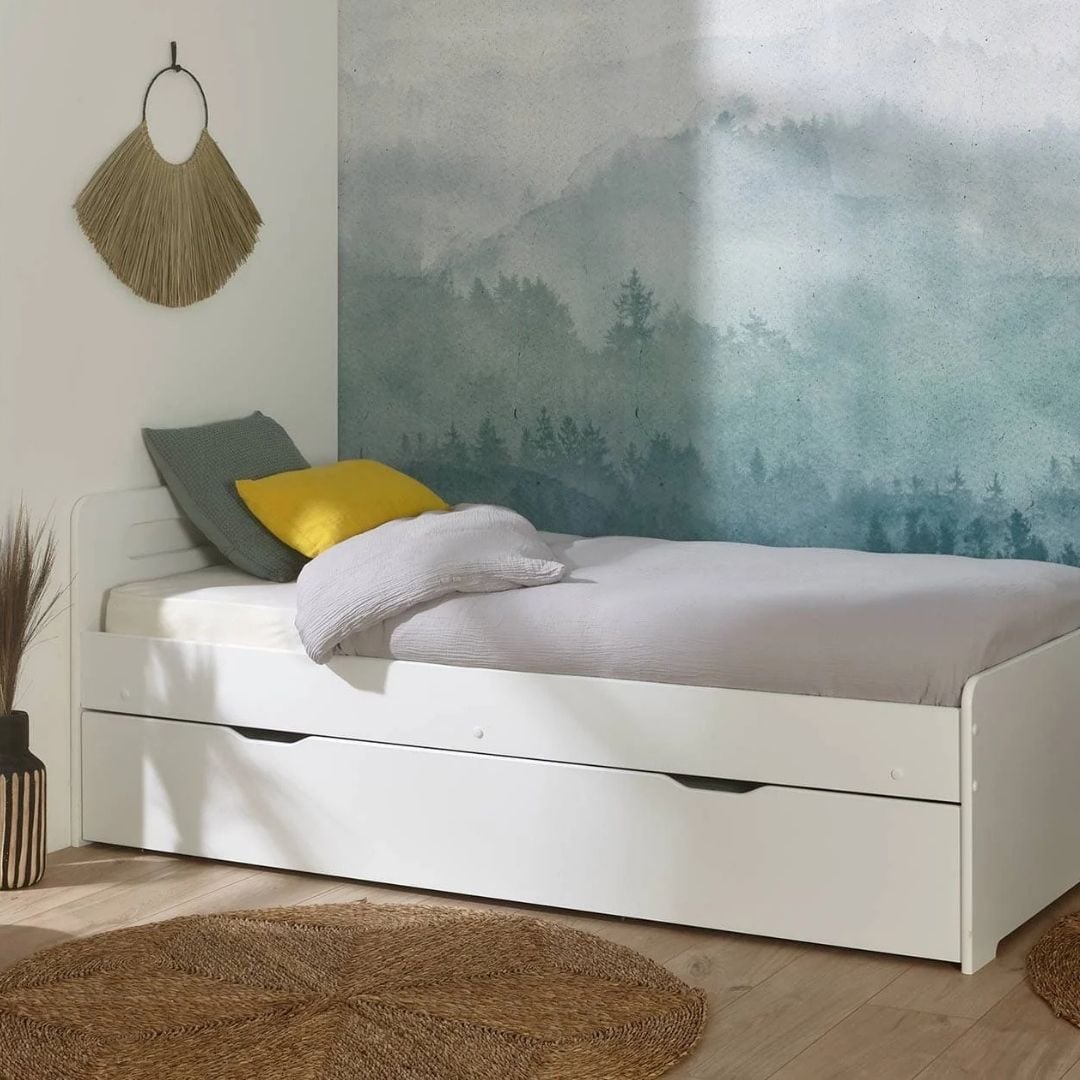
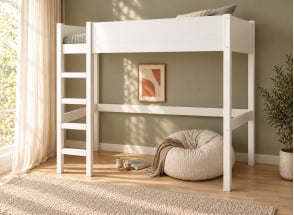
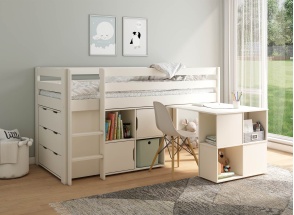
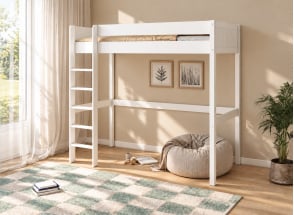
A safe bed works like an invisible barrier: it protects without restricting. Cabin bed models, for example, add a playful dimension while incorporating natural fall protection.
FAQ — Children's bed size
What bed size for a child aged 2 to 3?
The 70×140 cm bed is ideal. It offers more space than the 60×120 while remaining reassuring.
What bed size for a 10-year-old child?
The standard 90×190 cm is recommended. It allows for use over several years.
What are the dimensions of a single bed?
The standard size is 90×190 cm, with a 90×200 cm variant for long-term use.
What safety rail for a 70x140 bed?
A removable guard rail suited to the mattress height is recommended.
Sage green and wood bedroom: how to create a natural and soothing space
Children's bed size: the complete guide for healthy and safe sleep
How to decorate your bedroom with healthy materials?