Designing a child's bedroom: our advice

- Categories : Tips

Nateo CONCEPT

Furnishing and decorating your child's bedroom well

When moving into a new home or simply when your baby has grown up, it is not uncommon to wonder how to furnish your child's bedroom. What are the different areas you will create? How do you choose the furniture? The colours? The decoration? These are all questions that parents ask themselves, and which we will try to answer. So how do you furnish a child's bedroom? Here are our tips!

Spaces tailored to the child's age

The first step is to identify the different areas you want to create in your child's bedroom. This often depends on their age, but also on their habits and preferences. Before embarking on purchases, you can make a list of each area and what you will need to create it.

The sleeping area

The sleeping area is at the heart of a child's bedroom, as it is the primary function of this room. The most important piece of furniture to install there is of course a bed. For example, you can opt for a children's bunk bed. Children very often appreciate the possibility of having a raised bed or making a den with the lower bunk. The children's bunk bed is also a real asset for saving space when two children share the same room. You can also opt for a children's bunk bed with only one sleeping space. In that case, we no longer talk about a bunk bed, but rather a mezzanine bed that only keeps the upper sleeping area.

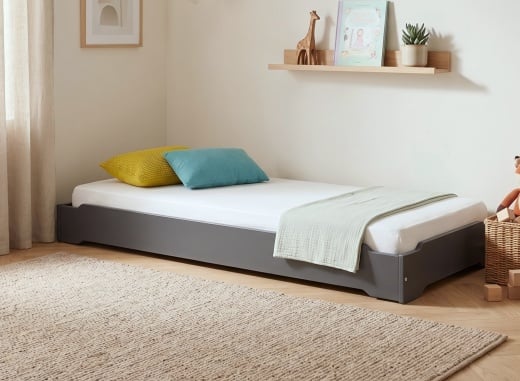
Other options are of course possible, such as the convertible children's bed, for example, which allows you to transform a cot into a child's bed. The children's trundle bed is perfect when you occasionally have friends or cousins staying overnight. You can also opt for a toddler bed such as a Montessori bed (with our SCOTT model for example) so that the child gains independence when getting up and going to bed.

From the children's bunk bed to the convertible bed, there are therefore a multitude of possibilities for creating a pleasant sleeping corner for your child. Don't hesitate to complement this with a children's bedside table and a bedside lamp and/or a night light to create an atmosphere conducive to sleep once evening comes.

The study area

For older children, having a desk will be very useful for doing homework in peace, but also for having a space to draw, for example. You can therefore add a wooden children's desk to your child's bedroom. If space in the room is limited, a raised children's bed can allow a desk to be installed just below it.

The storage area

Storage is essential in a child's bedroom. You can organise clothes in a children's chest of drawers and/or a children's wardrobe. You may prefer to purchase a Montessori piece of furniture so that the child can reach their own clothes and thus gain independence.

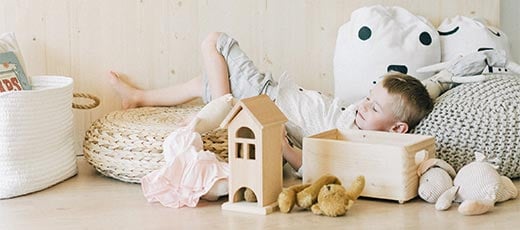
Petit garçon allongé dans sa chambre avec ses jouets

The play area

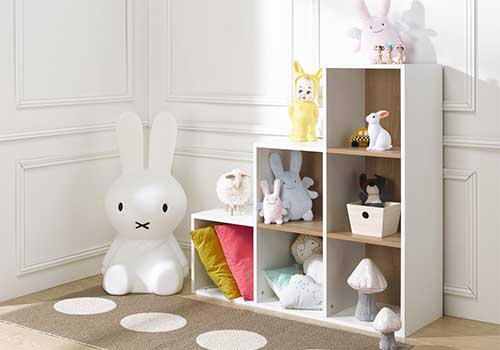
Finally, it is also important that a child has room to play in their bedroom. If space allows, you can create a play area, for example by laying a play mat on the floor. The child can then scatter their toys around as they wish without cluttering the space. We also recommend installing furniture to organise toys, such as toy boxes, baskets or shelves for books.

A decoration that matches their tastes and desires

Once you have defined the different areas to be found in your child's bedroom, you can take a closer look at the decoration. It is not uncommon for children to have certain very specific wishes that do not always match their parents' preferences. It is often recommended to find a compromise so that everyone is satisfied.

It is important that the child feels comfortable in their bedroom, which is why you can perfectly involve them in the choice of frames to hang on the wall or the sheets for their bunk bed, for example. However, you should try to keep a neutral base when it comes to the walls or the furniture. Indeed, as the child grows, they may no longer appreciate the wallpaper they once chose. This way, you avoid certain expenses and give yourself the opportunity to change the look of the room much more easily.

To create a neutral base, opt for colours such as white, beige, grey, etc. Wood is also very easy to match with all kinds of colours. After that, it is the small decorative objects that will make the difference. Sheets, lamps, cushions, frames, rugs and other decorative items will personalise the room and give it the desired look. These elements will be much easier to change if the child grows tired of them.

Durable, quality furniture

Finally, to protect the planet as well as your child's wellbeing. Choose quality, durable furniture. We recommend opting for PEFC-certified solid wood furniture (this means that the wood used to make the children's bunk bed or chest of drawers comes from eco-managed forests). It is also preferable to opt for furniture with a low formaldehyde content and water-based paint in order to limit the presence of volatile organic compounds.

By choosing your furniture carefully and consciously, you ensure you are opting for durable items to limit your environmental impact, while also preserving your child's wellbeing.