Siblings sharing a room: How to arrange it properly?
Nateo CONCEPT
Setting up a shared room for siblings: our tips
When a home lacks a room, it's not uncommon for siblings to share the same space. While adjustments often need to be made for the best cohabitation, it's also important to focus on the room's layout to create an optimal shared space. So how do you set up a shared room for siblings that suits both children? What are the tricks to avoid arguments and ensure a pleasant atmosphere in the room?
Can a brother and sister sleep in the same room?
It is entirely possible for a brother and sister to sleep in the same room. However, their desire for independence and privacy will increase with age, so it's best to keep in mind that sooner or later, each will need their own room. We can imagine harmonious cohabitation until about 8 years old, provided that the siblings get along well. Indeed, very different personalities or a large age gap can be sources of conflict. Therefore, it's up to the parents to find the most suitable solutions for each child to feel comfortable in their room.
Before considering sharing a room (unless it's been the case since the children were very young), make sure this project is feasible, otherwise tensions could quickly arise at home.
Which beds for a shared children's room?
First step in setting up a shared children's room: choosing the bed. The goal is of course for each child to have their own bed, without cluttering the room too much so there's space to add desks, a play area, etc.
The two beds side by side
If the room is large enough, you can opt for two separate single beds. Each can be placed in a part of the room to distinguish the two spaces reserved for each child. Of course, this solution only works if the room is spacious enough, otherwise you may quickly find yourself cramped once storage, desks, and toys are added.
The trundle bed
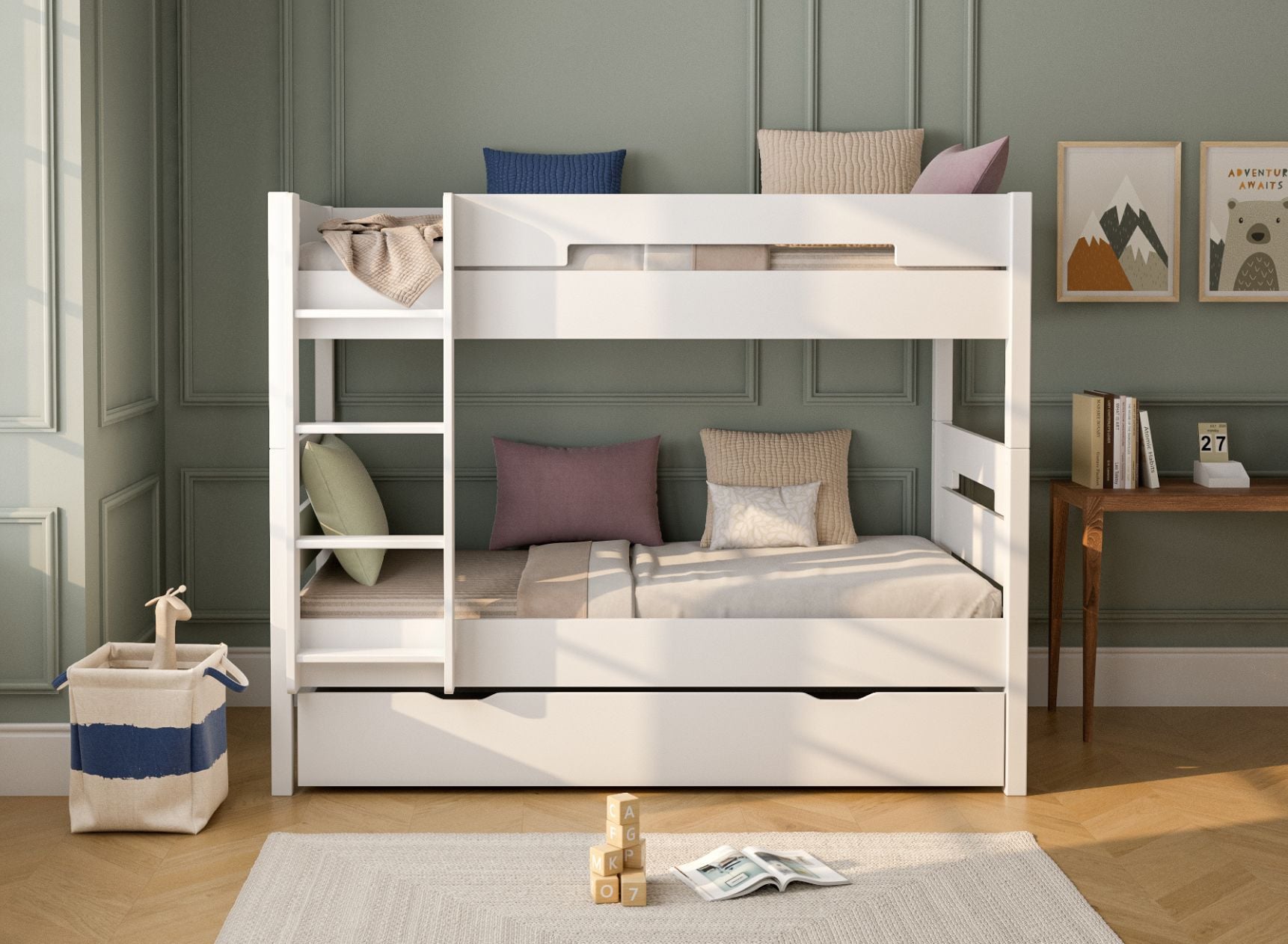
In the same vein as the 3-bed bunk bed, there's the trundle bed. This is a single bed with a drawer under the base that can be pulled out to reveal a second sleeping space. Very practical, this solution is better suited for occasionally accommodating a second child to sleep. Indeed, unfolding and setting up the second bed daily won't be as convenient as using a wooden bunk bed.
The bunk bed
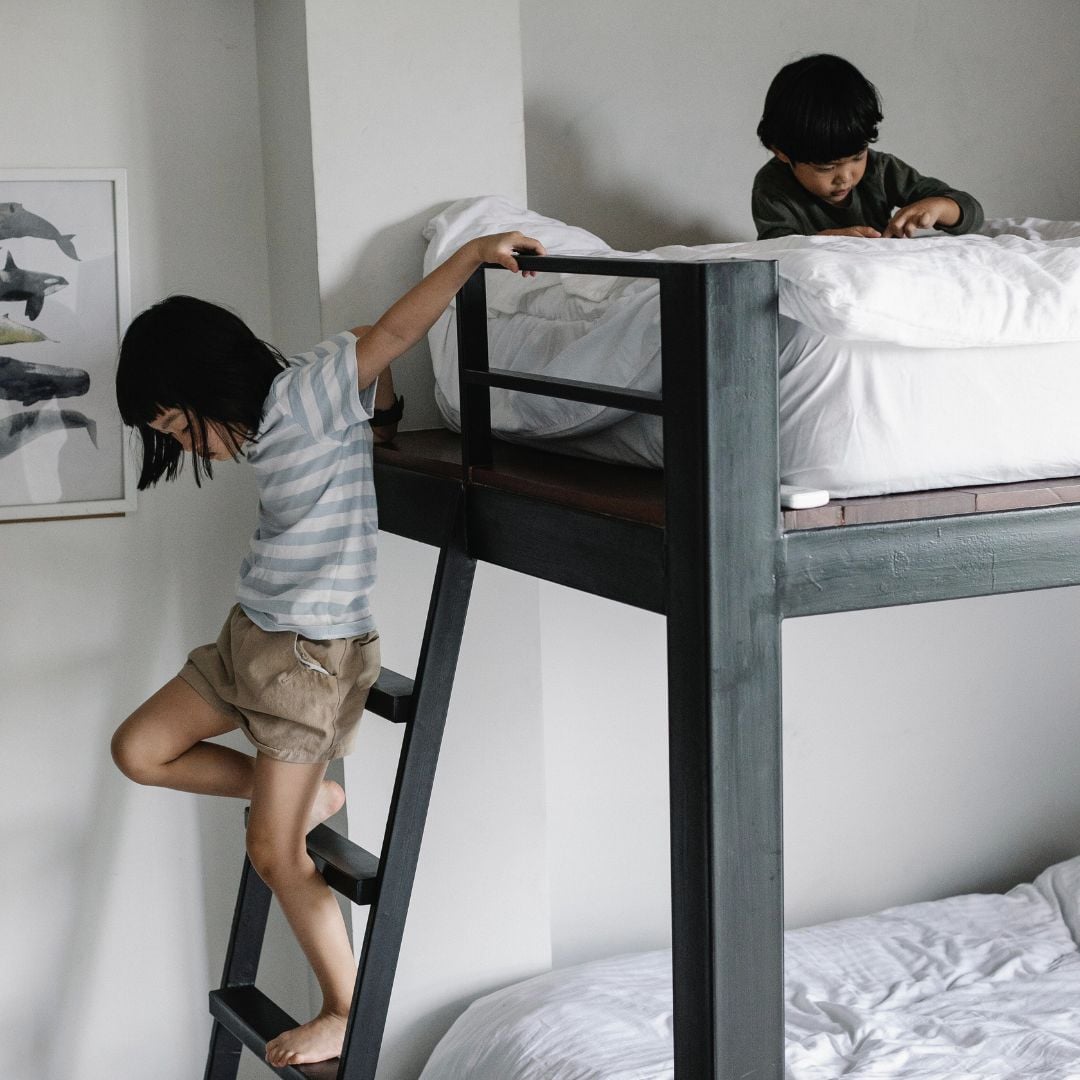
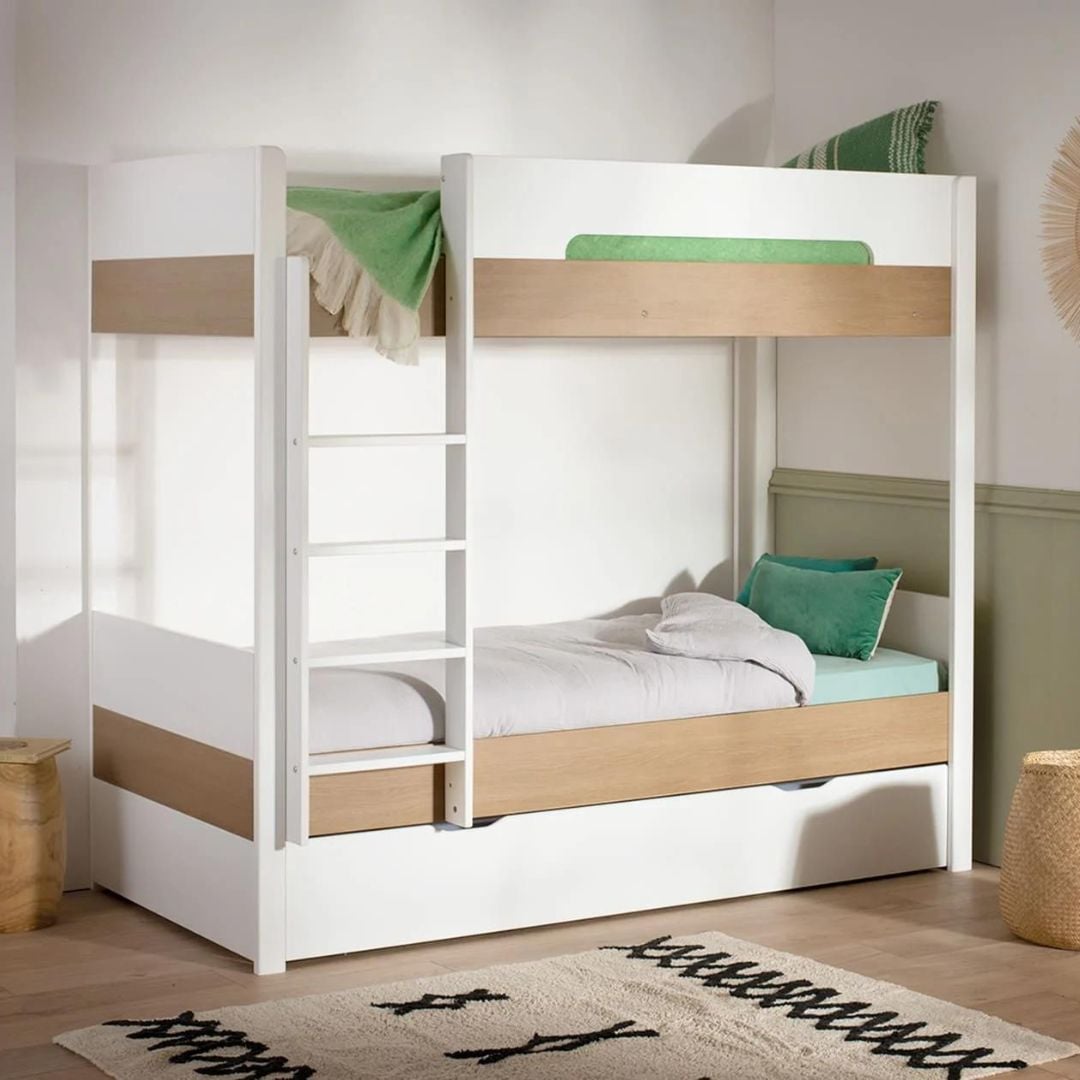
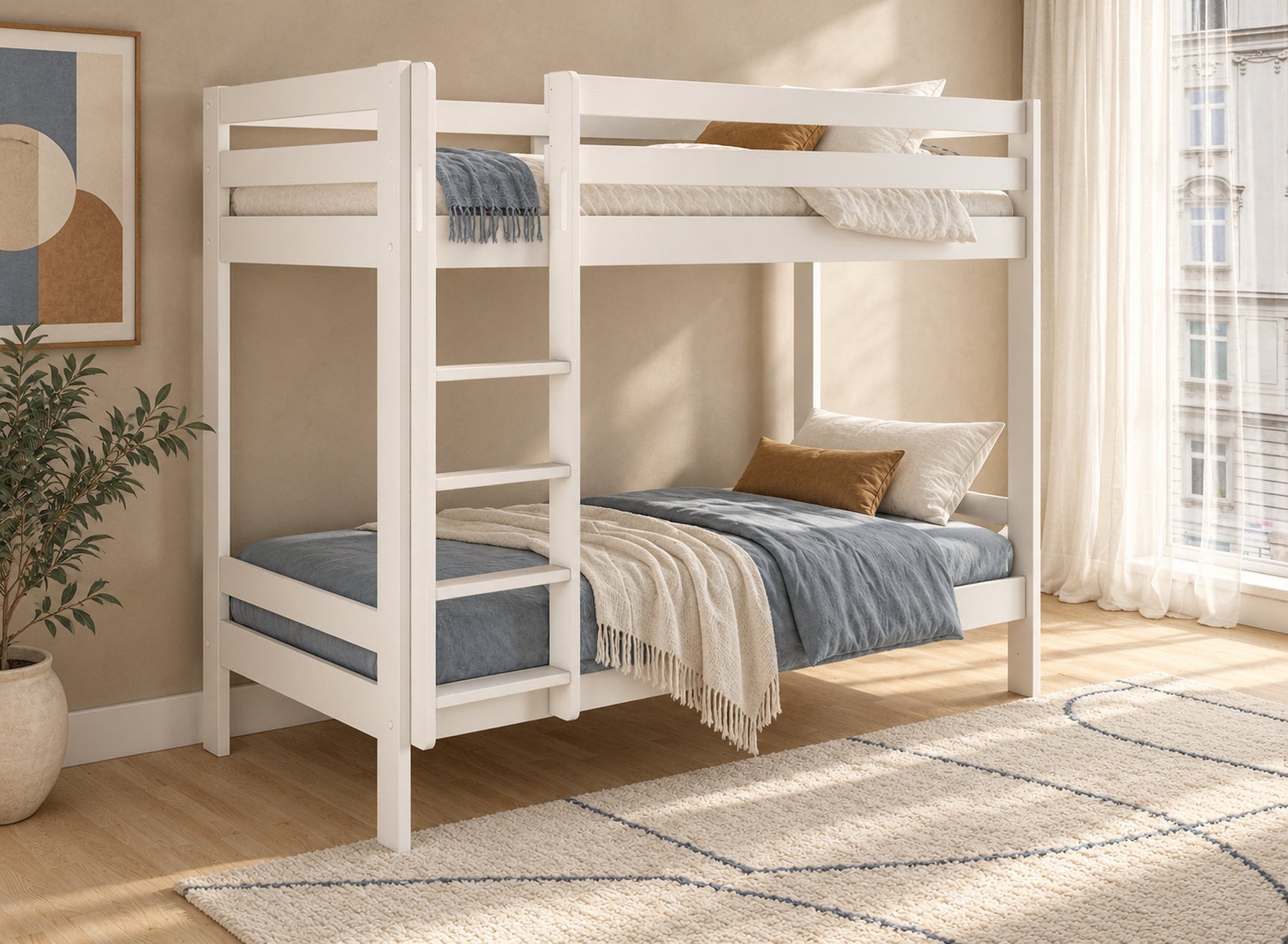
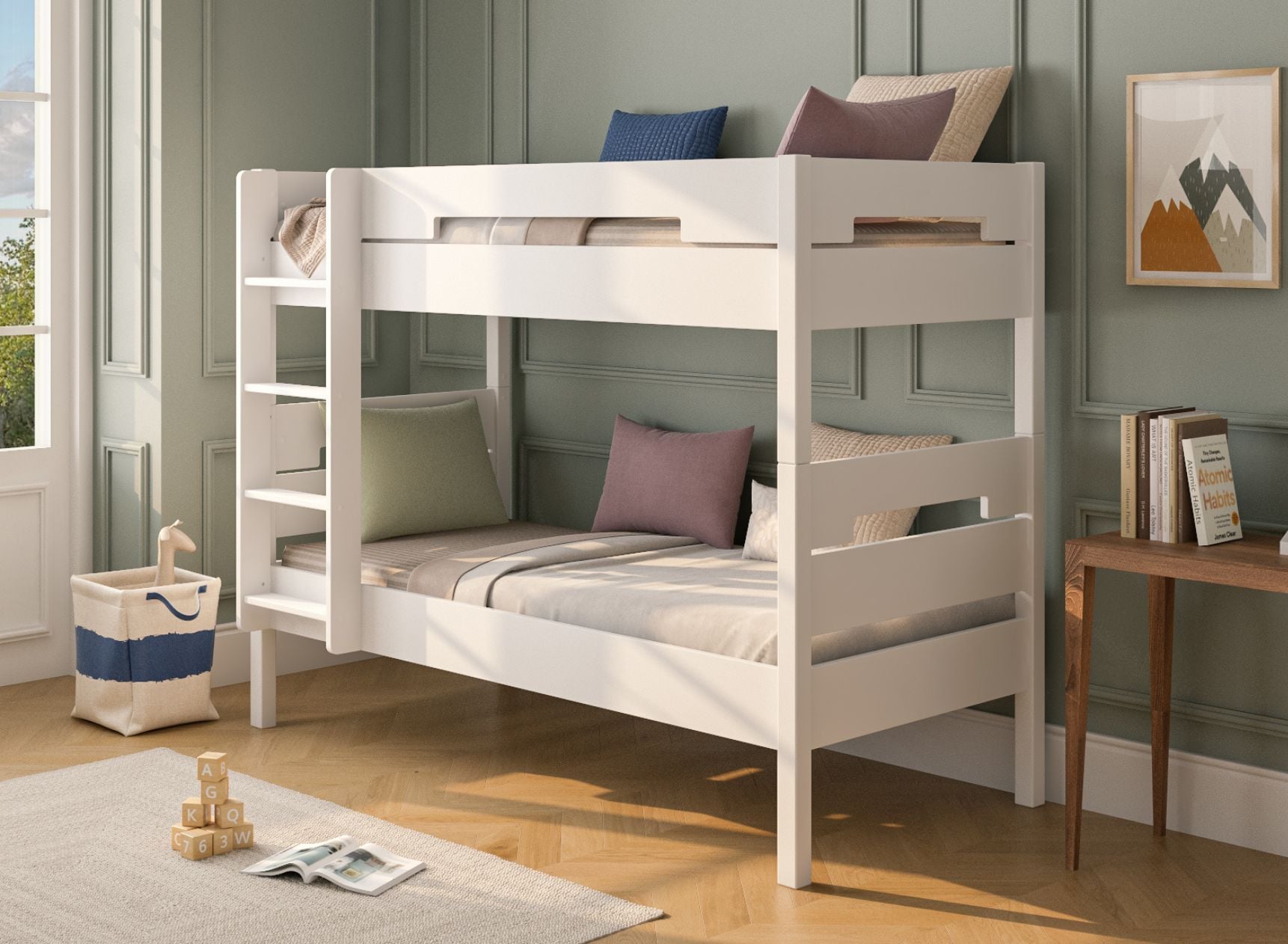
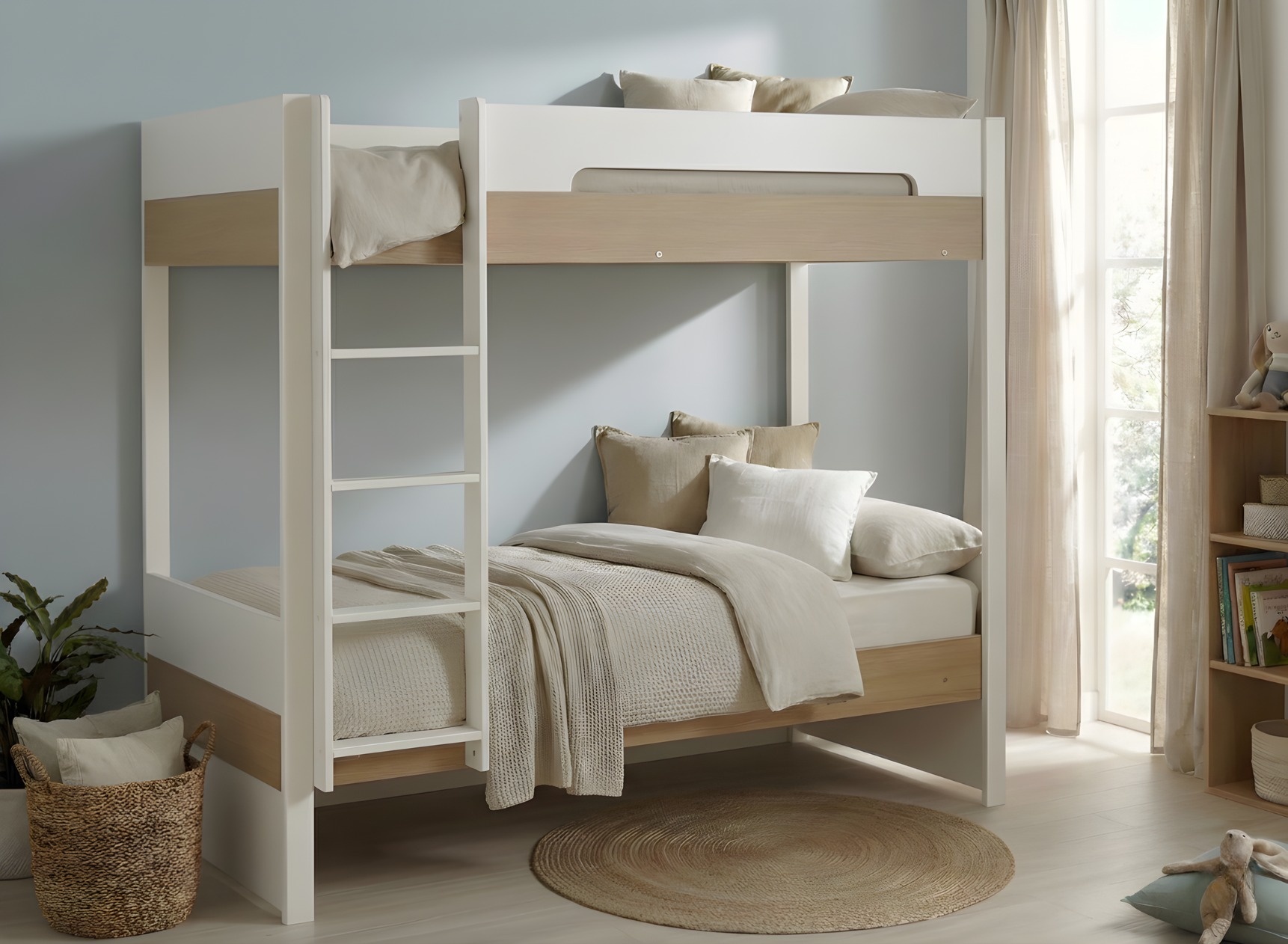
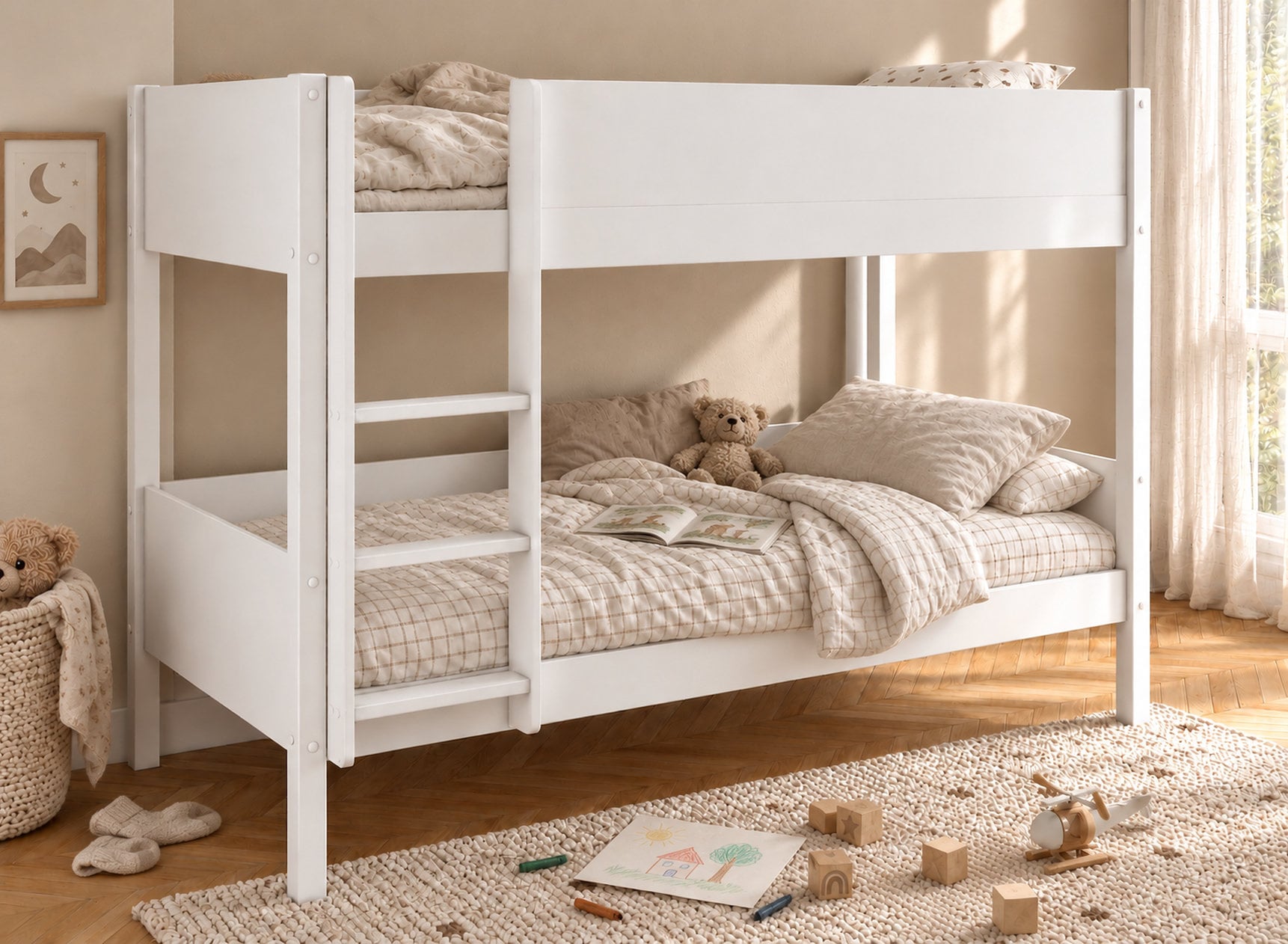
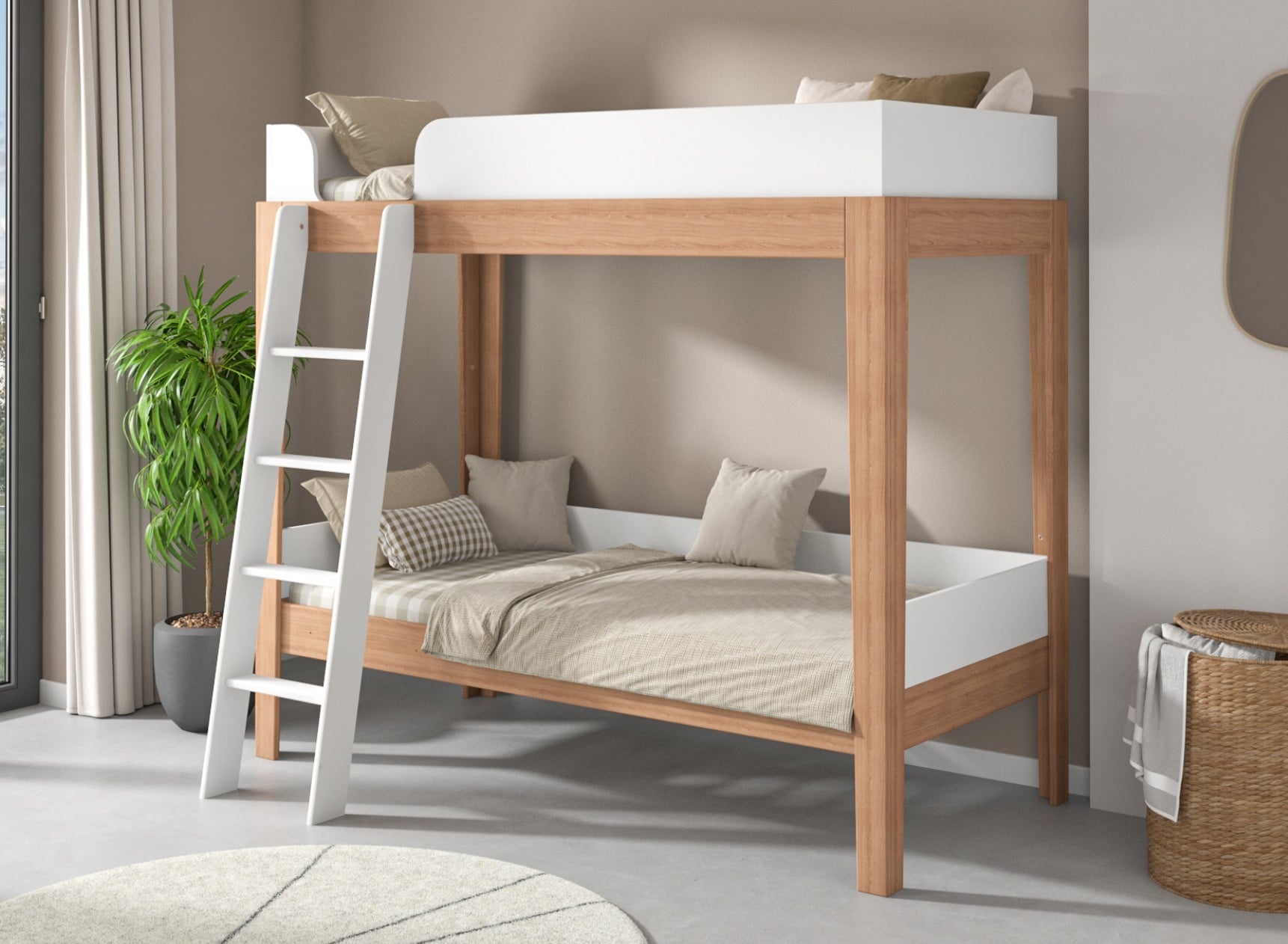
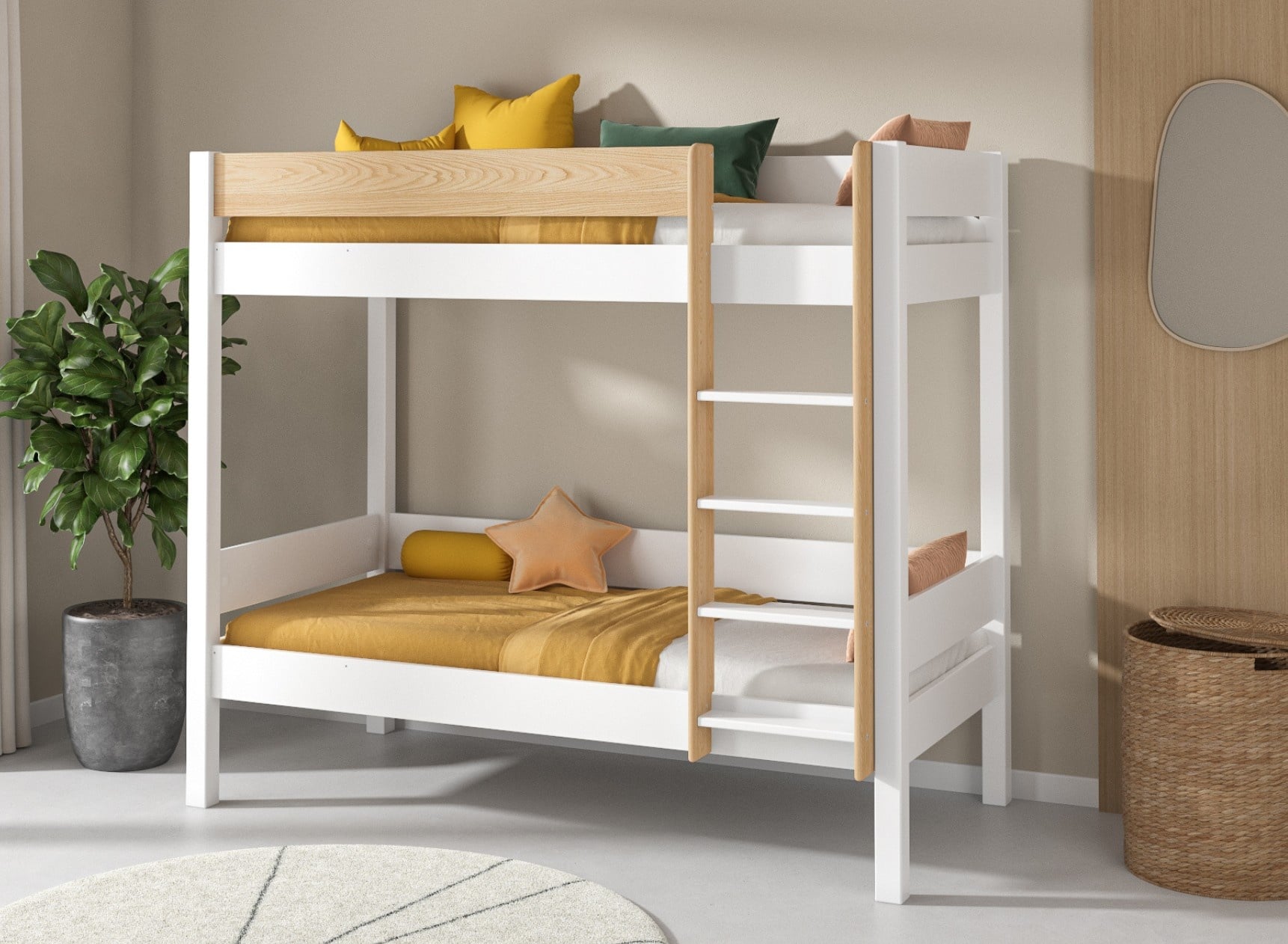
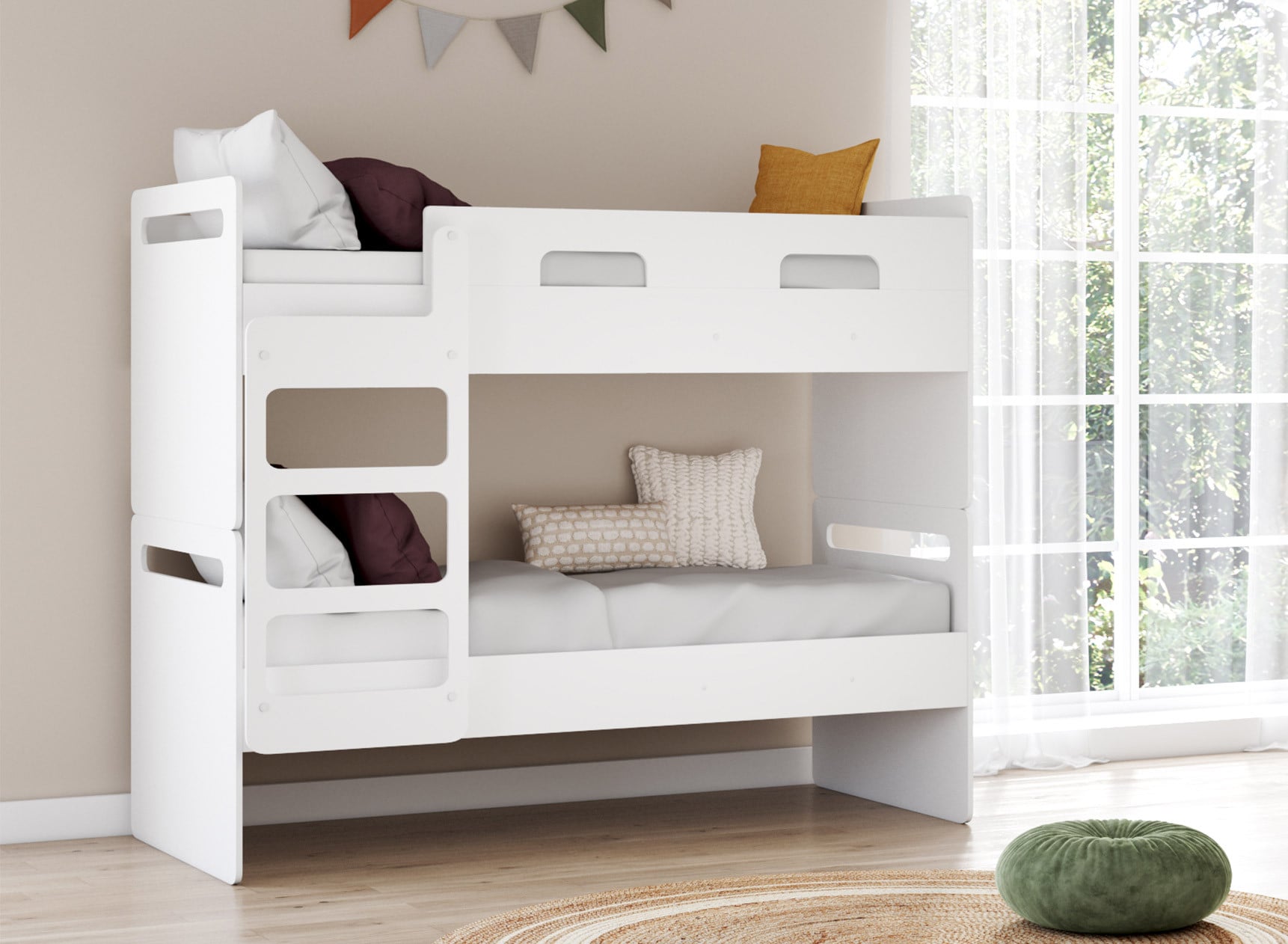
Whether the room is medium-sized or even small, the wooden bunk bed is often the preferred solution for parents. The bunk bed offers the possibility of installing one bed above the other using a high structure. The bottom bed is at a standard height and the top bed is accessible by a ladder (the child using the top bed must be at least 6 years old). With a 90x190 bunk bed, each child has a very comfortable bed and space in the room is maximally preserved.
There's even what's called a 3-bed bunk bed which contains a third sleeping space below the bottom bed. The 3-place bunk bed thus allows three children to sleep in the same space. Some models can accommodate a drawer and a third sleeping space only as an option, this is notably the case with our 90x200 PRADO bunk bed.
In terms of children's bunk beds, there's also the separable bunk bed. This solid wood bunk bed allows the two sleeping spaces to be separated. So, if your children share the same room, but you plan to set up two separate rooms in the future, this is a perfectly adapted solution that will save you from any new purchases.
How to create two distinct spaces?
In a shared children's room, it's important that each child has their own space. So avoid using shared furniture as much as possible, such as with desks and storage dedicated to clothes, for example. You can also define these two spaces with a colour code, for instance. For shared areas, opt for neutral colours and decor that suits both children.
Use the room's configuration so that, even if they use a bunk bed, your children each find their place. This can be done, for example, through setups dedicated to their favourite activities. If your daughter is passionate about reading, create a comfortable corner for her with a small bookshelf. If your son is passionate about drawing, set up a table at his height with all the materials he might need.
What tricks to avoid arguments?
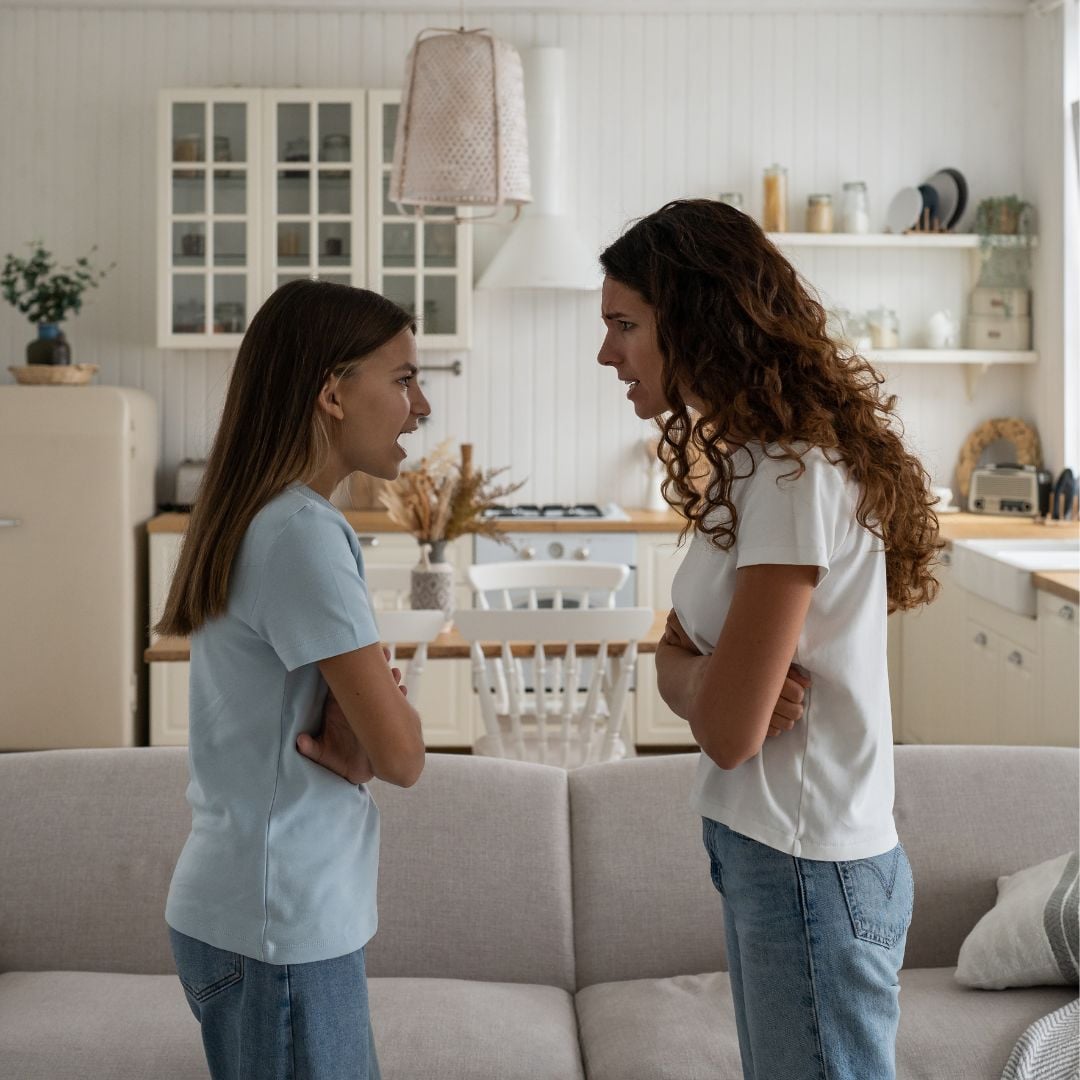
It's difficult to avoid arguments when two children share the same space permanently. However, some strategies can be implemented with simple rules consisting of sharing, respecting each other's peace, tidying up to avoid excessive clutter, etc. Additionally, suggest activities that allow your children to spend as much time as possible outside their room and also spend time apart from each other.
If you're struggling to manage conflicts in a shared room, you can certainly seek advice from a professional such as a psychologist. Their tips will be valuable for adapting daily life according to each child's personality and ensuring the best possible cohabitation.
Sage green and wood bedroom: how to create a natural and soothing space
Children's bed size: the complete guide for healthy and safe sleep
How to decorate your bedroom with healthy materials?