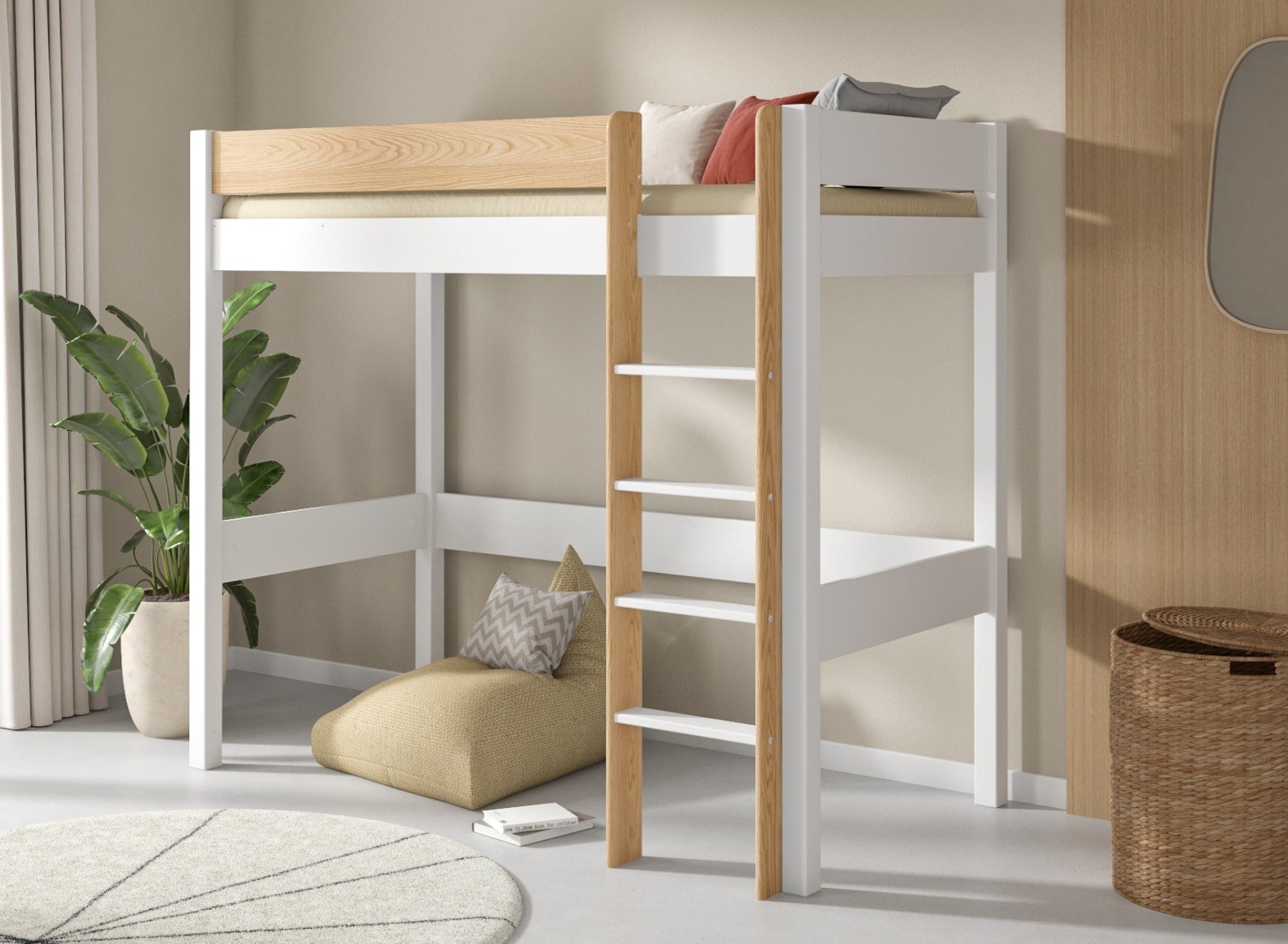
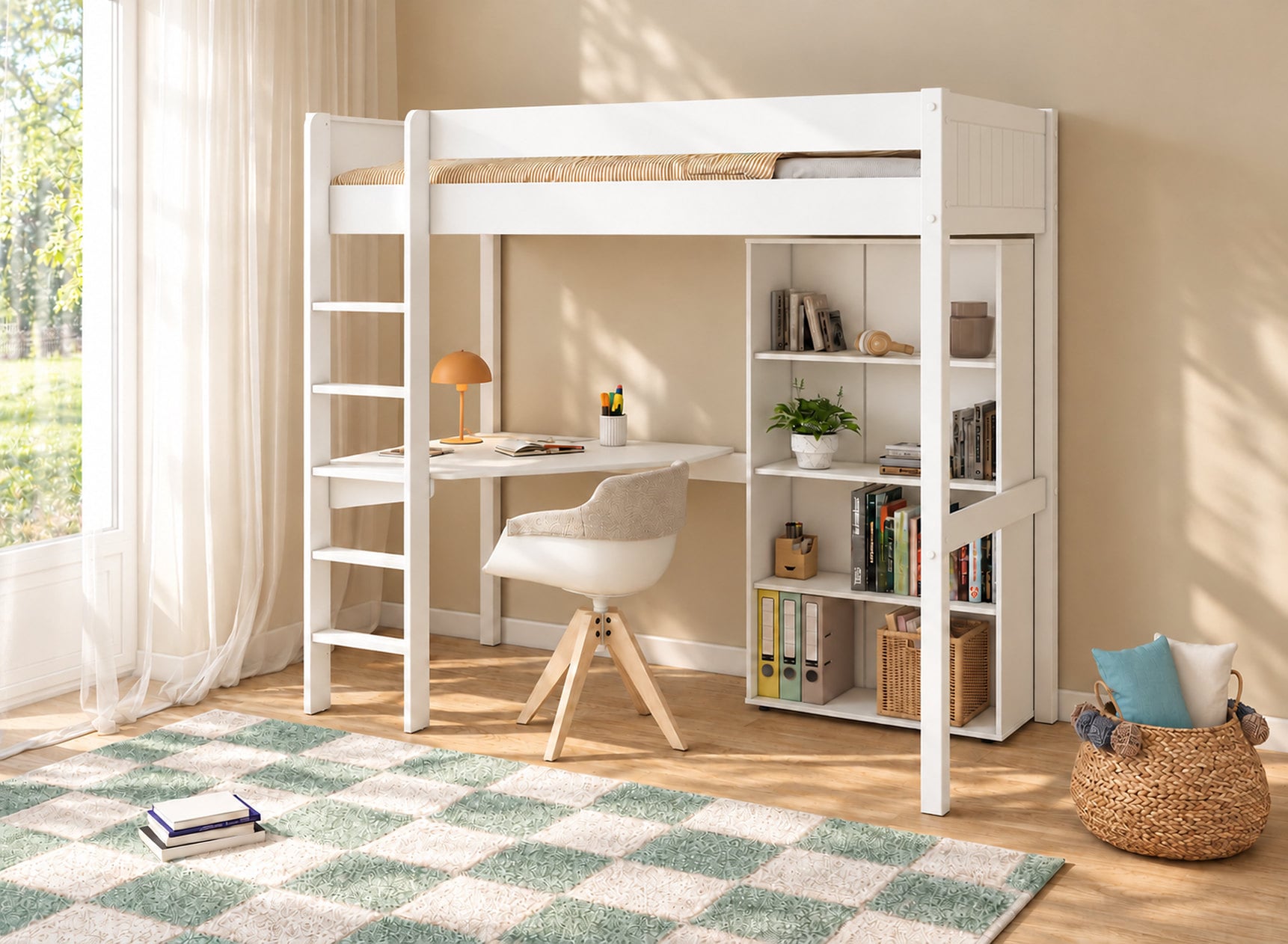
Loft bed height: the ideal measurements to know
Nateo CONCEPT
Loft bed: what ceiling height?
Are you afraid of investing in expensive furniture that might suffocate your child's room or compromise their safety due to poor estimation of available space? Determining the right loft bed height is nevertheless the keystone to guarantee a healthy, sustainable and perfectly safe layout, without ever sacrificing the comfort of your little sleepers or the room's volume. This expert guide provides you with the essential calculation rules and optimal configurations to combine clever space saving and peace of mind in daily life.
The golden rule: living space above the bed
The number to remember to avoid hitting your head
We often look at the floor space, but the real constraint of a loft bed height is up there.
💡 The rule is strict: keep a minimum of 60 cm between the mattress and the ceiling. This is the absolute limit to sit without getting a bump on the head! Let's be honest, for royal comfort, aim for 90 cm. The calculation is simple: Ceiling height - 60 cm gives the maximum height of the sleeping area.
The mattress trap: a detail that changes everything
Caution, the 60 cm of safety is measured from the top of the mattress, not the bed base. A model that's too thick and you lose this vital margin. To stay within the rules, I recommend a mattress thickness of 16 cm maximum. This is also essential for the barrier's effectiveness. Always check the instructions, we don't play with safety.
All heights at a glance
Lost in the numbers? Don't panic. We've compiled this summary table to instantly visualize the ideal configuration in your home. This data is the foundation of a sustainable and safe layout for the bedroom.
| Feature | Minimum recommended height | Ideal for... |
|---|---|---|
| Standard ceiling height | 240 cm | Most new housing (apartments, houses). |
| Space above the mattress | 60 cm | Basic safety and comfort (ability to sit). |
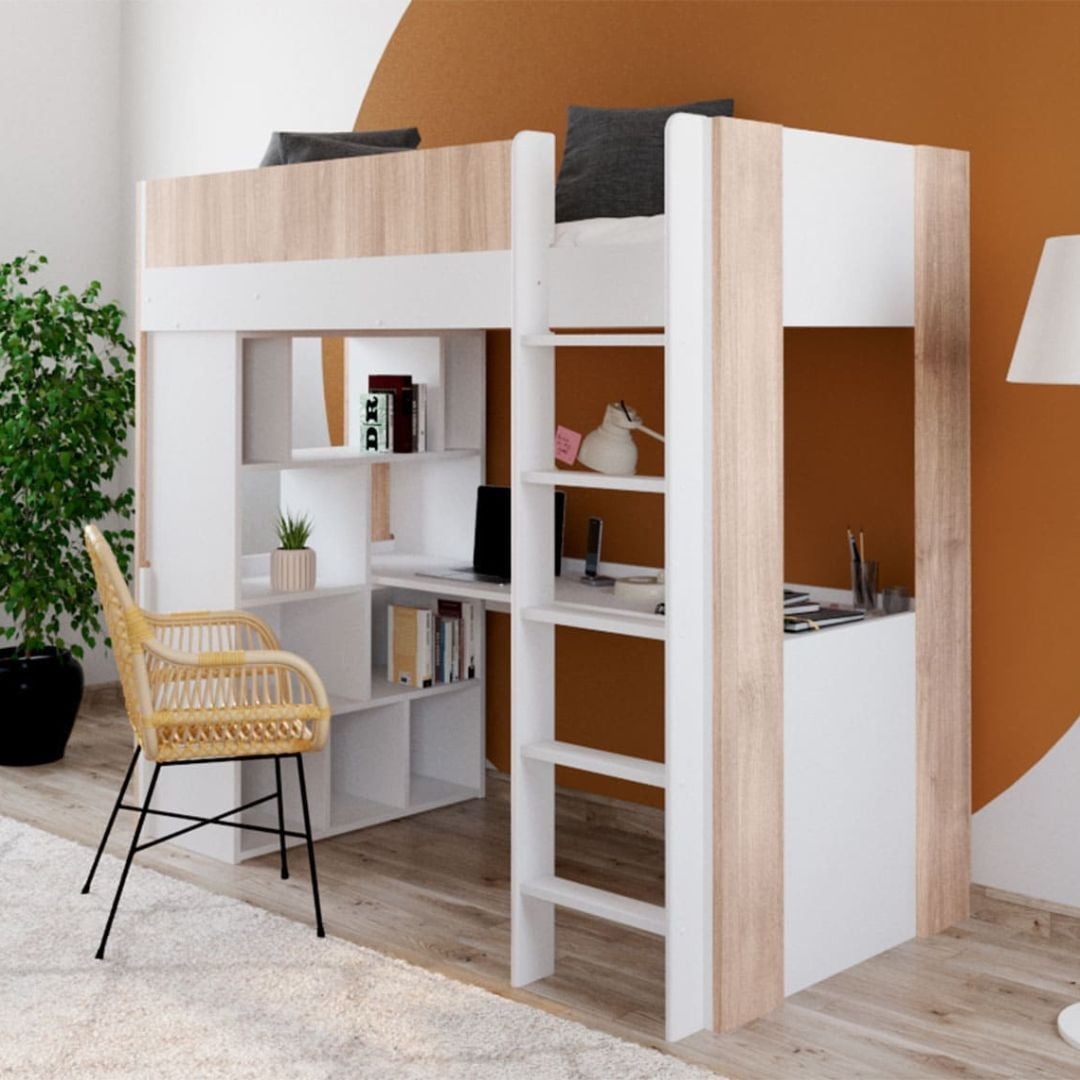
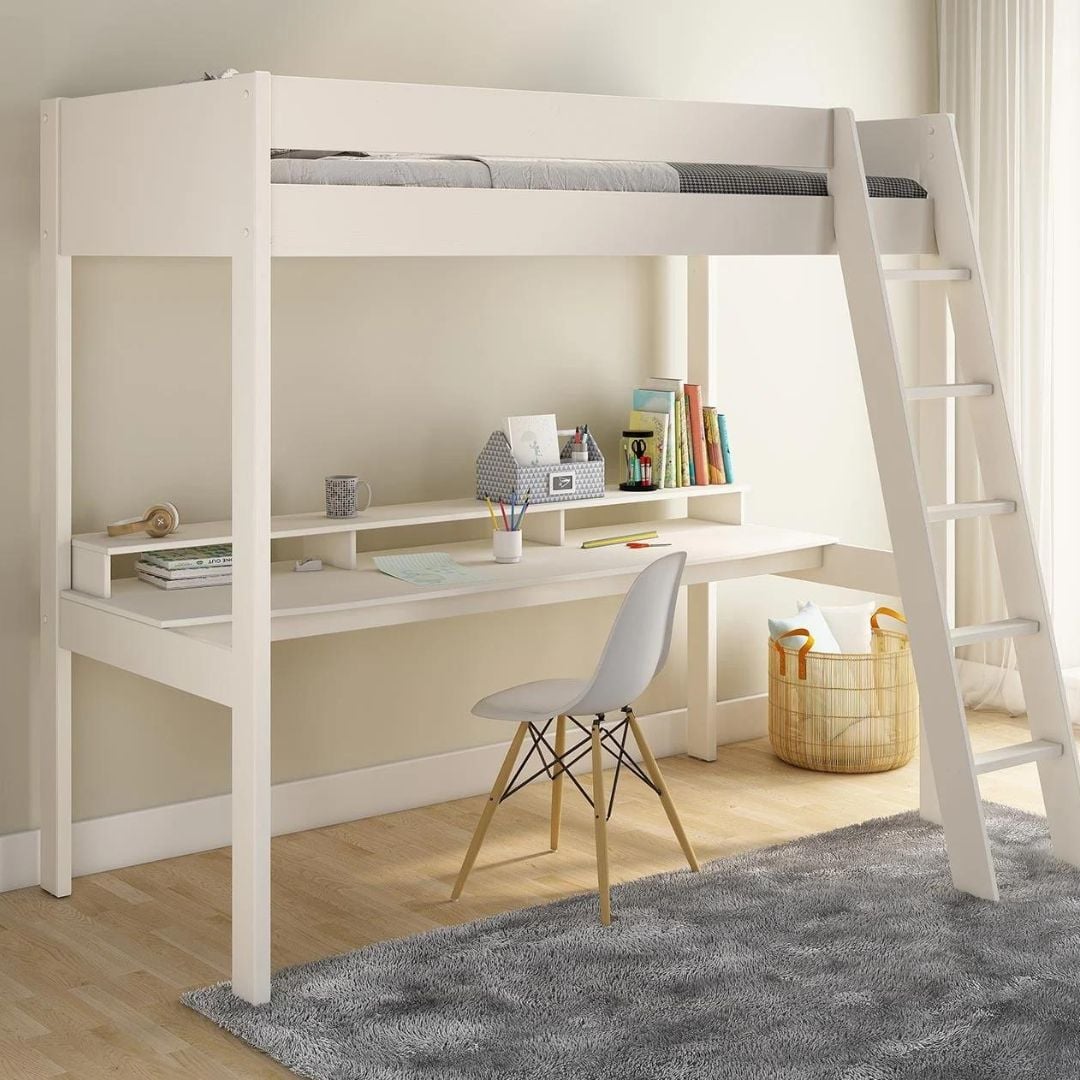
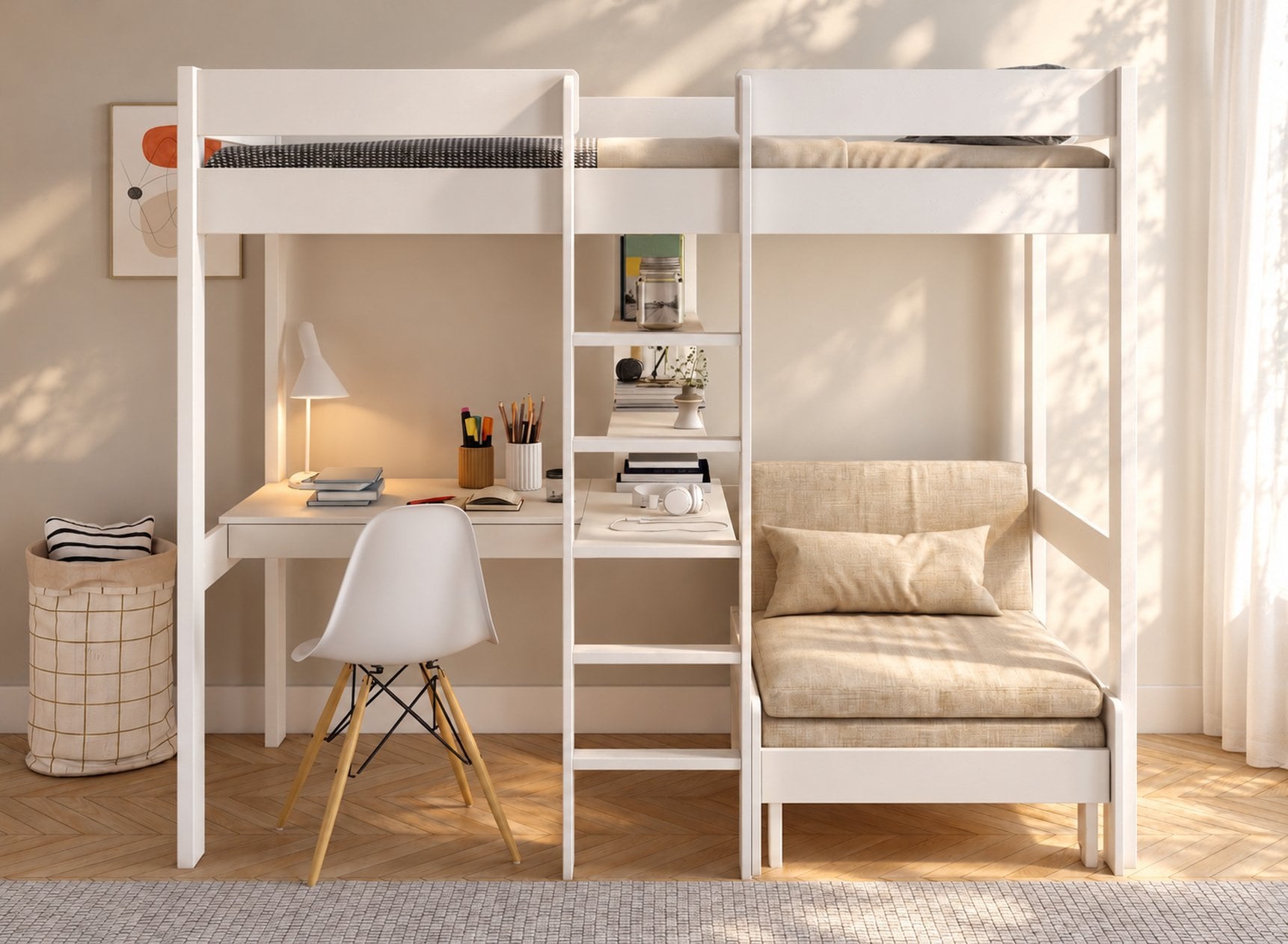
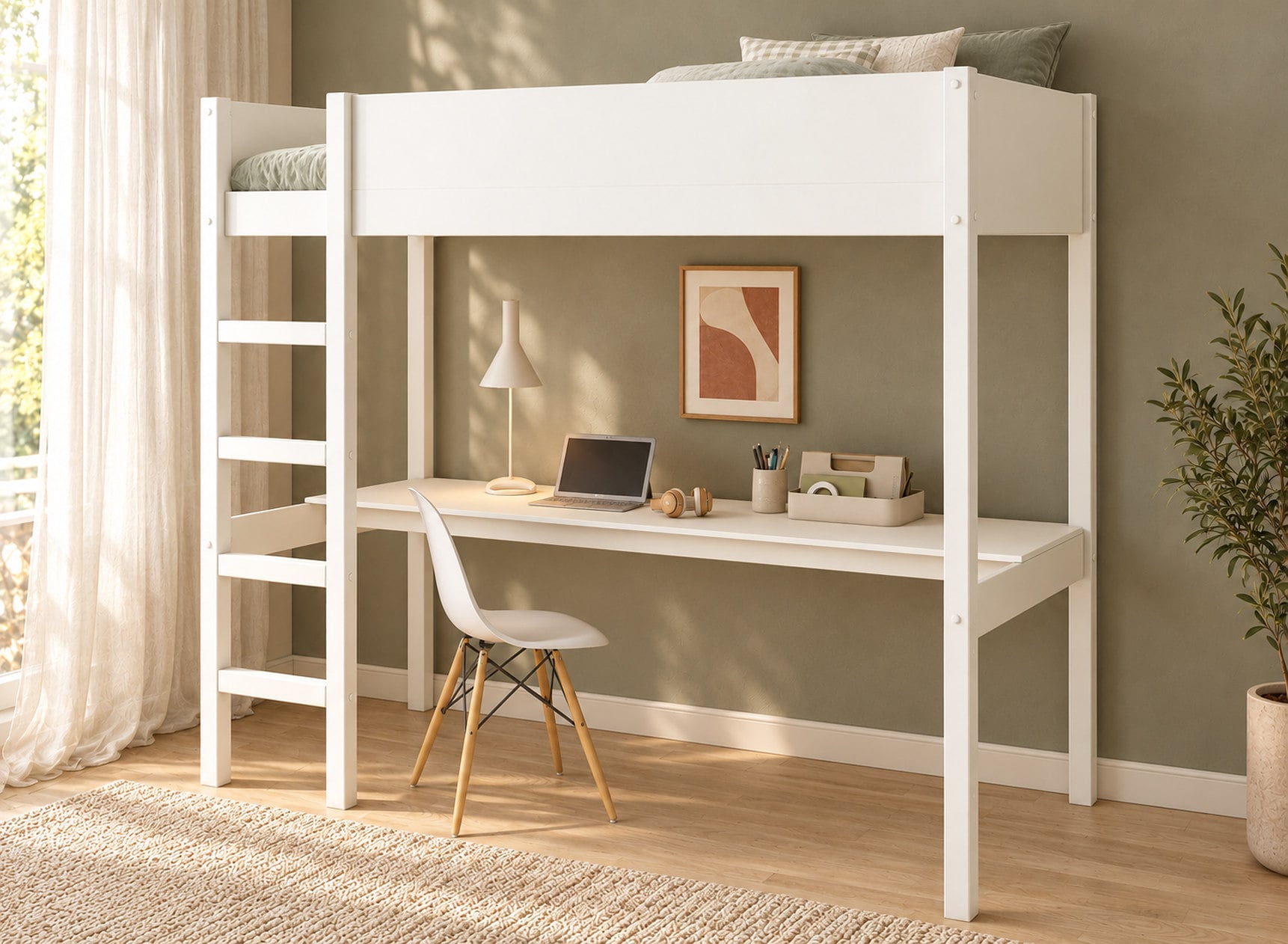
| Height under bed base (desk area) | 150 cm | Install a desk and an ergonomic chair. |
| Height under bed base (child 8-12 years) | 150 cm | Play space where the child can almost stand up. |
| Height under bed base (teen/adult) | 170 cm to 190 cm | Create a real small living room or a spacious work area. |
As you can see, the ceiling height of 240 cm remains the standard. If you have less, solutions exist. The essential thing is to never sacrifice safety for space saving.
Arranging the space under the bed: the perfect height for each use
You don't just want to "squeeze in" a desk, but create a real workspace. You need to be able to sit with your back straight without ever feeling oppressed by the structure above your head.
For an adult or a tall teenager, a height under the bed base of 150 cm is the viable minimum. This allows the use of a standard office chair without having the bed slats at eye level when sitting.
For absolute comfort, aiming for 170 cm or more is ideal, transforming the underneath into a real small room.
A play or relaxation space for children
Let's change perspective. For a child, the space under the bed isn't an office but a cabin, a reading nook. The perception of height is different.
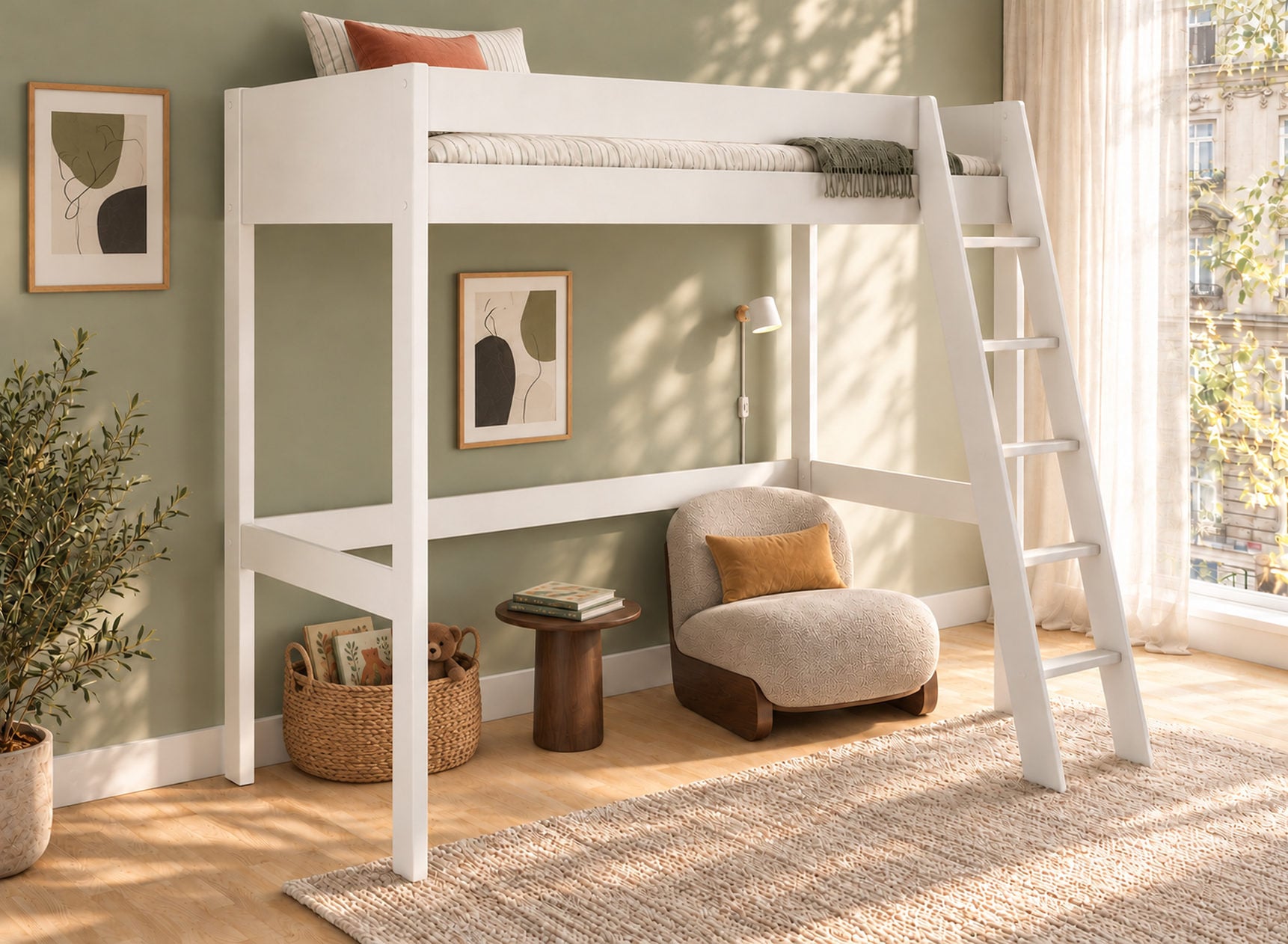
A height of 130 cm to 150 cm under the bed base is perfect. It's high enough to play sitting or kneeling comfortably, and low enough for the whole structure to remain safe and "child-sized".
This space can be simply furnished with large cushions, storage bins or a small bookshelf.
Just storage: what minimum height?
If your main objective is storage, the height constraints are lower. We then often talk about a mid sleeper bed.
A height of 90 cm to 120 cm can be enough to slide in dressers, storage boxes or even a spare bed. It's an excellent solution to optimize a small bedroom without aiming for a great ceiling height.
The choice of loft bed height will really depend on the main function of the space gained under the bed.
The children's loft bed: a choice that evolves with age
Before 6 years old: the false good idea
Let's be clear: installing a toddler at height is a common but dangerous mistake. Raised beds are strongly discouraged before 6 years old because of the real risks of nighttime falls. Motor skills are simply not mature enough.
Current safety standards leave no room for interpretation on this subject. This is a golden rule to be scrupulously respected to guarantee your child's safety.
From 6 to 10 years old: the mid sleeper bed, the ideal compromise
The mid sleeper bed is the perfect transition to leave the baby bed without vertigo. We're talking about a sleeping area positioned generally between 100 and 130 cm from the floor.
Your child gains independence, access remains easy and the height reassures worried parents. The freed space underneath quickly becomes a cabin or clever storage.
This solution fits ideally in a room with a standard ceiling height of 250 cm.
From 10-12 years old: ready for the real loft
The child grows and entering middle school changes their space and organization needs. This is the pivotal moment to move to a higher loft and free up floor space.
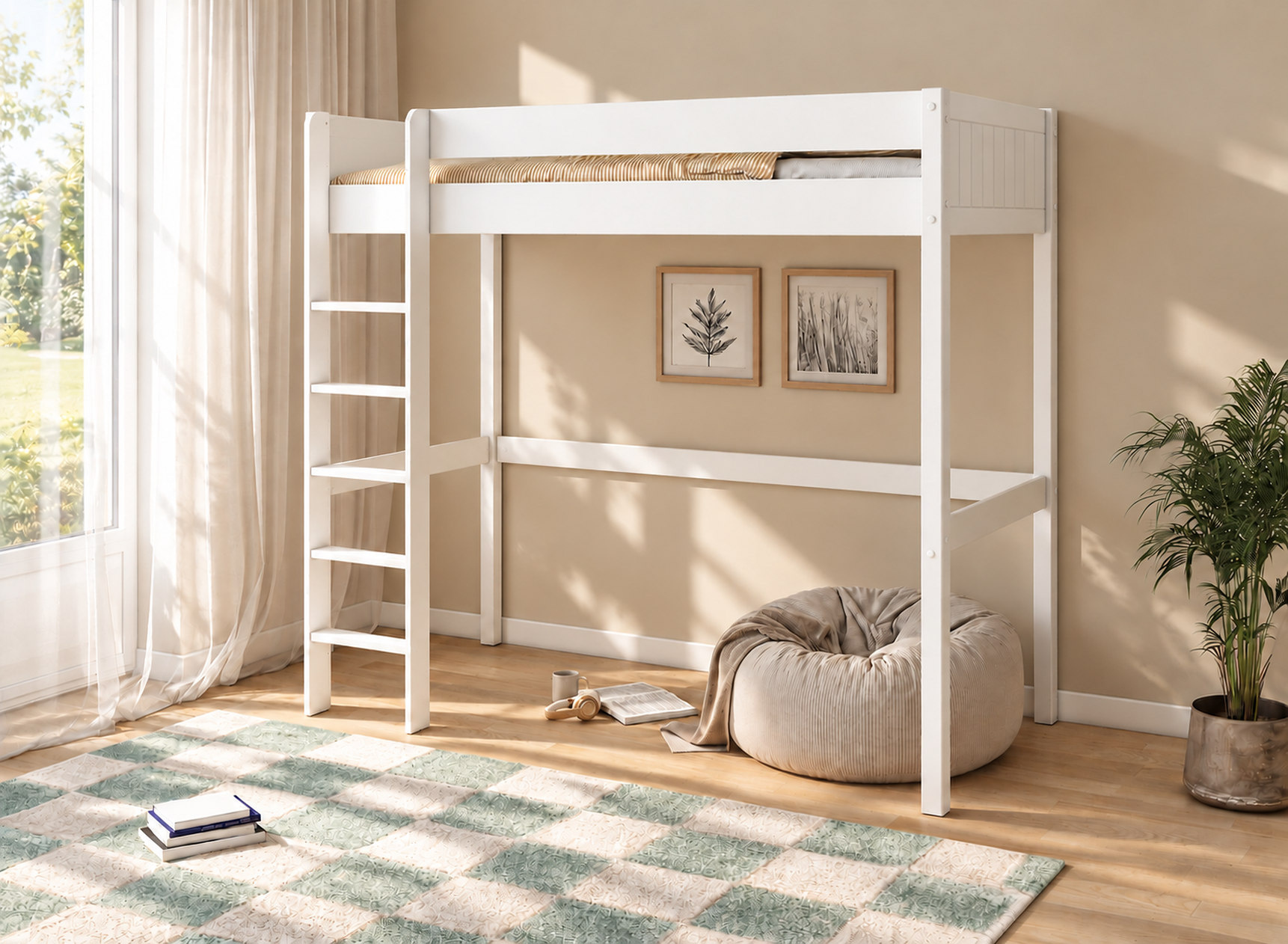
A loft bed height under the bed base of 150 cm is the recommended standard.
- The child can almost stand under the bed, which avoids feeling cramped.
- The space is sufficient to install a comfortable study desk.
- The bed remains at a manageable height for making the bed and for general safety.
Never neglect the climb: independence doesn't exempt from caution. If access safety remains the priority, stairs with storage cubes are often safer. It's a sustainable and reassuring choice.
The special case of low ceilings and small spaces
But what to do without the regulatory 2.40 m? Should we give up? Not at all. Tricks exist for studios or attic bedrooms.
When the ceiling height is less than 2.40 m
Do you live under the eaves or in an old building? Installation is still possible, but you need to be clever. The absolute priority remains the 60 cm of living space above the mattress. This is non-negotiable.
The sacrifice will therefore be made on the height under the bed: forget the idea of standing underneath. The objective then becomes to create a "lounge" area at ground level or clever storage space.
Solutions to cheat with height
Mid sleeper beds stand out as the most obvious solution. They free up floor space without requiring an immense ceiling. Also consider low sleeping, futon style, to gain a few precious centimeters on the mattress thickness.
- Opt for a mid sleeper bed: Ideal for low storage (dressers, boxes).
- Choose a very thin mattress: A 10-12 cm model maximizes the living space in height.
- Create a "cozy" corner: Favor a reading corner with poufs rather than a desk.
Even with a 2.20 m ceiling, a raised bed remains functional with the right compromises. The important thing is to clearly define the priority: the comfort of the sleeping area or the use of the space underneath.
The final checkpoints before getting started
You have your measurements, you have your project in mind. Perfect. Before pulling out the credit card and tools, here's a final checklist to be certain.
Think about air circulation and light
We often forget this silly detail: heat rises. If the bed sticks to the ceiling, your child will suffocate in summer, that's guaranteed. Keeping this space of 60 to 90 cm ensures good air circulation. It's vital for their sleep.
Let's talk about brightness. Check that the structure doesn't block the main window of the room. Also think about artificial lighting, essential for the reading corner upstairs and the play area underneath.
Safety, far beyond height
Having your loft bed at the right height isn't enough if the structure shakes. The stability must be absolute. The furniture must be perfectly stable and fixed to the wall to prevent any accidental tipping.
- Check the height of safety barriers: They must exceed the top of the mattress by at least 16 cm.
- Check the solidity and inclination of the ladder: The steps must be non-slip and easy to use, even in the middle of the night.
- Ensure wall fixing: This is an essential stability guarantee, especially with playful children.
Don't neglect the materials. A certified solid wood bed, from sustainably managed forests (PEFC), will withstand the test of time. It's an investment for your child's physical safety.
Finally, track down invisible pollutants. Demand finishes with water-based paints, without solvents or harmful components. You thus guarantee healthy air, night after night.
Beyond measurements, choosing the right loft height guarantees a safe and fulfilling space. By respecting these rules and favoring sustainable and healthy manufacturing, you offer much more than a bed to your child: a real cocoon to grow, play and dream in complete serenity.
Sage green and wood bedroom: how to create a natural and soothing space
Children's bed size: the complete guide for healthy and safe sleep
How to decorate your bedroom with healthy materials?