What age to switch to a Montessori bed?
Nateo CONCEPT
Montessori Bed: When to Make the Transition?
Montessori Bed: when to make the transition? We help you understand when your child is ready to gently leave their crib.
In a world where every educational detail can influence a child's future, many parents are seeking concrete tools to promote autonomy from the earliest age. Among these emerging tools, the Montessori bed intrigues, attracts, sometimes confuses... But above all, it profoundly transforms how your baby approaches their sleep, their space, and even their maturity.
Imagine a child who doesn't need to wait for an adult to get them out of bed. An infant who freely explores their room, in complete safety, in a configuration designed to respect their needs, their rhythm, and support their natural development. Fascinating, isn't it?
But then, at what age should you introduce this educational innovation? Should you wait until the child walks? Is it compatible with co-sleeping? And how can you be certain that this type of furniture, often placed directly on the floor, presents no danger?
You're in the right place. Through an approach based on true Montessori pedagogy, we'll explore in depth what you really need to know — well beyond the superficial advice found elsewhere.
What a Montessori bed really hides
Montessori principles applied to sleep
The philosophy behind the Montessori bed is simple but powerful: allowing the child to move freely in a secure environment while respecting their own biological rhythm. This approach is based on the conviction that autonomy is an essential driver of cognitive and emotional awakening, from the earliest months.
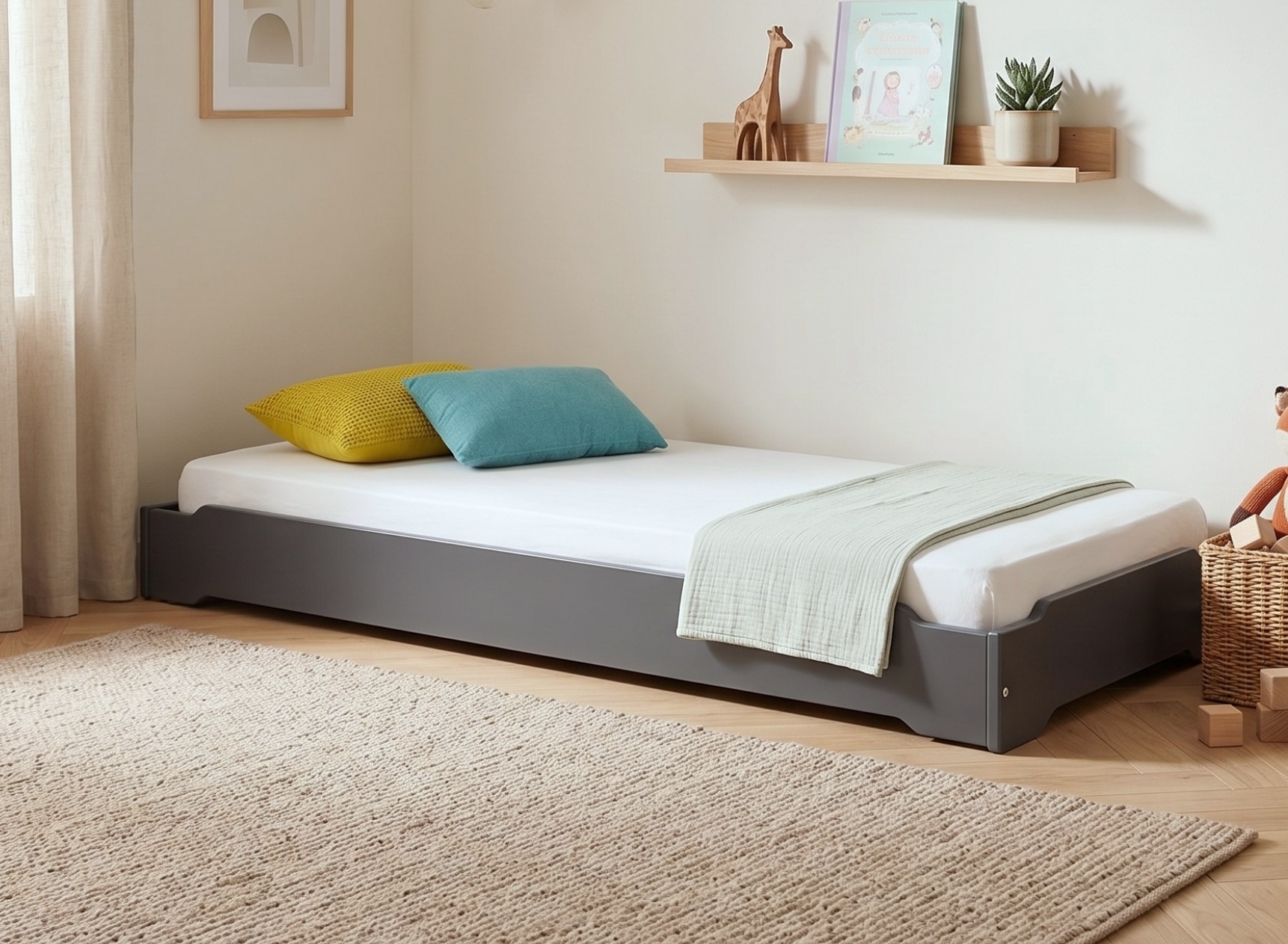
A bed mounted on legs or with bars often prevents this freedom. Conversely, a Montessori bed — typically a simple frame or mattress placed directly on the floor — aligns with the method's foundations: encouraging initiative-taking, building confidence, and minimizing physical barriers between the child and their immediate environment.
An environment designed for development
The bed design isn't trivial. It integrates into a Montessori bedroom, where each decor element becomes a subtle learning tool. The floor bed then becomes a natural extension of the rest of the space: accessible, welcoming, evolving according to the sensitive periods your baby goes through.
This type of equipment, when well chosen (we'll come back to this), promotes peaceful nights, better sleep regulation... but most importantly, it allows the child to understand from their earliest years that choices belong to them.
Controlled freedom: safety and personal development
Far from being just a trend or a minimalist design object, the Montessori bed meets specific requirements: ensuring freedom without compromising safety. Motor independence, when surrounded by a reassuring framework (removable low barriers, shock-absorbing anti-fall mats, soft night light), directly contributes to neuromuscular and emotional development.
It's not just about sleeping low: it's about sleeping freely... but with complete peace of mind.
What's the ideal age to start?
Maturity first: forget rigid numbers
The question "What age for a Montessori bed?" comes up often. However, the answer isn't just a simple number. It's not just about the famous "18 months" often cited as a symbolic threshold — even though many children achieve a certain form of autonomous mobility around this time.
What really matters? The combined appearance of several signals: ability to crawl or walk without major assistance, increased curiosity to explore outside the crib, manifest desire to do things alone.
A gentle and secure transition
This is where your role as an attentive parent becomes crucial. You can start observing these signs from 9-10 months in some particularly alert babies — yes! Some infants already show their desire for visual and tactile independence very early. This doesn't mean brutally removing the crib overnight; rather, it's about progressive preparation, where you start with naps in the new bed before spending all nights there.
A floor mattress can temporarily coexist with the traditional crib to facilitate this transition while adjusting your own level of emotional comfort with the change.
Enlightening testimonials and scientific validation
Many child development experts today confirm that some children are ready as early as 6-7 months to experience gentle forms of nighttime autonomy — as long as all safety conditions are met (total absence of risks related to soft objects or cumbersome fabrics). Families already practicing active pedagogy report a clear reduction in sleep disorders when this freedom is intelligently introduced.
How to choose THE right model?
Morphological adaptation according to age
The ideal bed size obviously depends on the current morphology... but also future growth! To avoid unnecessary multiple purchases, opt for "convertible" models that can accommodate your child up to 4 or even 6 years old.
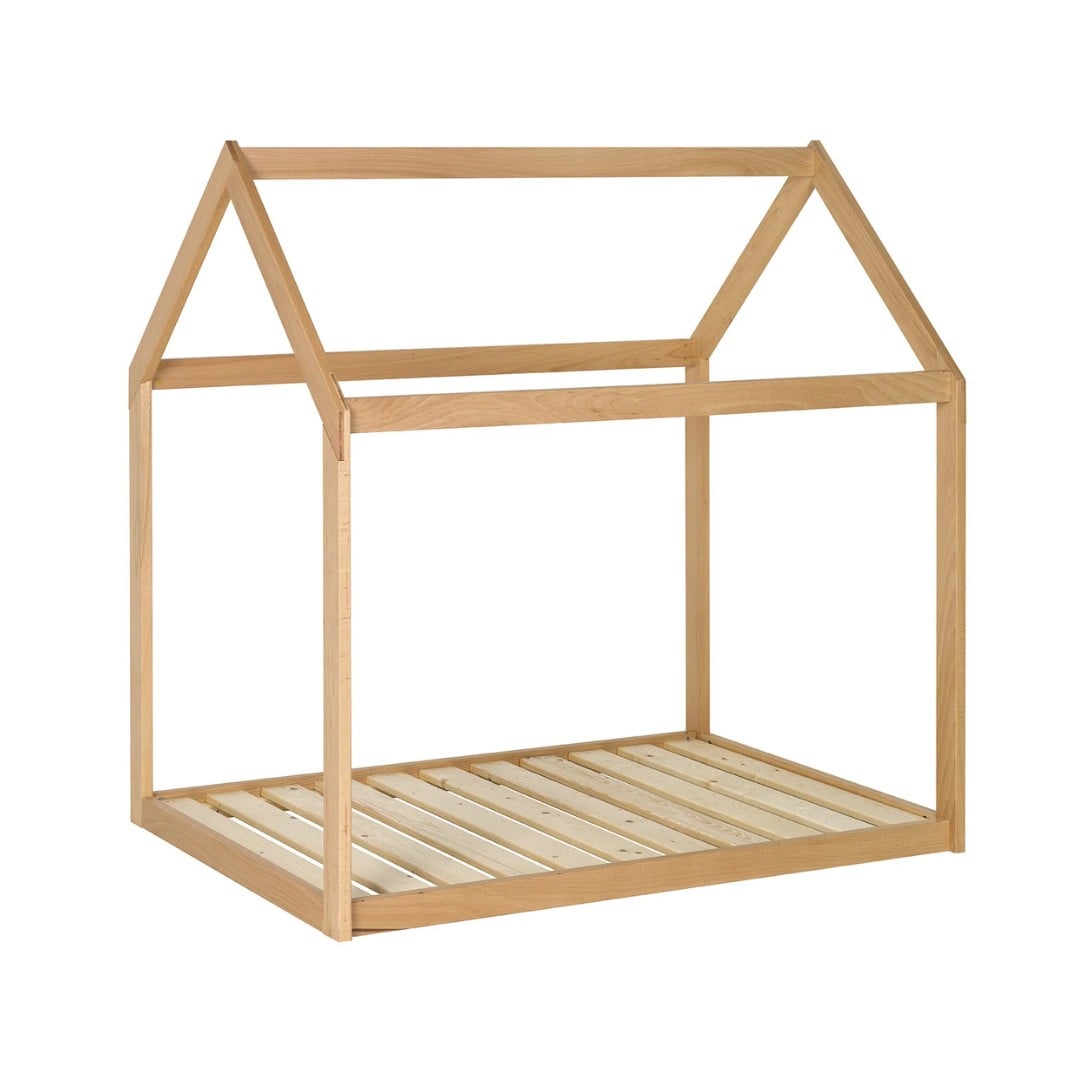
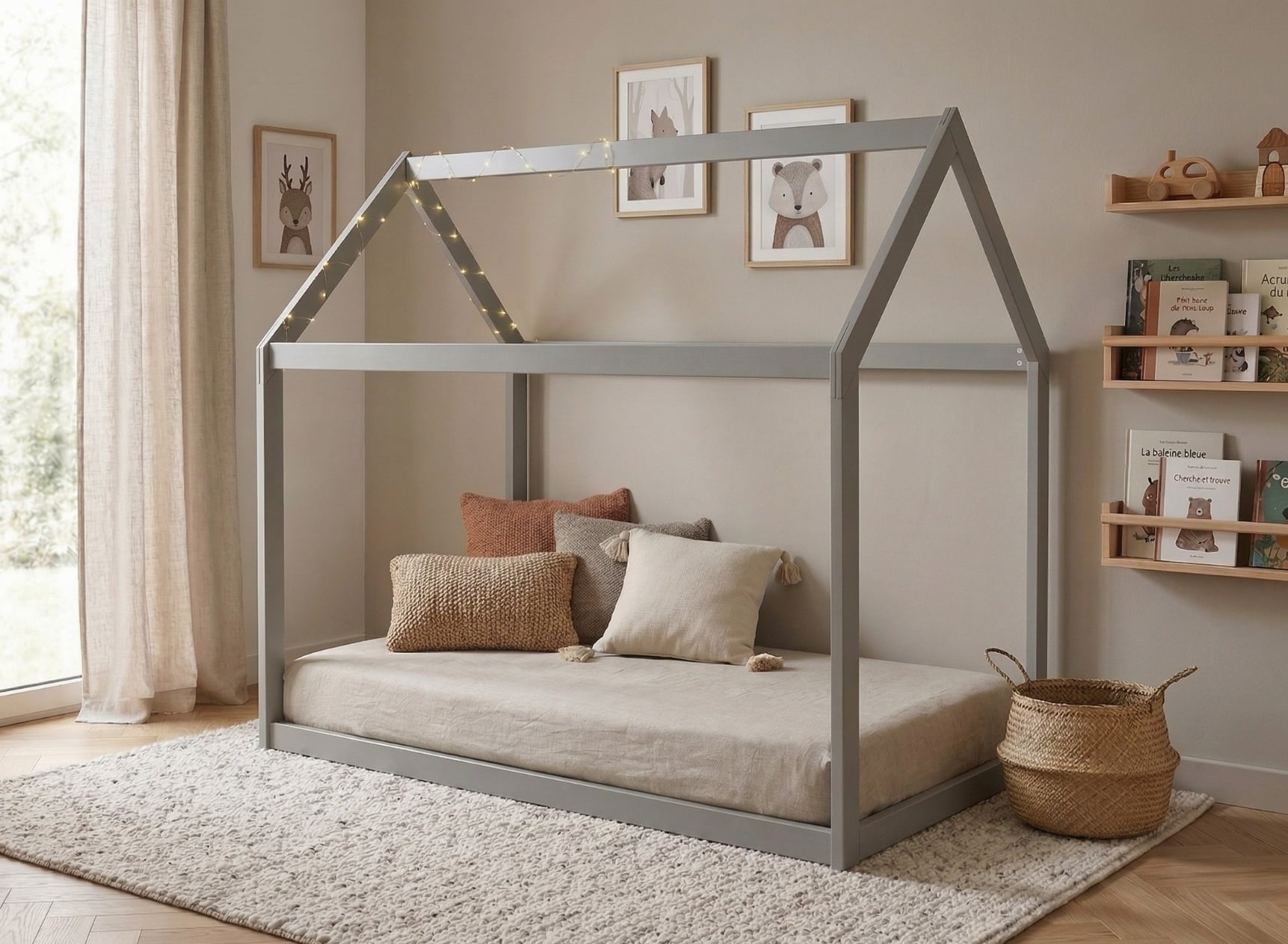
This is the case with our ELLY 90x140 house bed convertible to 90x190.
Some brands now offer solid beech models with integrated removable barriers, specifically designed to prevent any form of falling during the night while maintaining complete autonomy when getting up in the morning.
Noble materials and optimal safety
The choice of material is crucial: untreated natural wood (beware of toxic varnishes), rounded corners without sharp edges or dangerous rough spots. The importance isn't just aesthetic; each component must guarantee a total absence of VOCs (volatile organic compounds) to preserve the sensitive respiratory health of infants.
As for the mattress: choose a firm but comfortable model, certified Oeko-Tex or equivalent. The ideal thickness is around 8 cm, neither too soft (risk of sinking) nor too hard (muscle discomfort).
Floor mattress: minimalist but powerful solution
The very core of the concept often relies on the famous "floor mattress." This particular type allows direct physical immersion in the immediate environment without spatial break between wakefulness and sleep. Result? The child naturally learns to manage day/night transitions... without intervention!
Calmly preparing the transition from the crib
Anticipating emotions: key to success
Moving from a closed crib to an open environment isn't emotionally insignificant for some children... or some parents! That's why it's essential to integrate this step into a comprehensive methodology that includes symbolic dialogue ("You're growing up now"), gentle staging (telling stories about the change), and personalized ritual (choosing sheets together, for example).
Cognitive development enhanced through experimentation
Sleeping freely also means... thinking differently! When a child can choose when to enter/exit the bed based on felt tiredness rather than externally imposed constraints, we often observe a qualitative improvement in the relationship with sleep itself.
This phenomenon also increases their ability to recognize their own bodily needs — a fundamental skill rarely achieved before age 3 in traditional closed systems.
Ritual as an emotional anchor point
Creating a stable and comforting routine around the Montessori bed allows for better psychological appropriation of the new space. A night light chosen together? A stuffed animal always placed in the same spot? These elements unconsciously reinforce the internal sense of security essential for the first nights outside a traditional crib.
And after? The profound long-term benefits
Cognition + motor skills = natural accelerator
The link between nighttime physical freedom and cognitive stimulation is now validated in several interdisciplinary studies conducted notably by Scandinavian universities involved in experimental Montessori-inspired nurseries. Result? Better hand-eye coordination from 12 months in children sleeping without vertical physical constraints.
Inner confidence boosted from age 1
Being able to decide alone when to go to bed develops in some children a deep impression that they control their body... their space... sometimes even their emotions! This dynamic then naturally promotes autonomous management of daytime frustrations — a key competency according to Maria Montessori herself!
A powerful lever towards personal development
By integrating this minimal but powerful form of autonomy from early childhood, you're offering more than just designer furniture: you're activating a complete virtuous chain between nighttime emotional comfort... daily motor independence... then overall emotional balance over several years!
Discover more information about the Montessori method with our blog article.
Enlightening comparison with other types of bedding
Co-sleeping vs crib vs traditional bed
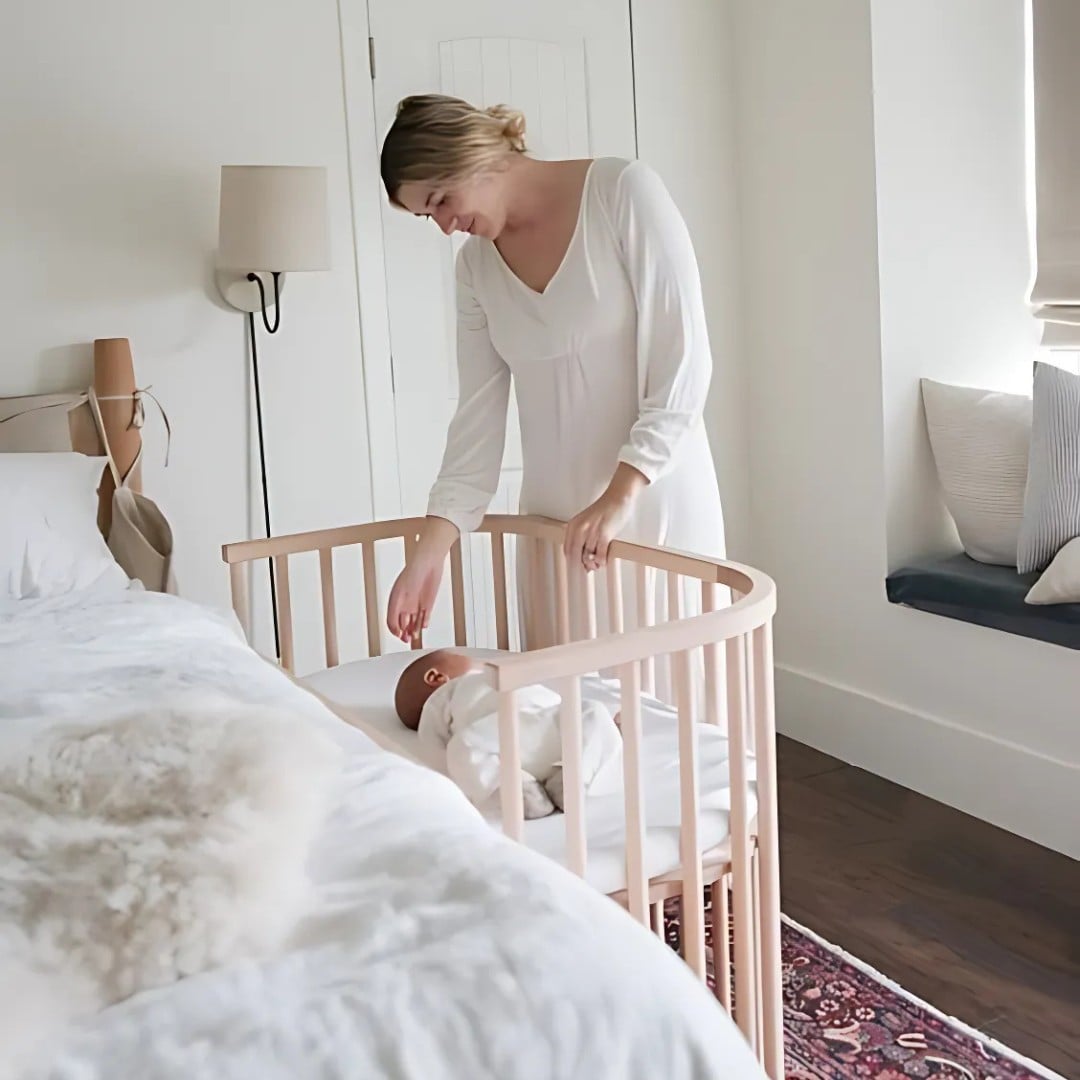
Co-sleeping remains relevant during the very first months (0-5 months approximately), particularly to facilitate breastfeeding or quickly respond to nighttime crying. But past this initial phase... it becomes limiting in terms of personal independence perceived by the child.
The closed crib, meanwhile, provides visual reassurance but mechanically inhibits any natural attempt at post-wake exploration...
Finally, the traditional bed with high bars? Very useful against accidental falls... but antithetical to any real idea of early autonomy!
The hidden limitations of classic solutions
Many parents today express regret about waiting too long before introducing their first "real" autonomous nighttime space. Why? Because the longer you delay this step... the more likely it is to be experienced as an abrupt break rather than a natural evolution!
Clever arrangements and hybrid alternatives
Hybrid solutions fortunately exist! Semi-open house bed? Adjustable low loft bed? Geometric shock-absorbing mats integrated under thin Japanese futon-style mattress?
Everything will depend here not only on your housing... but also on your child's unique temperament!
The last word...
Offering your child a true space to grow freely – from their earliest months – is neither marginal nor risky when correctly applying the fundamental principles from Maria Montessori!
Choosing the right model adapted to their real maturity rather than their theoretical age... Gentle integration through powerful emotional rituals... Fine understanding of cognitive issues behind each architectural micro-decision...
This is what deeply distinguishes those who simply use a trendy product... from those who are really building a home aligned with their child's harmonious global development.
Sage green and wood bedroom: how to create a natural and soothing space
Children's bed size: the complete guide for healthy and safe sleep
How to decorate your bedroom with healthy materials?