How to Have Twins: Real Factors, Myths, and Preparation
Nateo CONCEPT
Twins: myths, tips, and facts
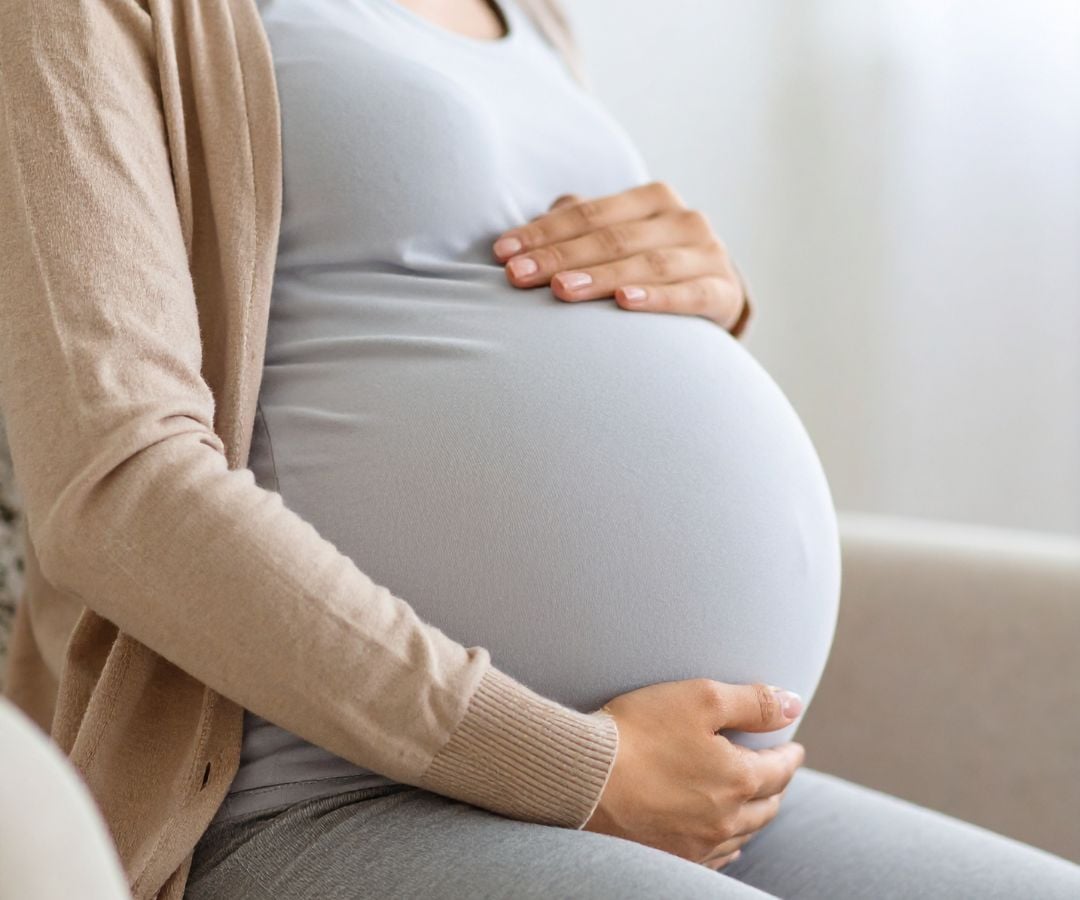
In France, about 1.6% of deliveries involve twins, amounting to just over 10,000 twin births a year. Many prospective parents wonder whether they can improve their chances. The honest answer: some factors do play a role, but no natural method guarantees a twin pregnancy. Here’s what’s supported by evidence, what’s myth, and how to prepare calmly for the arrival of two babies.
How to have twins: the short answer
There’s no reliable technique for conceiving twins. The chances increase mainly with:
- heredity on the mother’s side (a family tendency toward double ovulation);
- the mother’s age, with a peak between ages 35 and 39;
- previous pregnancies: the rate increases with the number of children already born;
- assisted reproduction, which is a medical process, not a method to choose in order to have twins.
Sex positions, old wives’ tales, and so-called miracle foods, on the other hand, have no proven effect.
Identical or fraternal twins: why the distinction matters
Fraternal twins (dizygotic) develop from two eggs fertilized by two sperm. Heredity, age, and fertility treatment can make them more likely because they depend on double ovulation.
Identical twins (monozygotic) develop when a single fertilized egg splits. This happens by chance: their frequency is roughly the same around the world, and no known factor can influence it.
Factors that really increase your chances of having twins
Heredity, especially on the mother’s side
If your mother, sister, or maternal grandmother has had fraternal twins, you’re more likely to release two eggs in the same cycle. This tendency toward double ovulation runs in families.
What about the father? He doesn’t influence his partner’s ovulation. He can, however, pass this genetic predisposition on to his daughters, who may then be more likely to have twins themselves.
Heredity, especially on the mother’s side
If your mother, sister, or maternal grandmother has had fraternal twins, you’re more likely to release two eggs in the same cycle. This tendency toward double ovulation runs in families.
What about the father? He doesn’t influence his partner’s ovulation. He can, however, pass this genetic predisposition on to his daughters, who may then be more likely to have twins themselves.
The expectant mother’s age
As women approach 40, hormonal changes make double ovulation more common. Spontaneous twin pregnancies are therefore more frequent between ages 35 and 39. This is one reason the twin birth rate in France has almost doubled since the 1970s: women are having children later.
The number of previous pregnancies
Statistically, a woman who has already had several children is more likely to be expecting twins in a subsequent pregnancy. As with age, this is an observed trend, not something you can control.
Assisted reproduction (ovarian stimulation, IVF)
Along with maternal age, assisted reproduction is the other major factor behind the rise in twin births. Treatments that stimulate ovulation can cause multiple eggs to be released, and IVF may involve transferring more than one embryo.
Today, however, medical teams aim to limit multiple pregnancies, which carry greater risks for the mother and babies. Transferring a single embryo is increasingly preferred. Assisted reproduction addresses difficulty conceiving; it isn’t an option for “choosing” to have twins, and no fertility treatment should be taken without medical supervision.
Body type
Studies observe slightly more twin pregnancies among taller women or those with a higher BMI. This is simply a statistical correlation: changing your weight to increase your chances makes no sense and is not recommended.
Sex positions, old wives’ tales, and diet: what’s myth
Is there a sex position that helps you have twins?
No. A twin pregnancy depends on what happens in the ovaries (the release of one or two eggs) or on a fertilized egg splitting. No sex position affects these processes.
Old wives’ tales about conceiving twins
Yams, sweet potatoes, dairy products, herbal teas: this advice has been circulating for a long time. Yams are often mentioned because Nigeria, where they are widely eaten, has one of the highest twin birth rates in the world. But that population also has a strong genetic predisposition, and no causal link to diet has been established.
A varied diet is still helpful when preparing for pregnancy. It simply doesn’t increase your chances of having two babies.
Folic acid and vitamins
Vitamin B9 (folic acid) is recommended for all women planning a pregnancy to help prevent certain birth defects. It should be taken on medical advice and is not intended to increase the chances of having twins.
The takeaway: You can’t choose to have twins. The best preparation is early prenatal care… and a little planning to welcome two babies home.
How can you tell if you’re expecting twins?
Possible signs—but not reliable ones
Greater fatigue, stronger nausea, and a belly that grows more quickly: these signs are often reported in twin pregnancies. But they also occur in many singleton pregnancies. No old wives’ tale can tell you whether you’re expecting twins.
A home pregnancy test can’t detect twins either, even if the line appears very quickly. A high beta-hCG level in a blood test may suggest twins, but it can’t confirm them.
Ultrasound: the only way to confirm it
An ultrasound confirms a twin pregnancy. The first-trimester scan (between 11 and 14 weeks of pregnancy, measured from the last menstrual period) can also show whether the babies share a placenta. This information, called chorionicity, determines how the pregnancy is monitored.
Twin pregnancy: at how many weeks are twins born?
A twin pregnancy generally lasts less time than a singleton pregnancy. The French National College of Gynecologists and Obstetricians (CNGOF) recommends scheduling delivery:
- between 37 weeks and 38 weeks, 6 days when each baby has their own placenta (a dichorionic pregnancy);
- between 36 weeks and 37 weeks, 6 days when the babies share a placenta (a monochorionic pregnancy).
An earlier birth is still common. Monitoring is more frequent than in a singleton pregnancy, and the medical team sets a schedule suited to each situation.
Good to know: Because twins often arrive before their due date, it’s best to have their nursery ready by around the sixth or seventh month of pregnancy.
Preparing for twins: setting up the nursery
Two babies mean two sleeping spaces, two mattresses, and many more diaper changes. A nursery planned during pregnancy will save you valuable time in the first few months.
One twin crib or two separate cribs?
Each baby needs their own sleeping space and their own mattress. You have two options.
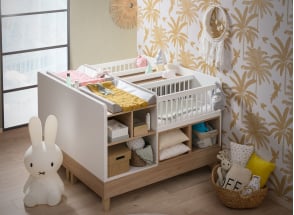
A twin crib. It combines two sleeping spaces in one piece of furniture, often with a changing table and storage. It’s the most practical option for those closely spaced nighttime wake-ups. The WILLOW convertible twin crib is a good example:
- two separate sleeping spaces, each initially with its own changing table and storage;
- it later converts into two 70 × 140 cm cribs with two separate changing dressers, then into two small children’s beds;
- legs and rails made of PEFC-certified solid beech, with water-based paint free of solvents and VOCs;
- designed with a French manufacturing partner.
→ See all our twin crib models.
Two matching cribs. More flexible to arrange, they work well in a long, narrow nursery or let you separate the children later. Ideally, choose a convertible crib that becomes a child’s bed, saving you another purchase around age 2 or 3. To compare the options in detail, read our guide: which cribs to choose for twins.
Twin nursery essentials
- Two separate sleeping spaces (a twin crib or two cribs)
- Two firm baby mattresses, sized to fit the crib exactly
- A well-equipped changing area: a nursery dresser with a changing table top
- Double the storage for clothes and linens: a nursery wardrobe
- Double—or even triple—the bedding
Place the changing area as close to the cribs as possible, and keep a clear path between the sleeping spaces for nighttime care. Find more organization ideas in our article how to set up a nursery for twins. Once you’re home from the hospital, see our tips on helping twins sleep in their nursery.
Thinking ahead: furniture that grows with them
Twins grow quickly—and at the same time. Convertible furniture reduces the need for new purchases: the crib becomes a child’s bed, and the changing dresser becomes a simple storage unit.
Later, when space gets tight, a bunk bed frees up floor space for play. Note: the top bunk is only suitable for children ages 6 and up. Until then, a trundle bed is a good alternative for two children sharing a room.
FAQ
How can you maximize your chances of having twins?
There’s no miracle formula, but some natural factors seem to make twin pregnancies more likely, especially fraternal twins. Maternal age is important: double ovulation peaks around age 37. A diet rich in yams or sweet potatoes, as observed in Nigeria, might also influence the menstrual cycle thanks to a compound similar to estrogen.
Does heredity really play a role in conceiving twins?
Yes, genetics plays a major role, primarily for dizygotic (fraternal) twins. If you have twins on your mother’s side of the family, you’re more likely to release multiple eggs. This is a hereditary trait passed down through families.
The father also plays a role, though indirectly: he can’t influence his partner’s pregnancy, but he can pass this “super-ovulation” gene on to his daughters. They may then be more likely to have twins when they become mothers.
What early signs might indicate a twin pregnancy?
Some physical symptoms are often more intense than in a singleton pregnancy. A beta-hCG hormone level that rises very rapidly can be a strong biological indicator. Expectant mothers also often report extreme fatigue, more frequent nausea, and a belly that grows more quickly.
However, the only reliable way to confirm that you’re expecting two babies is a dating ultrasound, generally performed between 7 and 13 weeks of pregnancy, measured from the last menstrual period.
How long does a twin pregnancy last on average?
A twin pregnancy is naturally shorter than a singleton pregnancy. On average, delivery occurs at around 36 to 37 weeks of pregnancy, measured from the last menstrual period. The babies are often considered premature and need closer monitoring.
Timing also depends on the type of pregnancy: for twins with separate placentas (dichorionic), delivery is often scheduled between 37 and 39 weeks. For twins sharing a placenta (monochorionic), doctors generally recommend delivery a little earlier, between 36 and 37 weeks, for the babies’ safety.
10 decorating ideas for a child's bedroom: inspirations and tips
How to make a bed: the complete step-by-step method
How to place a bed in a bedroom for healthy and restful sleep