How to make your bedroom cozier in winter?
Nateo CONCEPT
8 ideas for a truly cozy retreat
As the days grow shorter, the bedroom becomes the place you most want to retreat to. But it needs to feel truly inviting. The good news: making your bedroom cozier in winter takes neither renovations nor cranking up the heat. The right materials, furniture placement, lighting, and a few thoughtfully chosen textiles are enough to transform the atmosphere… and even how warm the room feels.
In this guide, we’ve gathered ideas that really work for adult, child, and baby bedrooms.
1. Choose wood and natural materials
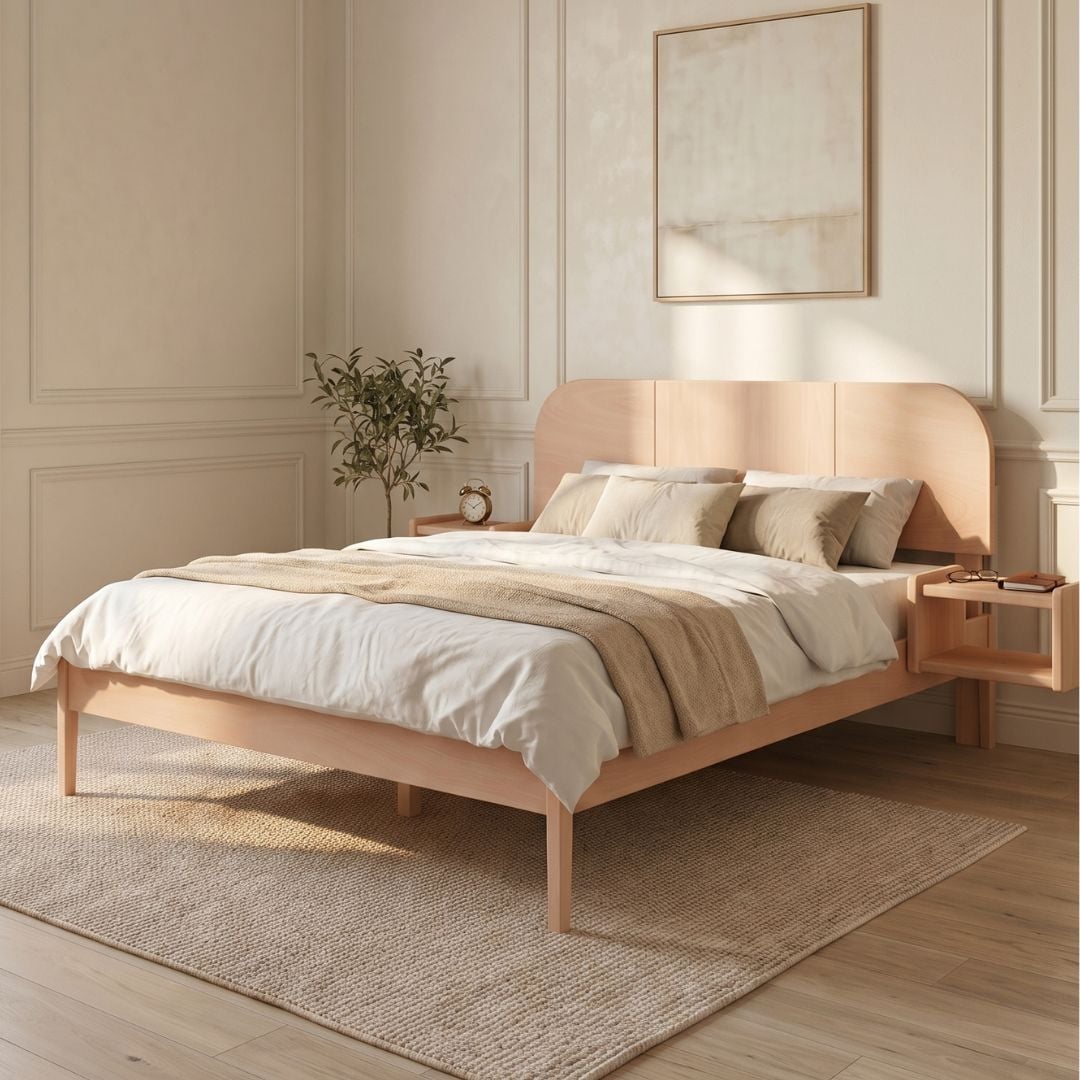
It’s the most lasting way to make a difference. Wood looks and feels warm: unlike metal or glass, it never feels cold. A solid wood bed, dresser, or nightstand immediately makes a room feel softer and more inviting.
A few pointers to help you choose:
- Dark woods like walnut create an enveloping atmosphere, ideal for winter. We explore its benefits in our article on walnut wood, a warm color for a healthy retreat.
- Light-colored woods (beech, pine) keep a bedroom bright while still feeling warm: a good choice for small rooms or bedrooms with limited natural light.
- Natural finishes (oil, matte varnish) highlight the wood grain, which has far more character than a lacquered look.
2. Warm up your color palette
Colors directly affect how warm a room feels. Cool tones (light gray, icy blue, pure white) heighten the sense of chill. In winter, choose:
- warm neutrals: beige, sand, linen, cream;
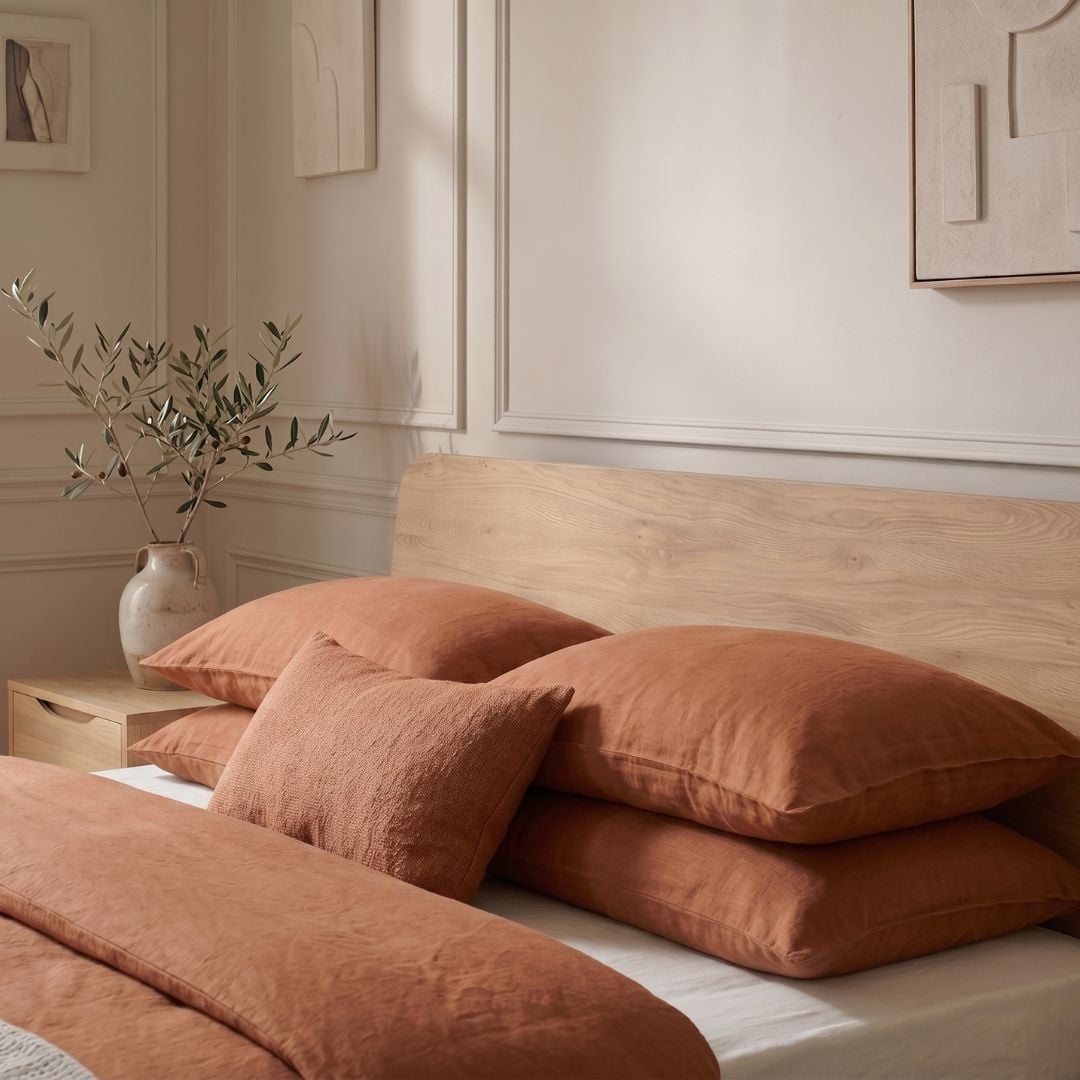
- earth tones: terracotta, ocher, caramel, rust;
- deep greens (sage, olive), which pair beautifully with wood.
There’s no need to repaint everything: one wall behind the bed is enough. If you’re unsure about taking the plunge, our guide to choosing a dark wall for your bedroom will help you find the right shade.
3. Make the bed the heart of your cozy retreat
The bed sets the tone for the bedroom. In winter, it’s also where you spend the most time, so it should feel comfortable and reassuring.
Add a headboard. It’s probably the most underrated element. A wood headboard defines the space, creates a snug, nest-like feel, and forms a barrier against the cool wall when you sit up to read. For a double bed, a 160 cm headboard with built-in storage also keeps books, a lamp, and herbal tea within reach.
Think about height. A slightly raised bed keeps you away from the floor, often the coldest part of the room, especially if it’s tiled. A storage bed with a headboard offers both benefits and frees up space to store summer comforters and throws.
Layer it up. The secret to an inviting bed is layering:
- a comforter suited to the season;
- a duvet cover in a soft fabric: flannel, washed linen, or waffle cotton;
- a thick throw draped over the foot of the bed;
- two or three pillows in different sizes.
You’ll find everything you need to put this look together in our bedding selection.
4. Replace the overhead light with several soft light sources
A single white overhead light makes the room look flat and feel cold. Instead, use several lower light sources:
- a bedside lamp on each side of the bed;
- string lights or a wall sconce above the headboard;
- an accent lamp in the reading nook.
Choose warm white bulbs (around 2,700 K). In the evening, soft lighting also helps you fall asleep. During the day, keep windows as clear as possible to make the most of natural light, which is especially precious in winter.
5. Arrange your furniture to keep the cold at bay
Furniture placement affects both the atmosphere and how warm the room actually feels.
- Move the bed away from exterior walls and windows. These are the coldest surfaces: putting the headboard against them can leave you feeling drafts all night.
- Use large pieces of furniture as insulation. A wardrobe or closet system placed against a north-facing wall creates an extra layer between the room and the outdoors. A full bookcase has the same effect.
- Never block radiators. Furniture or a bed placed in front of one prevents heat from circulating. Leave at least about 12 inches of clearance.
- Cover the floor. A large wool or thick-pile rug under the bed takes away that cold-floor feeling when you get up.
- Add an extra layer of curtains. Thick or thermal curtains, closed as soon as night falls, limit heat loss through the windows.
Finally, there’s no need to overheat the room: ADEME recommends around 17 °C for a bedroom. A well-arranged bedroom feels warmer at the same temperature.
6. A cozy child’s bedroom (and a safe space for baby)
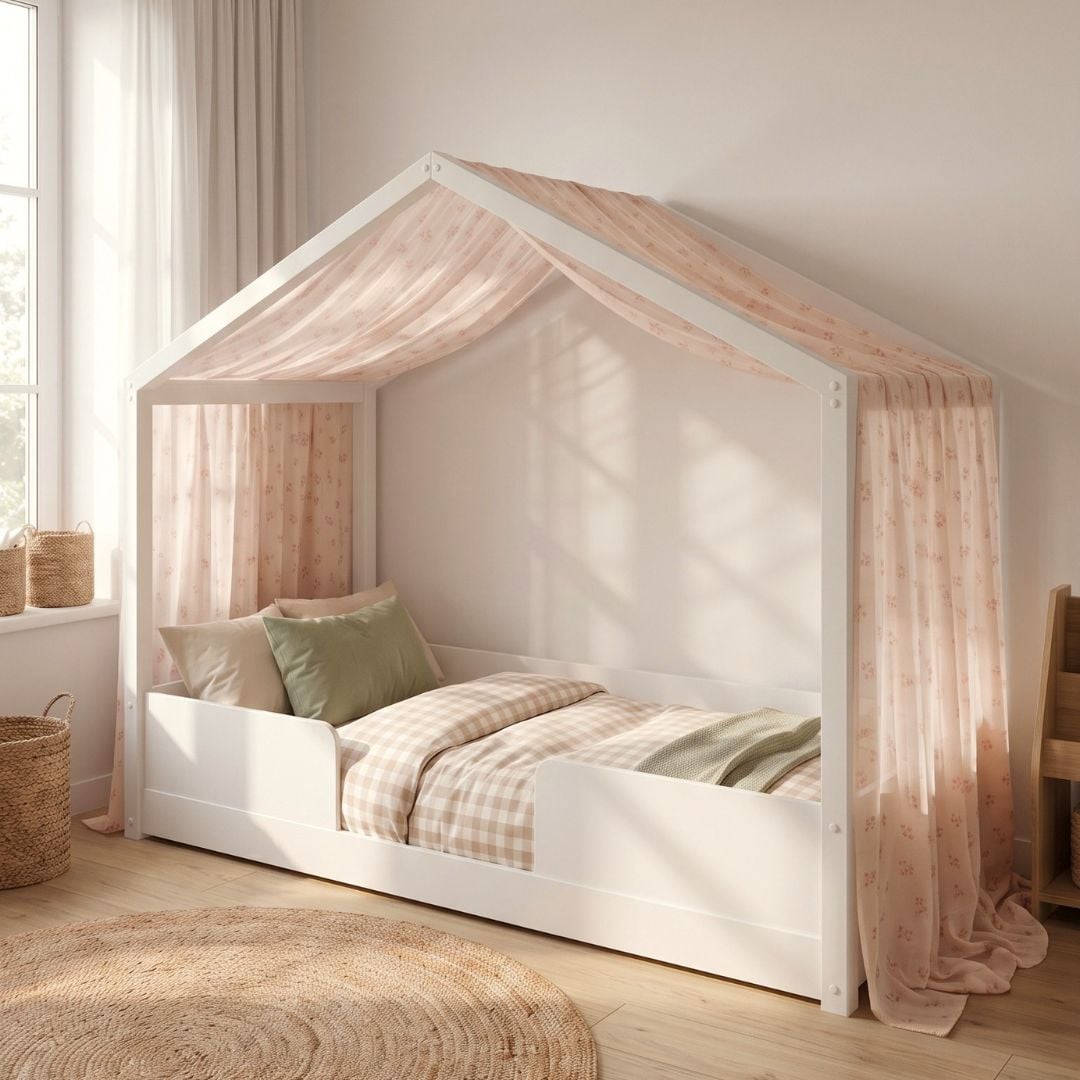
For children, winter is the perfect season to create a cozy retreat. A house bed is ideal for this: its house-shaped frame naturally creates a sheltered space you can dress up with a canopy, string lights, and pillows. For younger children, a floor-level house bed encourages independence while offering that same snug feeling. A thick rug in front of the bed also turns the floor into a real play area, even when it’s cold outside.
For babies, warmth should come from the room’s atmosphere, never from piling textiles into the crib. Safety recommendations are clear:
- a bedroom temperature of around 18 to 20 °C;
- no comforter, pillow, or crib bumper: choose a sleep sack suited to the season instead;
- a bed positioned away from radiators and windows.
Instead, a sense of coziness comes from natural wood furniture, soothing colors, and a softly glowing night-light. Find more ideas in our article on creating a cozy baby’s room and our selection of baby room furniture.
7. Declutter: a tidy bedroom feels warmer
Sweaters, throws, spare comforters: winter brings more bulky textiles. Without suitable storage, they pile up on a chair or at the foot of the bed, and the bedroom loses its sense of calm.
- Store summer items in a storage bed or under the bed to free up closet space.
- Keep the throws you’re currently using in a wicker basket or a storage bench at the foot of the bed.
- A low dresser keeps surfaces uncluttered and also provides a place for an accent lamp.
A tidy bedroom invites rest: it’s the foundation that lets all the other tips work their magic.
8. Add a seasonal touch without overdoing it
A few details are enough to evoke the season: fir or eucalyptus branches in a vase, candles (blow them out before bed), velvet pillows, or a natural wreath on the door. The idea is to suggest winter, not turn your bedroom into a Christmas display. Changing just one item each season is enough to refresh the atmosphere.
FAQ
How can you make a cold bedroom feel warmer without turning up the heat?
Move the bed away from exterior walls, hang thick curtains, lay down a large rug, and place a wardrobe against the coldest wall. These steps help limit heat loss and make the room feel less cold.
What colors make a bedroom feel warm?
Warm neutrals (beige, sand), earth tones (terracotta, ocher), and deep greens. Paired with wood, they create a cozy, enveloping atmosphere.
Which wood should you choose for a cozy bedroom?
Choose walnut for an enveloping atmosphere, or beech or pine to keep the room bright. The key is to choose a natural finish that lets the wood grain show through.
Does a headboard protect you from the cold?
It’s no substitute for insulation, but it creates a barrier between you and the wall when you’re sitting up in bed. It also noticeably enhances the cozy, cocoon-like feel.
What temperature should a bedroom be in winter?
ADEME recommends around 17 °C for an adult’s bedroom. For a baby’s room, the usual target is 18 to 20 °C.
In summary
A warm bedroom in winter rests on three essentials: natural materials like wood, a bed designed as a cozy retreat, and a layout that helps keep the cold at bay. Start with the change that will make the biggest difference to your daily life, often a headboard or bedding, then add more as the season goes on.
Want to make your bedroom feel warmer? Explore our wood headboards and adult bedroom furniture, designed to last well beyond winter.
Adult bedroom decor ideas: 8 styles for a bedroom that feels good to be in
Christmas gift ideas for kids: 10 pieces of furniture for their rooms
10 decorating ideas for a child's bedroom: inspirations and tips