From what age can a child sleep in a bunk bed?
Nateo CONCEPT
Is a bunk bed right for my children?
Since its arrival on the market many years ago, the children's bunk bed has often been a favorite for little ones who love to sleep up high, as well as for parents who gain space. However, choosing elevated sleeping is not without risks and there is a minimum age for climbing into a bunk bed.
Bunk bed: 6 years old on top, from 2–3 years old on the bottom.
To the question “at what age for a bunk bed?”, the official answer is clear: the upper bunk is reserved for children aged 6 and over, while the lower bed can be used from 2 to 3 years old. This distinction is dictated by the European standard NF EN 747, which aims to prevent the risk of falls and ensure a safe sleeping environment. Before 6 years old, a child's motor skills and danger awareness are not sufficiently developed to climb up or down alone. On the other hand, the lower bunk represents an excellent transition after the crib, while remaining perfectly safe.
What age for bunk beds?
Health authorities and manufacturers recommend a minimum age of 6 years for the upper bunk. Before this age, motor skills and danger awareness are not sufficiently developed to guarantee safe use.
The lower bunk, however, is suitable from 2–3 years old, as it involves no risk of falling. It is an excellent transition after the crib.
Why wait until 6 years old for the upper bunk?
Before 6 years old, climbing up or down a ladder can lead to falls, especially at night. At this age, the child's coordination and balance become sufficient for autonomous use.
The NF EN 747 standard requires:
- a safety guardrail of at least 16 cm above the mattress,
- a fixed and stable ladder, a rigid structure without movement.
💡 Did you know?
Any compliant bunk bed must display the mention: “The elevated sleeping area is not suitable for children under 6 years old.”
What if my child seems ready before 6 years old?
Even in case of early maturity, it is preferable to wait. If the child already sleeps in the bottom bed, install a night light and a cushioning mat on the floor. Choose a model like the PRADO solid wood bunk bed, robust and compliant with standards.
By the way, what is a children's bunk bed?
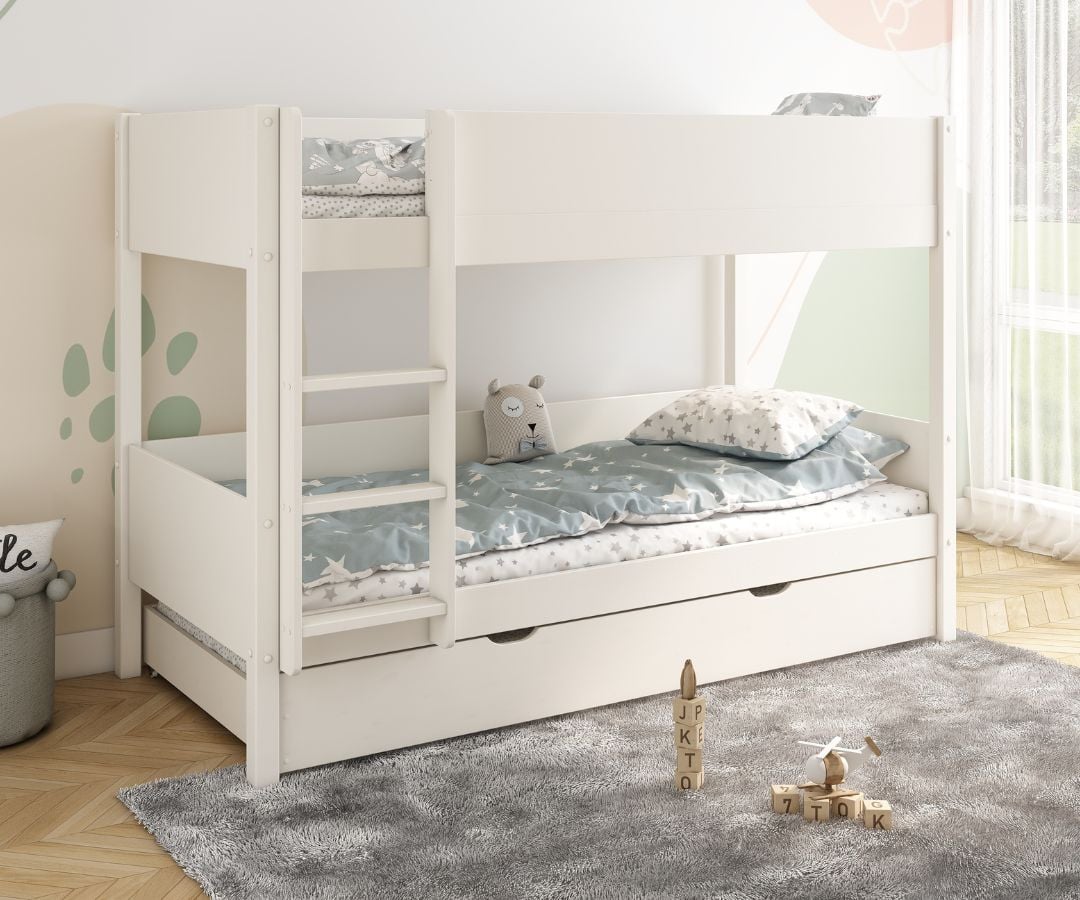
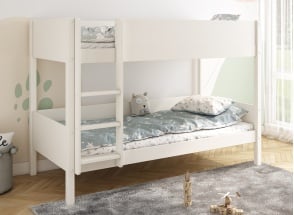
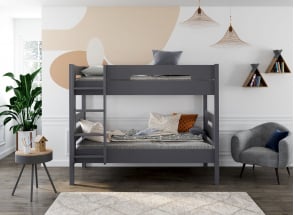
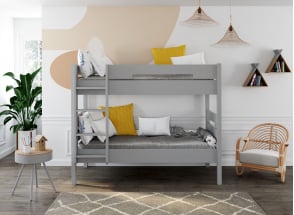
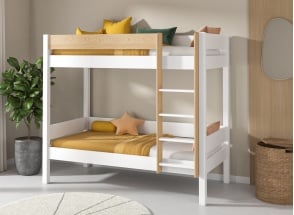
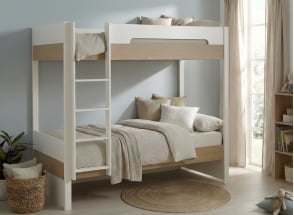
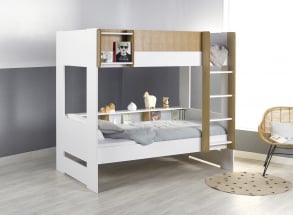
A children's bunk bed includes two sleeping spaces arranged one above the other, connected by a wooden or metal structure and accessible by a ladder. Practical and fun, it saves precious space in shared bedrooms.
The safest models comply with the NF EN 747 standard, guaranteeing the stability and safety of the structure. At Nateo Concept, priority is given to ecological materials, such as PEFC-certified solid wood and water-based paints without solvents.
The different types of bunk beds
- The solid wood bunk bed: robust and durable, it is often made of solid pine or beech from eco-managed French forests.
- The 90x190 cm bunk bed: a standard size that accompanies children's growth until adolescence.
- The separable bunk bed: modular, it transforms into two single beds when the children grow up.
- The storage bunk bed: it incorporates drawers or shelves for maximum space saving.
- The 3-place bunk bed: perfect for large families, combining a double bed and a single sleeping space.
Lower bunk: from 2 years old, how to secure it?
From 2–3 years old, a child can sleep on the lower bunk of the bunk bed. For a smooth transition:
- Choose a 90x190 cm mattress with a maximum thickness of 16 cm.
- Install a removable guardrail or soft protection.
- Make sure the structure is secured to the wall if the furniture moves.
To go further, read our article “What bed to choose for a 2-year-old child?”
Safety checklist & optimal space
Before installing a bunk bed, make sure to respect the safety distances:
- Ceiling height: at least 60 cm between the top mattress and the ceiling.
- Bar spacing: maximum 75 mm.
- Top mattress: thickness less than or equal to 16 cm.
- Stability: no oscillation of the furniture.
✅ These points guarantee a safe room that complies with NF EN 747 requirements.
Optimize space without compromising safety
Bunk beds free up space for playing, reading, or setting up a desk. Some models, like the MANLY bunk bed with storage, combine sleeping and clever storage solutions.
For small bedrooms, make sure to:
- leave one meter between the two bed bases,
- choose a non-slip ladder with handles,
- add soft lighting for nighttime climbing.
For other tips, discover how to arrange a small child's bedroom.
A durable investment: the bed that grows with your children
A well-chosen bunk bed accompanies your children for many years. Evolving or separable models transform into two single beds to follow their growth.
Nateo Concept models, like the HOYA bunk bed in solid pine, are manufactured in France, with PEFC-certified wood and water-based paints without solvents.
Other types of elevated sleeping
- The mid sleeper bed: accessible from 3 years old, perfect for creating storage space underneath.
- The loft bed: reserved for children over 6 years old, it frees up ideal space for a desk or reading corner.
FAQ: Required Age for Bunk Beds
At what age can a child sleep in a bunk bed?
From 6 years old for the upper bunk, and from 2–3 years old for the lower bunk. Before this age, the child does not yet have the motor skills and awareness necessary to climb up and down safely. The lower bed therefore remains the best option for younger children, especially if it is equipped with a safety rail.
Can a 4-year-old child sleep on top?
No, the rule is strict: not before 6 years old, even if the child is agile. At 4 years old, danger awareness remains limited, and the risks of falling are real, especially at night. It's better to wait until your child reaches the recommended age and sleep on the bottom until then.
What standards should be followed?
The NF EN 747 standard governs the design and safety of bunk beds. It requires guardrails of at least 16 cm above the mattress, a fixed and stable ladder, as well as a rigid structure without movement. This standard ensures that the furniture has been tested against impacts and load.
What mattress should I choose?
A mattress with a maximum thickness of 16 cm for the top bed is recommended to respect the safety height of the guardrail. For the lower bunk, you can choose a thicker mattress for more comfort, always ensuring compatibility with the structure.
What about ceiling height?
Allow at least 60 cm between the top mattress and the ceiling to prevent the child from bumping their head when sitting up. In a room with a low ceiling, opt for compact models or mid-height beds.
Is a bunk bed a good investment?
Yes, an evolving and PEFC-certified model can last until adolescence. Its robust structure often allows the bunks to be separated and transformed into single beds. It is therefore an economical, durable, and ecological choice.
A bunk bed is a space-saving, safe, and durable solution, provided that safety standards and the recommended age are respected. Choose an ecological and robust model, designed to grow with your children.
Sage green and wood bedroom: how to create a natural and soothing space
Children's bed size: the complete guide for healthy and safe sleep
How to decorate your bedroom with healthy materials?