Teaching your child to play alone: our advice
Nateo CONCEPT
Increase your child's autonomy by letting them play alone
Learning to play alone is part of a child's natural development and allows them to gain independence and autonomy. For some children, the task is more difficult than for others, but there are many tips that can help your child play alone. So how do you teach your child to play alone? We explain everything!
Why is it important for a child to play alone?
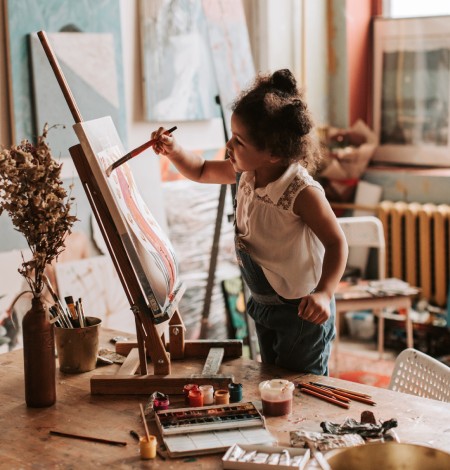
Playing alone is essential for child development. It is often during these solitary play times that little ones experiment with learning for pleasure. Therefore, playing alone can bring many benefits such as:
- Develop their autonomy and sense of initiative
- Learn to trust oneself
- Develop their creativity
- Increase their problem-solving ability
- Recharge batteries after a busy day
- Learn to be comfortable with oneself
- Etc.
In short, while shared moments are important, moments of solitude are just as important for the child's well-being.
However, some children find it difficult to play alone. Often, it's because they need affection, to feel soothed or confident. Moreover, children who attend daycare may find it hard to play alone because they are used to doing everything in groups.
Create a suitable space for playing alone
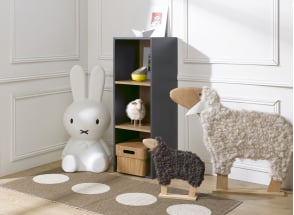
The first step for a child to be able to play alone is to have a space where they can be peaceful and where they enjoy spending time. The bedroom seems to be the most appropriate place. It allows them to be alone and quiet to play as they wish. We will therefore furnish and decorate this room to make it a fun and pleasant space.
Choosing the bed
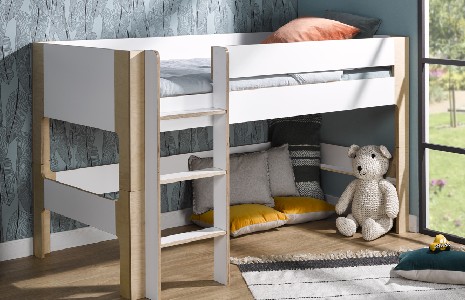
Opting for a mid-height children's bed for example is a great idea. The mid-height children's bed is a bed whose height is between a loft bed and a simple bed. The bed base and mattress of the mid-height children's bed are therefore at a medium height and a safety rail is present for security. Young children love using a mid-height children's bed because it is accessible by a small ladder and its height allows them to imagine all sorts of games. The mid-height children's bed also has the particularity of having a small space underneath which is perfect for creating a play or reading corner.
Choosing a mid-height children's bed is therefore a very good idea to make the room comfortable. More than a mid-height children's bed, you can also consider an evolving children's bed that will follow them throughout their growth, a trundle children's bed for occasional bed sharing thanks to a second sleeping space, or a simple 2-year-old children's bed in 90x140 to preserve space in the room.
Choosing other furniture
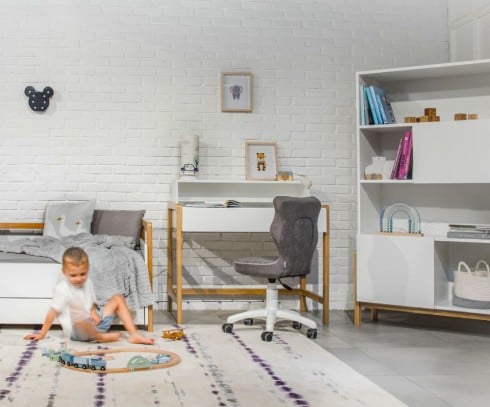
Beyond the sleeping area which is essential in the bedroom, we can add other furniture such as a wooden children's desk for example. It's perfect for working, but also for enjoying independent activities like reading or drawing. You can install a desk even in a small room by choosing a high children's bed like a loft-type bed for example.
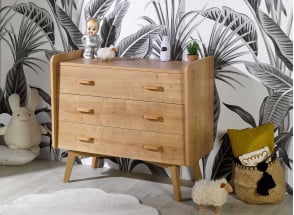
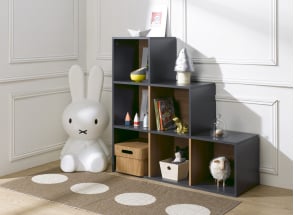
Depending on storage needs, you can add a children's bedside table, a children's dresser, a children's wardrobe. To promote autonomy, you can opt for Montessori furniture like our observation tower for example.
- -10%
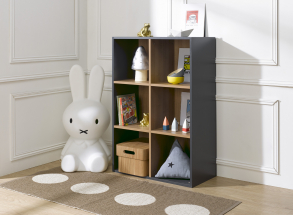
ANGEL 6-cube bookcase
- -15%
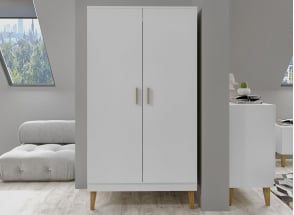
DREAM 2-door wardrobe - White/Oak
- -15%
PRADO 2-drawer desk – White/Oak
- -10%
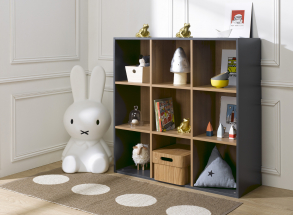
ANGEL 9-cube bookcase
- -30%
ANGEL 3-drawer chest - Slate
- -12%
VOLT Storage Desk – White/Wood
- -30%
SYMI wooden bedside table
- -15%
PRADO 2-door wardrobe – White/Oak
Helping your child play alone, our advice
To help your child play alone, several tips can be implemented to facilitate the process.
Stay nearby
If a child doesn't feel comfortable alone in their room to play, you can suggest they settle a bit closer. While you're busy cooking, cleaning, or simply reading a book for example, the child can settle nearby and play alone. An occasional word allows them to feel reassured by your presence while being fully autonomous in play.
Do things gradually
It's difficult to ask a child to go play alone for an hour if they're not used to it. Therefore, opt for short and occasional play times to become more frequent and longer so that the child gets used to it. The change will then be much more comfortable for everyone.
Praise moments of autonomy
Just as we praise a child when they master a new skill, we can certainly praise them for this solo play time. This will make them feel valued and more confident in their ability to have fun alone.
Do not disturb these play moments
When a child manages to play alone and is in their bubble, it is recommended to not disturb the moment. You can simply ask if everything is okay from time to time or peek into the room to make sure. Avoid anything that could disturb this moment, such as turning on the TV for example.
Let the child get bored
Boredom is conducive to creativity and inventiveness. It is therefore essential that a child learns to be bored to mobilize their resources and find an occupation, alone. You can therefore let a child get bored and not systematically offer them a new activity as soon as they show signs of boredom.
Dedicate time to them
At the same time, it is also important that parents dedicate quality time to their child. This way, they receive the attention they need and will find it easier to spend time alone afterwards
Sage green and wood bedroom: how to create a natural and soothing space
Children's bed size: the complete guide for healthy and safe sleep
How to decorate your bedroom with healthy materials?