How to choose a children's bed for healthy and safe sleep

- Categories : Tips

Nateo CONCEPT

Children's bed: making the right choice

Key takeaways

  • The size of the bed must be adapted to the child's age and independence

  • Safety (standards, stability, rails) is the number one criterion

  • Materials must be healthy, durable and environmentally friendly

  • Design plays a key role in the harmony of the bedroom

  • Some simple choices help avoid common mistakes

Choosing a children's bed is not just a matter of style. It is a defining purchase that influences sleep, safety and the development of the bedroom for several years. The goal is simple: find a comfortable, safe, durable bed suited to the child's pace, without overcomplicating the decision.

Here is a clear guide to help you make the right choice, step by step.

Which sleeping option is best suited to each age?

The need for safety evolves with age, thus transforming the criteria for selecting furniture over the years.

The first bed for toddlers aged 0 to 2

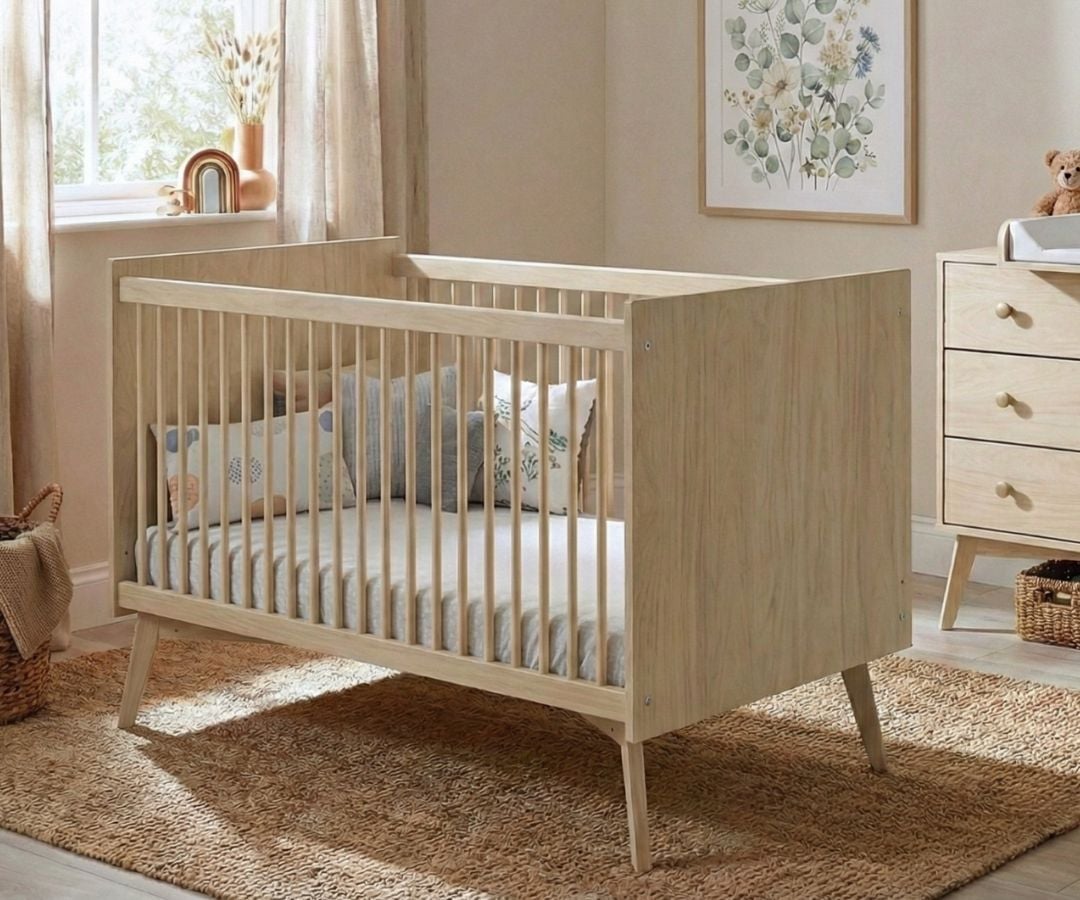
The classic baby bed comes primarily in two dimensions: 60x120 cm or 70x140 cm. These formats offer a compact space, designed to reassure the child and recreate an enveloping environment close to that of a cradle.

During the first months, this type of sleeping arrangement promotes safe and stable sleep. The child feels contained within it, which helps to soothe the nights.

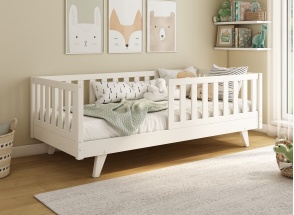
Opting for an adaptable bed is also an excellent option. These models follow the child's growth and extend the useful life of the furniture. It is a sustainable solution that limits frequent replacements while adapting to the needs of each stage.

The slats must strictly comply with the NF EN 716 standard, guaranteeing safe everyday use. To go further in choosing a healthy and sustainable environment, you can consult our dedicated article on adaptable furniture for the baby's bedroom.

Lit bébé évolutif LINE
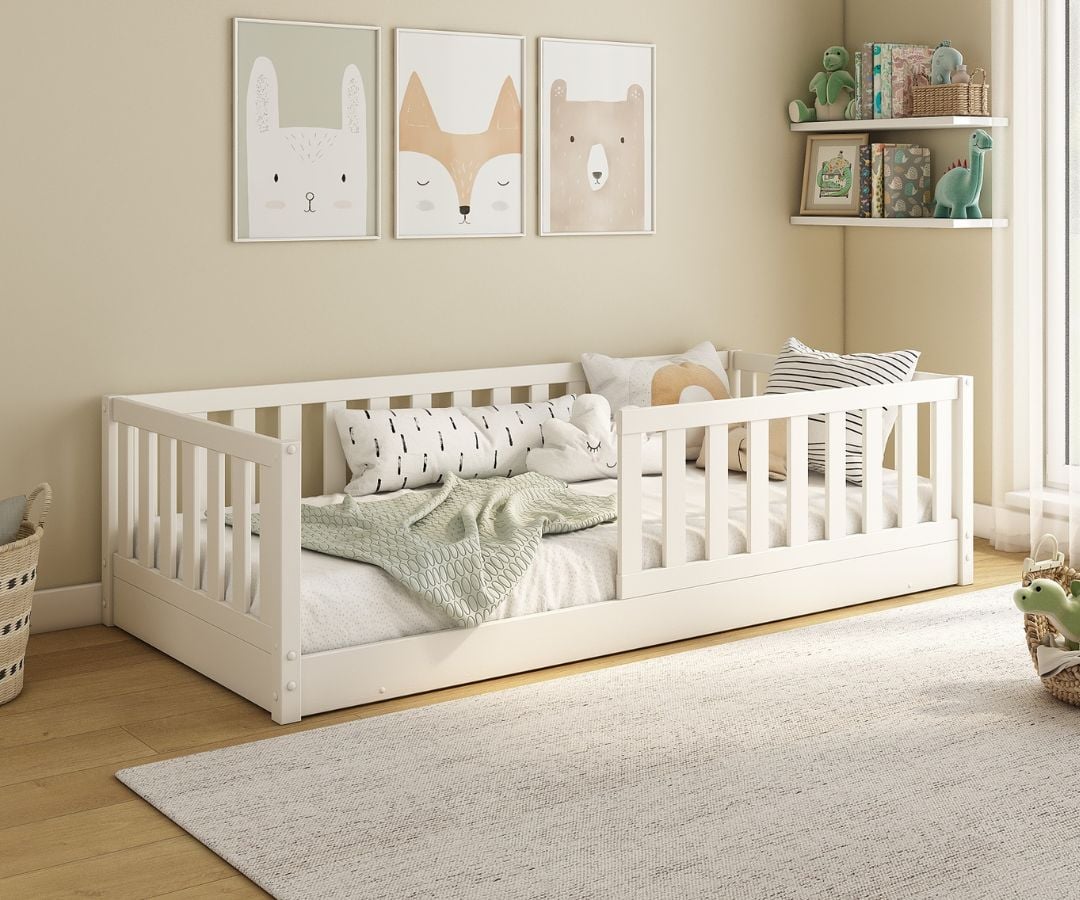
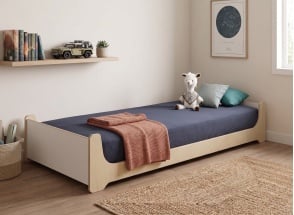
Lit Montessori 90x190

The transition phase between 2 and 6 years

As the child grows, generally between 2 and 6 years old, several options are available to you.

If you opted for an adaptable baby bed, this step is simplified: simply convert the sleeping arrangement to suit the child's new level of independence.

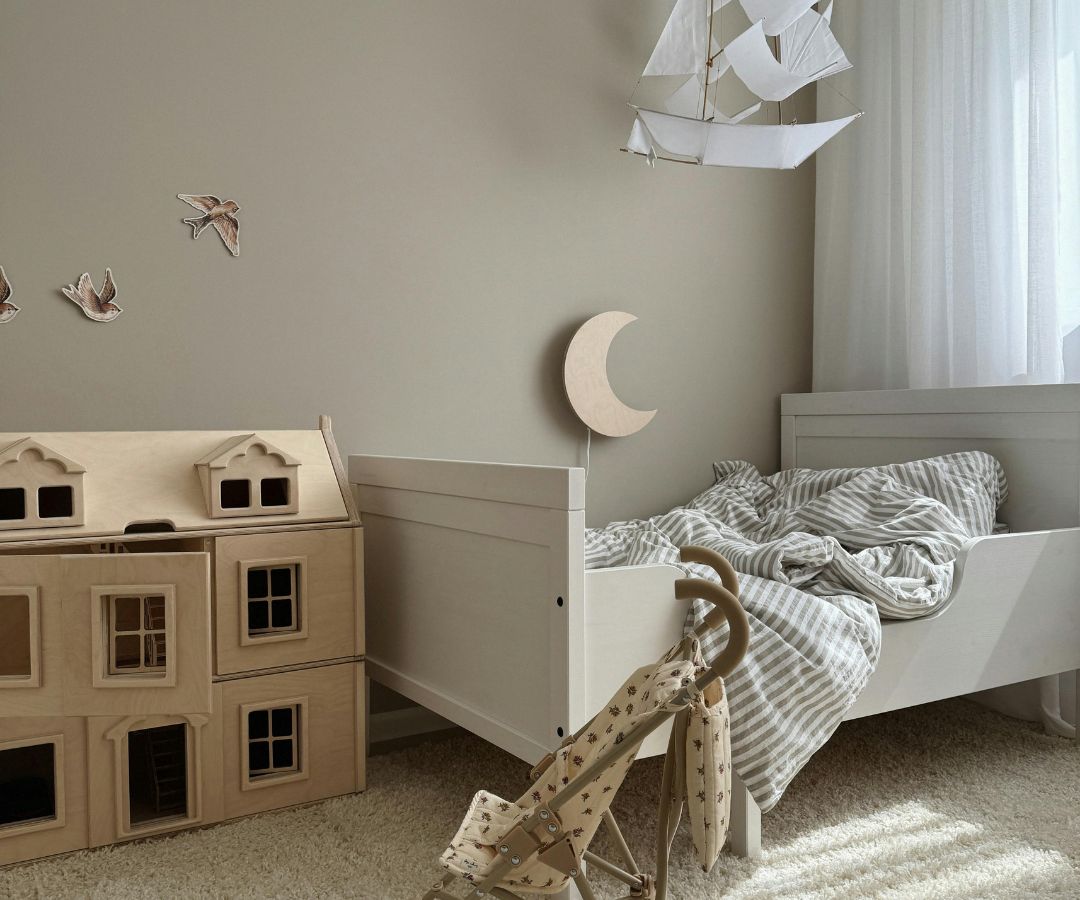
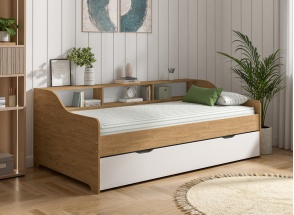
If that is not the case, several alternatives are possible depending on the child's pace, your preferences and the space available in the bedroom. You can, for example, choose a simple floor bed with removable rails, a cabin bed to encourage imagination and independence, or a 90x190 cm bed fitted with a safety rail for a smooth transition.

At this stage, the choice must above all adapt to the child's development. A low bed base is strongly recommended: it makes getting in and out of bed easier and limits the risk of falls in the event of a night-time awakening.

To help you refine your choice, discover our guide on the bed size for a 3-year-old child and the most suitable models for this key stage.

The move to a big bed after age 6

From the age of 6, the child enters a new phase of growth and independence. The 90x200 cm bed then becomes the reference. It accompanies the child for several years, through adolescence, without requiring any major change.

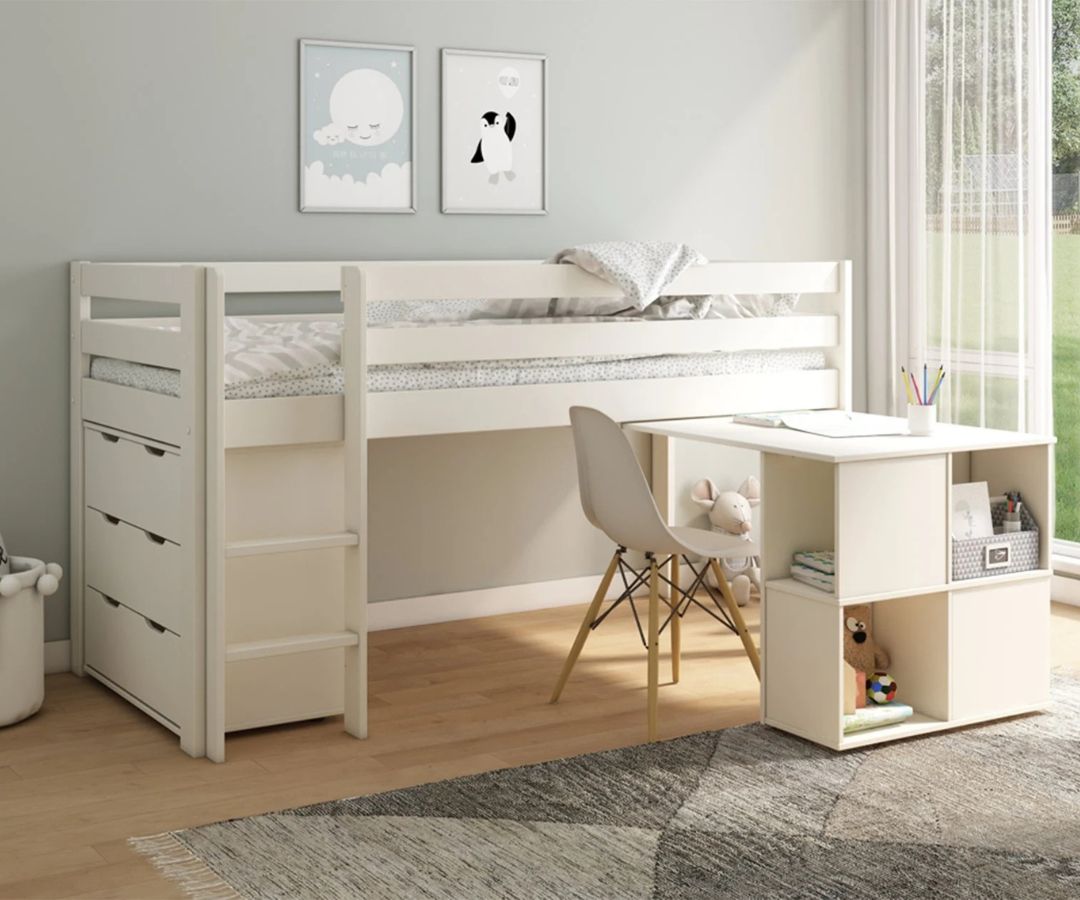
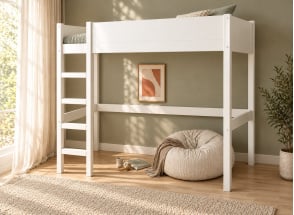
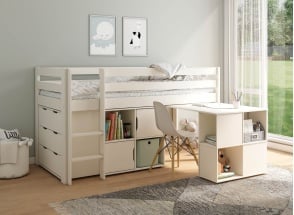
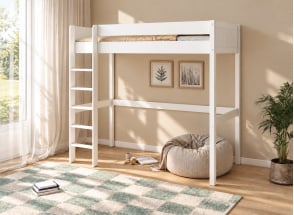
This is also the age when elevated solutions can be considered: mid sleeper bed, mezzanine bed or bunk bed depending on the layout of the bedroom and the family's needs. These formats free up floor space while structuring the room.

At this stage, design also becomes more important. The bed can reflect more of the child's personality, while remaining robust enough to withstand everyday use, including play.

The choice of mattress also becomes essential to ensure good support and accompany growth.

To go further, consult our guide on the bed size suited to the child's growth to make a lasting and coherent long-term choice.

Lit mi-hauteur avec commode et bureau JADE

Safety: a non-negotiable criterion

A children's bed must above all be a safe space. This is the most important point to check.

The stability of the structure is essential. The bed must not move, creak or have any play in the joints. The corners must be rounded or protected to avoid impacts.

Safety rails are particularly useful for younger children. They help prevent falls during sleep, while leaving an opening to encourage independence.

The height of the bed must also be appropriate. A bed that is too high can become risky, especially for a child who gets up alone at night.

Finally, it is important to check that the bed complies with the standards in force for children's furniture, ensuring safe everyday use.

Healthy and responsible materials for a safer environment

The choice of materials has a direct impact on air quality in the bedroom and on the durability of the bed.

It is recommended to favour materials from responsible sources and finished with clean, controlled processes. Ecological wood panels are today a particularly suitable solution for children's furniture, as they allow solidity, aesthetics and respect for the environment to be combined.

Finishes must be non-toxic and suitable for daily use in a child's bedroom. This ensures a healthier environment, especially for the youngest children who spend a lot of time in their room.

At Nateo Concept, this quality requirement is central: offering furniture designed to last, while minimising environmental impact.

A design that blends naturally into the bedroom

The children's bed is often the centrepiece of the bedroom. Its design must therefore be carefully considered to integrate harmoniously into the whole.

Simple, timeless lines are to be preferred. They allow the bed to adapt to changes in decoration over the years, without having to change everything.

Neutral or natural tones are also interesting, as they make it easier to coordinate with the other elements in the bedroom: textiles, storage, rugs or lighting.

Good design is not only aesthetic. It must also facilitate the organisation of the space and promote a soothing environment for sleep.

Common mistakes to avoid

Certain mistakes recur frequently when choosing a children's bed. Avoiding them leads to greater comfort and peace of mind.

The first mistake is choosing a bed solely for its design, without taking into account the child's age or needs. A beautiful but ill-suited bed quickly loses its appeal in daily use.

Another common mistake is neglecting safety in favour of aesthetics. A bed must always be stable, appropriate and designed for real use, not just visual appeal.

It is also important to avoid beds that are too large for a small bedroom. This can quickly unbalance the space and restrict circulation.

Finally, underestimating the child's development can lead to having to change beds too quickly, when an adaptable solution could have served several years.

Finding the right balance for a lasting choice

Choosing a children's bed means finding a balance between several criteria: safety, comfort, aesthetics and durability. No element should be overlooked.

The ideal approach is to think of the bed as an investment in the child's daily life: their sleep, their independence and their well-being in their bedroom.

A well-chosen bed facilitates bedtime routines, encourages independence and creates a reassuring and pleasant environment.

At Nateo Concept, the goal is to offer beds designed to support families over time, with particular attention paid to responsible materials, timeless design and quality craftsmanship.

FAQ

Sleep is the key moment when your child truly grows. It is during deep sleep phases that the pituitary gland secretes growth hormone, which is essential for bone and muscle development. A suitable bed minimises micro-awakenings and promotes nervous system recovery, allowing the brain to consolidate the day's learning.

Beyond the physiological aspect, quality sleeping arrangements provide an indispensable sense of security. A space proportionate to the child's size reduces night-time anxiety and strengthens independence, giving your little one a true protective cocoon in which to thrive serenely.

For toddlers aged 0 to 2, the classic baby bed of 60x120 cm remains the reference for a reassuring setting. Around age 2, you can move to the 70x140 cm format, a gentle transition that allows the child to leave the cot without losing their bearings. To find out more, discover our guide: Children's bed size at age 3: choosing a safe and durable model.

After age 6, the move to a standard 90x190 cm or 90x200 cm bed marks the start of school years. This format will accompany your child through to adolescence. If your child moves a lot, intermediate options such as 80x160 cm or extendable beds offer optimal freedom of movement.

Your children's respiratory health depends on the quality of the materials. Favour structures made from solid wood or certified PEFC and FSC, guaranteeing sustainable forest management. It is crucial to choose furniture using water-based paints, free from chemical solvents, to limit the emission of VOCs (volatile organic compounds) in the bedroom.

The choice of mattress is equally essential: opt for a model certified Oeko-Tex, guaranteeing the absence of toxic substances. A slatted bed base is also recommended to ensure natural ventilation, thereby avoiding moisture and the proliferation of dust mites.

For non-negotiable safety reasons, access to the upper bunk of a bunk bed or mezzanine bed is strictly reserved for children aged 6 and over. At this age, the child has the agility necessary to use the ladder safely. Below this age, the risk of falls is too great.

During installation, ensure that the bed complies with safety standards (NF EN 747), with robust guardrails and a securely fixed ladder. To optimise your space while remaining vigilant, consult our advice: How to choose a children's bunk bed.

Inspired by Montessori pedagogy, the cabin bed stimulates imagination while encouraging independence. Thanks to its low bed base, often close to the floor, the child can get in and out of bed alone, without the help of an adult. This strengthens their self-confidence and transforms bedtime into a positive and playful ritual.

By choosing a model made from ecological wood, you offer your child healthy furniture that respects their pace of development. It is the ideal solution for combining on-trend design with caring education from the earliest age.

Conclusion

Choosing a children's bed does not have to be complicated. By focusing on the right criteria — appropriate size, safety, healthy materials and adaptability — it becomes easier to find a model suited to your everyday life.

A good bed is one that integrates naturally into the bedroom, accompanies the child's growth and guarantees peaceful nights, year after year.

Discover our children's beds