How to put baby to bed properly?

- Categories : Tips

Nateo CONCEPT

The right practices for safe baby sleep

For baby to enjoy restful and safe nights, there are several recommendations to consider when putting them to bed. These good practices will indeed allow the child to be comfortably installed so they can rest and also limit the risk of sudden infant death syndrome. Choice of bed, choice of mattress, room temperature, and child's position are all among the many good practices that new parents should follow.

Choosing a suitable baby cot

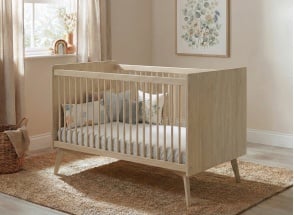
Even before baby's birth, parents will choose a cot. This can be used from birth or a little later after a period of using a cradle or co-sleeping. In either case, its choice must be made thoughtfully to avoid mistakes. There are several types of beds for a baby's room such as:

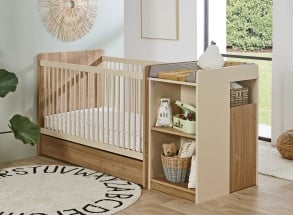
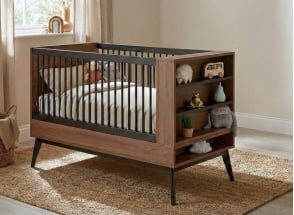
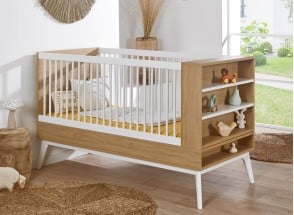
  • The convertible baby cot, which is adaptable as the child grows. For example, you can go from a cradle to a barred cot, then to a child's bed. The convertible baby cot is particularly interesting as it's a piece of furniture that baby can use from birth to adolescence, allowing for a sustainable solution over time.
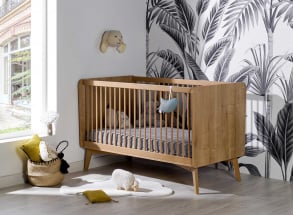
  • The wooden baby cot, which allows you to opt for a durable piece of furniture over time, especially in the case of a solid wood baby cot. You might also consider opting for a complete wooden baby room.
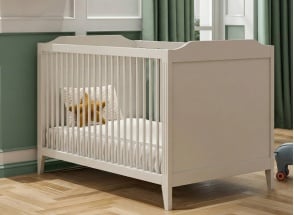
  • The simple baby cot, which is a classic 60x120 baby cot with bars.
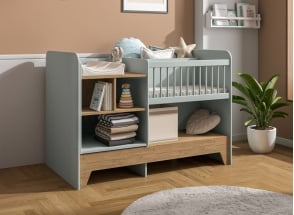
  • The combination baby cot, which integrates several pieces of furniture in one, such as a convertible baby cot, a chest of drawers, a changing table, etc. We can notably mention our BORA model for example.

Whether you decide to opt for a classic white baby cot with bars or a 70x140 baby cot, certain criteria should be prioritized such as:

  • The use of solid wood furniture for greater durability
  • French manufacturing for proximity
  • The use of PEFC certified wood from eco-managed forests
  • The use of water-based paints and low formaldehyde panels to protect baby's health

By following these criteria when choosing your convertible baby cot or combination baby cot for example, you ensure making a responsible purchase that will preserve your child's well-being.

Choosing the baby mattress

After choosing your convertible baby cot comes the choice of the baby mattress that will go with it. Indeed, a convertible baby cot, a classic baby cot, or any other type of barred cot is generally sold without the mattress. It's therefore an additional purchase that needs to be made and which also gives the opportunity to opt for a quality product that cares for your child's well-being.

Most often, it is recommended to choose a mattress made of natural materials such as bamboo or cotton. Here too, we ensure the presence of certain labels such as Oeko-Tex or Certipur for example, which guarantee the absence of certain harmful substances. We can also opt for a made in France baby mattress.

The right temperature in the room

Once the convertible baby cot and mattress are installed, the room is ready to welcome baby during the night. To reassure the child, it is often recommended to place the baby's cot in the parents' room for the first 6 months. This also makes it easier to take care of them during the night.

However, you will need to ensure daily that the temperature of the room where the child sleeps is appropriate. Indeed, baby should neither be too hot nor too cold to have restful nights. The right temperature to maintain is between 18° and 20°.

It is also important to air the room daily. Furthermore, ensure regular dusting while favoring the use of natural cleaning products without essential oils. It is also advised to prohibit pets from entering the baby's room.

Properly positioning your child

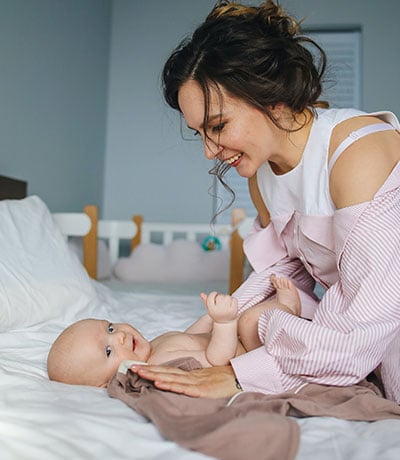
When parents put their child down for a nap or for the night, it is imperative that they lie on their back. Indeed, lying on the stomach can impede breathing, which is one of the main risk factors for sudden infant death syndrome. The side position is too unstable and makes it easy to roll onto the stomach. However, devices aimed at keeping baby on their back should not be used, as pillows, head supports, and others can increase the risk of suffocation.

It is also not recommended to cover your child with a sheet or duvet. The use of a sleep suit or appropriately sized sleeping bag is recommended to prevent the child from sliding inside. You can check if the child is not too hot by placing your hand on their neck. You should not feel any sweat on your fingers. Necklaces, cords, and other chains are of course forbidden to avoid any risk of strangulation.

Stay as vigilant as possible

Finally, there are several devices that can be set up to monitor your child during the night and naps to ensure they are safe. Sharing the same room for the first 6 months remains, as we mentioned, the most recommended solution. When parents are not yet in bed or during nap times, they can use a baby monitor to hear if the child cries, for example. There are even video solutions to keep an eye on your child and check, for instance, that they haven't rolled onto their stomach.