- Categories : Tips

Nateo CONCEPT

At what age does baby say their first words?

When will baby say their first words? A question that plagues every parent, oscillating between impatience and worry. Discover when baby talks. This guide accompanies you through the key language stages, from early babbling to intentional sounds, including revealing gestures like pointing.

Key takeaways: First words often appear around 12 months and first sentences at 18-24 months, but each child develops at their own pace. Before speaking, baby communicates through cooing and gazing, thus preparing their language development. Interacting, reading, and singing strengthen their skills. Don't panic: patience and love are the best allies to support this crucial stage.

Baby's first words: what to expect and when?

Do you know when your baby will say their first words? Most children start speaking around 12 months and build their first sentences around 18-24 months. But before worrying if your little one seems to be taking their time, remember one essential truth: each child has their own pace.

You'd be surprised to discover how much your baby already communicates with you, well before speaking their first words. From the very first days, their cries, movements, and gazes are all ways of telling you they need you. Around 2 months, cooing appears, revealing a growing curiosity for their own voice. And at about 6 months, they start babbling, imitating the intonations they hear around them.

According to specialists, more than 80% of babies who seem "slow" to talk catch up by ages 2 to 3, thanks to a supportive and stimulating environment. This is exactly what you offer your child every day, simply by being there for them.

Become your child's caring guide in this exciting adventure. Because while each baby is unique, certain stages are universal and deserve to be understood to better support this essential development.

The major language stages, from birth to 3 years

From 0 to 4 months: communication before words

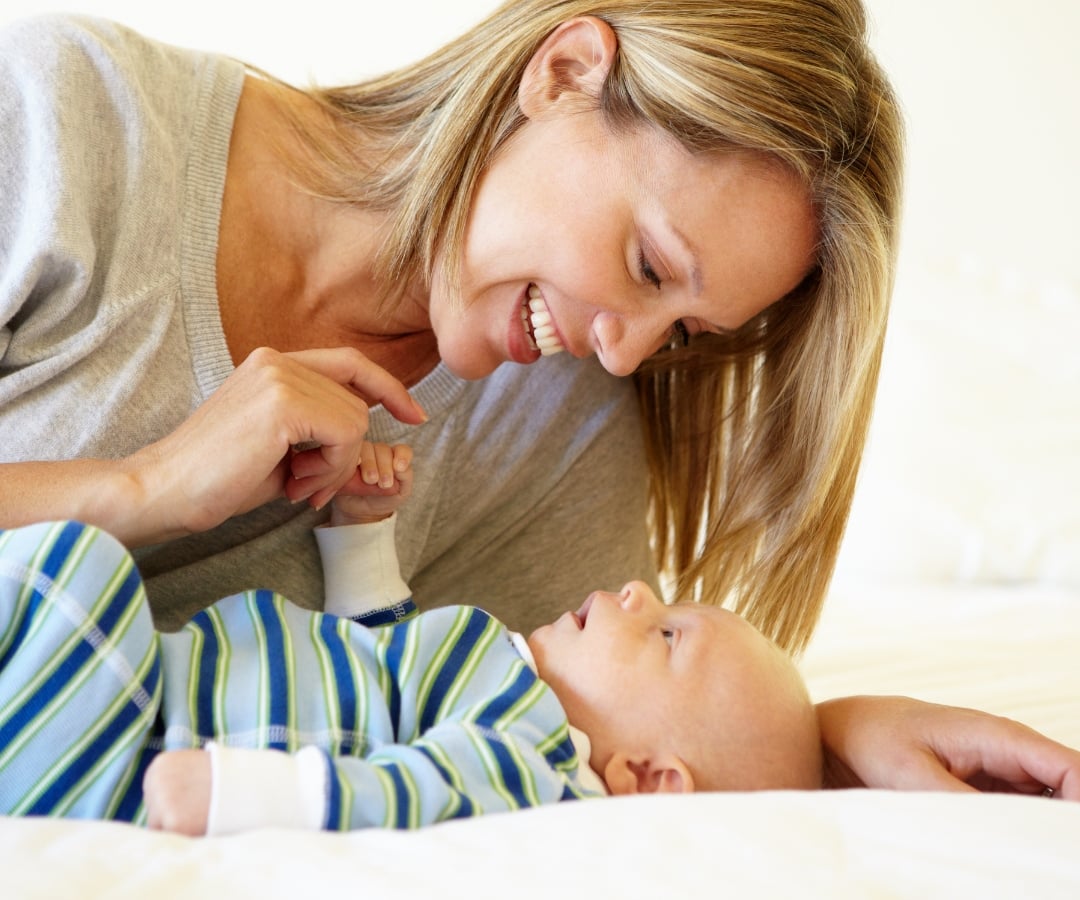
At birth, your baby communicates through cries, intense gazes, or smiles. These sounds and expressions convey their needs (hunger, tiredness) and wonder at the world.

Around 2-3 months, cooing appears. They discover their voice by making sounds like "ahh" or "ooh". This vocal play marks the beginning of their curiosity for sounds. They explore vowels and consonants that are easy to produce with their little mouth.

They're already attentive to your intonations and face. Your tender exchanges strengthen this essential connection for their future development.

From 4 to 9 months: the time of babbling and understanding

Between 4 and 9 months, babbling becomes their favorite activity. They repeat syllables like "bababa" or "tatata", exploring the sounds of their future language.

They imitate your intonations and start understanding simple words. From 6 months, they recognize their name and understand the meaning of "no", even if they don't obey yet.

Moreover, as UNICEF points out, it's also around 9 months that a baby starts to point at objects to express their needs.

This phase is crucial: they learn to associate sounds and intentions. Your encouraging responses fuel their desire to communicate.

From 10 to 18 months: the arrival of first words

Here comes the anticipated moment: the first "real" words emerge. "Mama", "dada" or "night-night" come out shyly, sometimes with approximate pronunciation ("tate" for "cake").

Their understanding is ahead of their speech. They grasp simple commands ("give the rattle") before being able to formulate them.

The major child development milestones indicate that around 1 year, they try to repeat words you pronounce. Encourage them by reformulating their attempts without harsh corrections.

From 18 to 24 months: from words to first sentences

Their vocabulary explodes: they can pronounce around fifty words and form their first sentences with two words ("daddy gone", "more milk").

They often use their name to refer to themselves ("Lucy drinks"), before adopting "I". Their speech remains dotted with pronunciation errors, like "wed" for "red" or "paci" for "pacifier".

This stage is essential for structuring their thoughts. Value their efforts and reformulate correctly to provide them with the right model.

From 2 to 3 years: towards real conversations

At this age, they build complete sentences and ask endless questions, especially curious "why's?" Their language becomes a rich tool for exchange.

Articulation becomes refined, even if some sounds remain difficult (like "sh" or "r"). They use "I" to assert themselves and share their thoughts.

This is also the age of funny and touching little phrases. A "very very big cat" reveals their ability to describe the world in their own way.

Decoding early signs and hidden language connections

How to know if baby will speak soon?

Baby's first words don't appear by magic. Before pronouncing "mama" or "blankie", they're already communicating in their own way. These preparatory signs, sometimes subtle, are keys to anticipating their evolution.

Here are the signs not to miss:

  • They imitate your facial expressions and voice intonation
  • They use intentional finger pointing to show an object
  • They consistently respond to their name and simple requests like "wave bye-bye"
  • They babble with varied intonations, as if telling a story in their own language
  • They actively try to get your attention through sounds and gestures

These behaviors reveal that they're actively testing communication tools. Like a little scientist, they observe your reactions and refine their attempts. This silent observation phase hides intense learning.

When body and speech progress hand in hand

Motor development and language form an inseparable duo. Each physical progress opens a window to new words. As soon as baby masters sitting, their hands become communication tools: clapping, pointing, or tactile exploration.

Before being able to name the world, your child explores it with their whole body. Each new motor skill is a door that opens to new words and discoveries.

When they crawl or walk, their movements offer new encounters: a cat to describe, a toy to request. These concrete experiences nourish their vocabulary. Even a simple "peek-a-boo" after a first step becomes an opportunity to learn to name emotions.

Motor skills act as levers: they transform each gesture into a language opportunity. A baby grasping a cube isn't just learning to hold an object, but to say "square" or "blue"

Your role as a parent: how to become the best coach for your child

Games and rituals to stimulate language daily

  • Talk to them simply: Describe your actions during care ("I'm putting on your jacket" or "This yogurt is strawberry"). Your baby associates sounds with objects they experience directly.
  • Read stories together: Touch-and-feel books or picture books become precious tools. The sound of your voice and colorful images transform each page into an adventure. A reading corner with age-appropriate books facilitates this playful learning.
  • Sing nursery rhymes: Music and rhymes structure language. Songs like "Mary Had a Little Lamb" or "Head, Shoulders, Knees and Toes" help memorize sounds.
  • Rephrase without correcting: If your child says 'tate', respond "Yes, you want a nice cake!". This positive reinforcement encourages them without frustration.
  • Avoid 'baby talk': Use real terms ("dog" instead of "bow-wow") to enrich their vocabulary without confusion.

Transform every moment into learning. Your baby observes your expressions and memorizes sounds. Vary situations: playing "peek-a-boo" or narrated walks stimulate language and curiosity.

The importance of limiting screen exposure

Screens captivate but don't replace human contact. Each additional minute in front of a screen between 12 and 36 months reduces exposure to adult language. It's essential to manage digital balance well to preserve their development.

Before age 2, prioritize face-to-face interactions. Your baby needs to see your expressions and feel your responsiveness. Screens offer unilateral communication, slowing their linguistic development.

Offer them fabric books, sound toys, or puppets. Your active presence transforms these moments into learning through play sessions, strengthening your emotional bond.